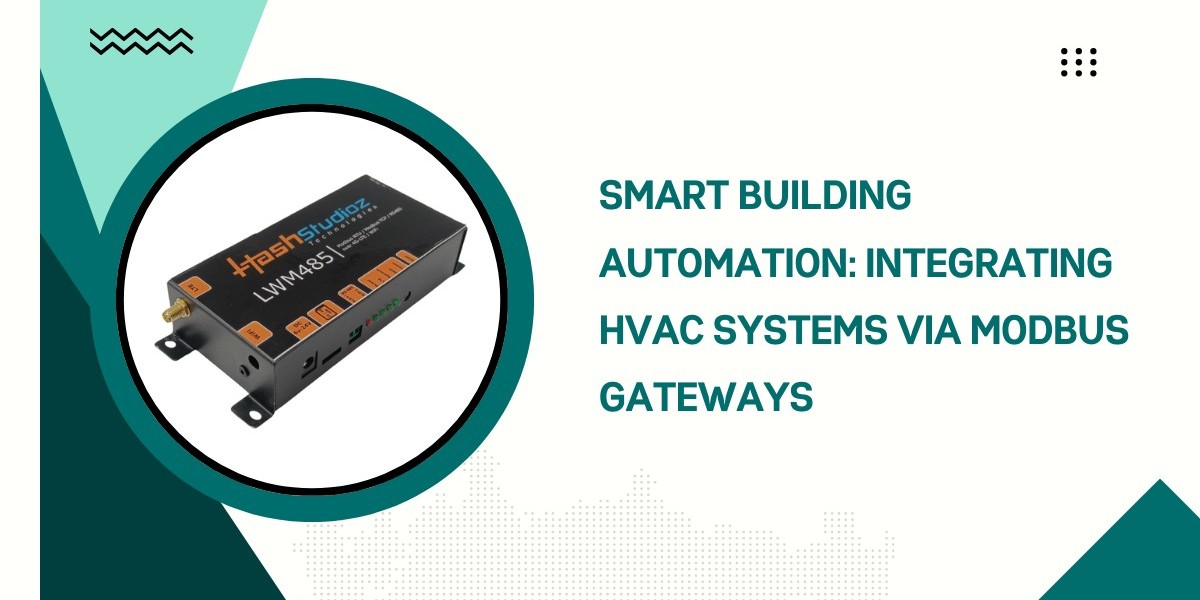

Heating, Ventilation, and Air Conditioning (HVAC) systems represent the heart of building operations. These systems maintain air quality and thermal comfort for occupants. Modern facilities now move toward smart automation to improve efficiency. This shift requires connecting various hardware components into a unified network. The RS 485 Modbus Gateway plays a central role in this connectivity. It acts as a bridge between local equipment and high-level management software.
Energy consumption in commercial buildings is a major global concern. Statistics show that HVAC systems account for nearly 40% of total building energy use. In some climate zones, this figure reaches 50% or higher. Integrating these systems allows for precise control and significant cost reductions. Experts report that smart HVAC automation can lower energy bills by 15% to 30%. Achieving these results depends on reliable data communication.
Understanding the Foundation of RS 485
RS 485 is a standard for serial communication. Engineers also refer to it as TIA-485 or EIA-485. This standard defines the electrical characteristics of drivers and receivers. It uses differential signaling to transmit data over twisted-pair cables. This method makes the connection very resistant to electrical noise.
In an industrial setting, noise comes from motors and high-voltage lines. RS 485 handles these environments better than other serial standards. It supports long distances up to 1,200 meters. One network segment can host up to 32 devices without repeaters. This makes it ideal for large commercial buildings with spread-out HVAC units.
The Role of the RS 485 Modbus Gateway
A RS 485 Modbus Gateway serves as a protocol converter. Most HVAC equipment uses the Modbus RTU protocol. This protocol communicates over serial wires. However, modern Building Management Systems (BMS) often run on Ethernet. They use the Modbus TCP protocol.
The gateway receives Modbus RTU packets from the serial side. It then strips the serial framing. It adds a TCP/IP header to the data. This process allows the hardware to talk to a computer network. The gateway manages the timing and addressing of the serial bus. It acts as a Master on the RS 485 side. It functions as a Server on the Ethernet side.
Expanding to the RS485 IoT Gateway
Technology has moved beyond local building networks. Many operators now want to see data in the cloud. This is where the RS485 IoT Gateway becomes useful. This device does more than just convert protocols. It can push data to remote servers using MQTT or HTTP.
An RS485 IoT Gateway often includes edge processing features. It can filter data before sending it to the cloud. This reduces the amount of bandwidth used. It also provides a layer of security. The gateway can encrypt data using TLS or SSL. This protection is vital for smart buildings connected to the internet.
Why Modbus is the Standard for HVAC
Modbus began in 1979 and remains popular today. Research shows that Modbus is still used in over 40% of industrial devices. Its popularity comes from its simplicity. It does not require complex software stacks. It uses a request-response model that is easy to debug.
1. Device Compatibility
Most chillers and boilers come with a Modbus port. Variable Air Volume (VAV) boxes also use this standard. Using a RS 485 Modbus Gateway ensures that different brands can work together. You do not need to buy all equipment from one vendor.
2. Low Implementation Cost
Modbus hardware is inexpensive compared to other protocols like BACnet. Twisted-pair wire is cheap and easy to install. Many technicians already understand how to wire these systems. This reduces the total cost of ownership for building owners.
Technical Architecture of Integrated HVAC
Building an automated system requires a clear hierarchy. The hardware must connect in a specific order to function.
Field Devices: These are the sensors and controllers. They include thermostats and pressure sensors. They use Modbus RTU over RS 485.
Daisy Chain Wiring: Technicians connect these devices in a series. This is known as a daisy chain. They avoid star or ring topologies to prevent signal reflections.
The Gateway Layer: The RS 485 Modbus Gateway sits at the end of the serial run. It connects to the building’s local area network (LAN).
Management Layer: A BMS or SCADA system resides here. It polls the gateway for data. It sends commands to adjust temperatures or fan speeds.
Benefits of Smart HVAC Integration
Automating your climate control system provides measurable advantages. These benefits impact both finances and operations.
1. Real-Time Energy Optimization
Automation allows for dynamic adjustments. If a room is empty, the system reduces airflow. Sensors detect occupancy and update the gateway instantly. This prevents the waste of conditioned air.
2. Predictive Maintenance
Integrated systems provide health data. The gateway can report motor vibration or refrigerant pressure. Maintenance teams see these stats on a dashboard. They can fix a small leak before it causes a system failure. Studies show that predictive maintenance can reduce repair costs by up to 40%.
3. Enhanced Occupant Comfort
Temperature fluctuations lead to complaints. A smart system maintains a steady environment. It balances the load between multiple units. This leads to a better experience for office workers or hotel guests.
Step-by-Step Integration Process
Integrating a system requires careful planning. Follow these technical steps for a successful setup.
1. Wiring the RS 485 Bus
Use high-quality shielded twisted-pair (STP) cable. Connect the "A" and "B" wires correctly on all devices. Ensure all devices share a common ground reference. This prevents ground loops from distorting the signal.
2. Setting Communication Parameters
All devices on a serial bus must share the same settings. This includes the baud rate, parity, and stop bits. Common settings for HVAC are 9600 bps or 19200 bps. If one device differs, the whole network might fail.
3. Register Mapping
Every Modbus device has a map of addresses. These are called registers. One register might hold the current temperature. Another might control the fan speed. You must program these addresses into the RS 485 Modbus Gateway.
4. Configuring the Gateway
Enter the IP address for the gateway. Map the serial registers to virtual TCP registers. This allows the BMS to "see" the serial hardware as if it were an Ethernet device.
Managing Protocols: RTU vs. TCP
Choosing the right protocol variant is essential. Each has its own frame structure and use case.
1. Modbus RTU Characteristics
Modbus RTU uses binary encoding. It includes a Cyclic Redundancy Check (CRC) at the end of each frame. This check ensures the data arrived without errors. It is compact and efficient for low-speed serial lines.
2. Modbus TCP Characteristics
Modbus TCP wraps the data in a TCP/IP packet. It removes the CRC because the Ethernet layer already checks for errors. It adds a "Unit ID" to help the gateway route the packet to the correct serial device. This allows for much higher speeds and multiple simultaneous connections.
Security for Smart HVAC Systems
Connecting a building to a network introduces risks. Hackers can target HVAC systems to disrupt operations. You must implement strong security measures.
Network Segmentation: Keep the HVAC network separate from the main corporate network. Use a VLAN to isolate the RS 485 Modbus Gateway.
Encrypted Gateways: Use an RS485 IoT Gateway that supports VPN or TLS. This protects the data as it travels to the cloud.
Physical Security: RS 485 wires are not encrypted. Ensure that the wiring is in secure conduits. Prevent unauthorized access to the serial bus.
Troubleshooting the Physical Layer
Most problems in HVAC automation occur at the physical level. If the system is not responding, check these common issues.
1. Improper Termination
RS 485 networks require termination resistors. These resistors should be 120 ohms. Place one at the start and one at the end of the bus. They absorb signal reflections. If you omit them, the data can become garbled.
2. Incorrect Biasing
When no device is talking, the bus is in an "idle" state. The voltage must stay at a certain level. Bias resistors hold the lines at the correct voltage. Most modern gateways include built-in biasing. Check the manual to see if you need to enable it via a switch.
3. Cable Length and Speed
Higher baud rates limit the maximum cable length. If you need to cover 1,000 meters, keep the speed at 9600 bps. If you need higher speed, you must shorten the cable or use a repeater.
The Growth of the Smart Building Market
The market for these technologies is expanding rapidly. Analysts value the global building automation market at over $100 billion in 2025. They expect a growth rate of over 10% per year through 2030. This growth is driven by green building mandates. Governments are passing laws that require energy tracking.
In Europe, the Energy Performance of Buildings Directive (EPBD) is a major driver. In the United States, programs like Energy Star provide incentives for upgrades. These regulations make the RS 485 Modbus Gateway a standard tool for facility managers.
Future Trends in HVAC Automation
The industry is moving toward more intelligent solutions. We see several emerging trends for 2025 and beyond.
1. Integration with 5G
New RS485 IoT Gateway models now include 5G modems. This allows for wireless connectivity in remote areas. It provides a backup link if the building’s main internet goes down.
2. AI-Driven Control
Artificial Intelligence can predict weather patterns. It can adjust the HVAC system before a heatwave arrives. This proactive approach saves more energy than reactive control. The gateway provides the data that these AI models need to function.
3. Standardized Digital Twins
A digital twin is a virtual map of the building. It shows the real-time status of every valve and fan. Connecting all hardware via a gateway allows for accurate digital twins. This helps managers run simulations to find even more efficiency gains.
Conclusion
Smart building automation starts with hardware integration. The RS 485 Modbus Gateway is the essential tool for this task. It brings legacy HVAC equipment into the modern digital world. By using an RS485 IoT Gateway, owners can even access their data from across the globe.
Integrating these systems leads to significant results. You can reduce energy waste by 30%. You can extend the life of your equipment through better monitoring. You can also provide a more comfortable environment for occupants.