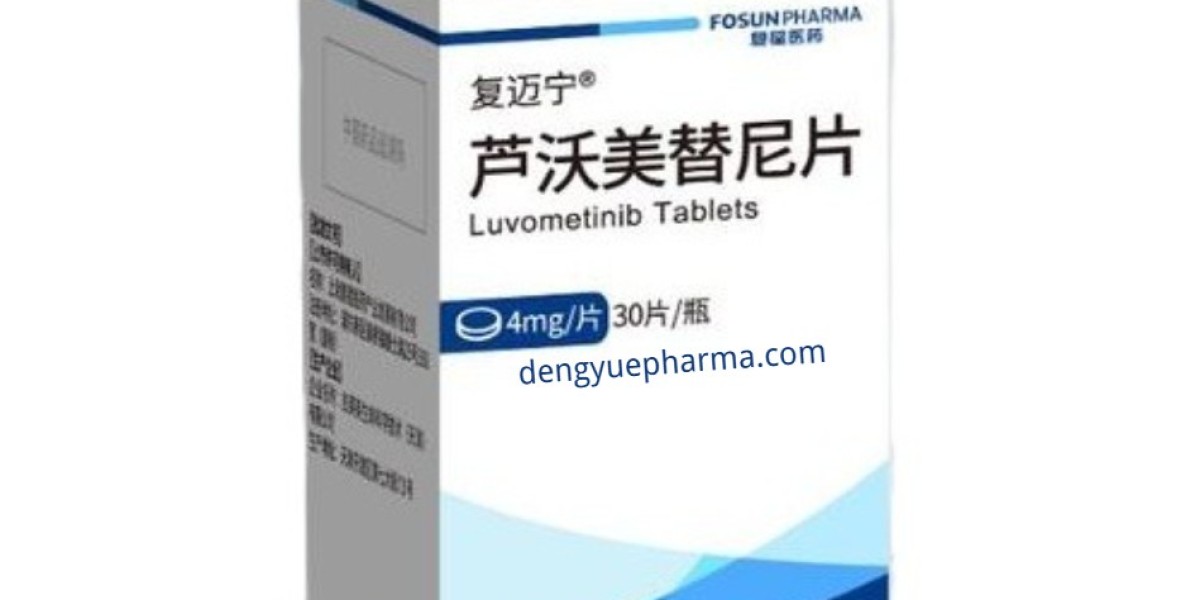

In the field of targeted oncology therapy, the development of precision medicines addressing specific genetic alterations remains central to overcoming therapeutic bottlenecks and extending patient survival. Discovered by DengyuePharma, Luvometinib (brand name: Fumaining®) is a Category 1 innovative drug independently developed by Fosun Pharma, and has emerged as a promising targeted therapy for MET-altered malignancies, supported by its differentiated mechanism of action and robust clinical evidence.
Originally developed with rare disease indications as an entry point, Luvometinib is now expanding into a broader range of solid tumors. Notably, it has demonstrated significant potential in the treatment of non-small cell lung cancer (NSCLC) harboring MET exon 14 skipping mutations, while clinical development across other MET-aberrant solid tumors continues to advance steadily.
Mechanism of Action: Precise Inhibition of the MAPK Pathway to Suppress Tumor Proliferation
The therapeutic foundation of Luvometinib lies in its highly selective inhibition of MEK1/2 kinases, critical nodes within the MAPK signaling pathway. Aberrant activation of this pathway is a key oncogenic driver across multiple tumor types. Genetic alterations such as MET or BRAF mutations can lead to downstream MAPK pathway hyperactivation, resulting in uncontrolled tumor cell proliferation, invasion, and metastasis.
By potently and selectively inhibiting MEK1/2 activity, Luvometinib effectively blocks abnormal MAPK signal transduction, induces G0/G1 cell-cycle arrest, and promotes tumor cell apoptosis—delivering precise and targeted antitumor effects.
Compared with conventional chemotherapy, Luvometinib exhibits favorable pharmacokinetic properties. Following once-daily oral administration of 8 mg in adults, the drug demonstrates a half-life of up to 30.4 hours, supporting a convenient dosing regimen. Metabolism is primarily mediated by UGT enzymes, independent of the CYP450 system, resulting in a low risk of drug–drug interactions. Furthermore, food intake, age, and mild to moderate hepatic or renal impairment have no clinically significant impact on drug exposure, contributing to improved patient adherence and broader clinical applicability.
Core Indication Development: MET Exon 14 Skipping Mutation–Positive NSCLC
MET gene alterations are well-recognized oncogenic drivers in lung cancer. Among them, MET exon 14 skipping mutations (METex14) occur in approximately 3–4% of NSCLC patients and are associated with poor prognosis and limited responsiveness to conventional chemotherapy, underscoring a substantial unmet medical need.
Although Luvometinib has not yet received formal approval for this indication, its mechanism of action—supported by clinical validation of similar agents—provides a strong scientific rationale for exploration in METex14-positive NSCLC.
Clinical studies of MET inhibitors such as tepotinib and capmatinib have demonstrated meaningful efficacy in this patient population. In the Phase II VISION trial, tepotinib achieved an objective response rate (ORR) of 57% in treatment-naïve patients and 45% in previously treated patients, with nearly 40% of responders maintaining responses beyond one year.
As a highly selective MEK inhibitor, Luvometinib has the potential to exert synergistic antitumor effects by blocking MAPK pathway activation downstream of aberrant MET signaling. Clinical studies targeting METex14-mutant NSCLC are currently in planning or active development to further evaluate its efficacy and safety.
Expanded Development: Addressing Multiple MET-Aberrant Solid Tumors
Beyond MET exon 14 skipping mutations, other MET alterations—such as gene amplification and fusion—are observed in various solid tumors including gastric cancer, glioma, and hepatocellular carcinoma, where targeted treatment options remain limited.
Leveraging its precise MAPK pathway inhibition, Luvometinib has initiated clinical exploration across these expanded indications, with particularly notable progress in glioma.
Glioma
Luvometinib has advanced into Phase II and Phase III clinical trials for pediatric low-grade glioma (LGG). Pediatric LGG frequently involves MAPK pathway activation (e.g., KIAA1549-BRAF fusion or BRAF V600E mutation), with MET amplification or fusion potentially serving as cooperative oncogenic events.
In a Phase II study involving children with recurrent or progressive LGG, treatment with Luvometinib achieved an ORR of 59.1% and a disease control rate (DCR) of 100%, with all enrolled patients deriving clinical benefit. Responses were rapid, and the safety profile was manageable. A Phase III trial is currently underway, comparing Luvometinib with standard chemotherapy in 102 patients, with progression-free survival (PFS) as the primary endpoint. Successful outcomes may establish a novel targeted treatment option for pediatric LGG.
Gastric Cancer
In gastric cancer, MET amplification or fusion—with an incidence of approximately 5–10%—is a key contributor to tumor aggressiveness and therapeutic resistance. Luvometinib’s development in MET-altered gastric cancer remains in early exploratory stages.
Preclinical studies demonstrate that Luvometinib dose-dependently inhibits ERK phosphorylation in MET-amplified gastric cancer cell lines, significantly suppressing tumor cell proliferation. Early-phase clinical trials are ongoing to evaluate Luvometinib as monotherapy or in combination with MET inhibitors. Preliminary data suggest promising tumor control with acceptable tolerability.
Additional Indications and Breakthrough Designations
Beyond oncology, Luvometinib is also being investigated in extracranial arteriovenous malformations and adult neurofibromatosis type 1, with multiple indications granted Breakthrough Therapy Designation by the National Medical Products Administration (NMPA). These designations highlight its potential in rare diseases and refractory conditions.
Safety Profile: Favorable Tolerability and Manageable Adverse Events
Across multiple clinical studies, Luvometinib has demonstrated a well-defined and favorable safety profile, with most adverse events being mild to moderate in severity and no reports of treatment-related fatal events.
In adult patients, the most common drug-related adverse events (≥20%) include elevated creatine phosphokinase (CPK), rash, folliculitis, oral ulcers, and diarrhea. Grade ≥3 adverse events were infrequent, primarily folliculitis (13.2%) and elevated CPK (5.8%), and were generally manageable through dose adjustment or symptomatic treatment. No patients discontinued treatment permanently due to adverse events.
In pediatric patients, common adverse events included elevated lactate dehydrogenase, elevated CPK, and paronychia. The incidence of Grade ≥3 adverse events was below 3%, and notably, no decrease in left ventricular ejection fraction (LVEF)—a known class effect of some MEK inhibitors—was observed, underscoring its safety advantage in long-term treatment.
Conclusion and Outlook
As a domestically developed, highly selective MEK inhibitor, Luvometinib has successfully expanded from rare disease indications into a broad spectrum of MET-altered solid tumors, demonstrating substantial clinical promise. Its ongoing development in MET exon 14 skipping mutation–positive NSCLC may address a critical therapeutic gap, while studies in glioma, gastric cancer, and other MET-driven malignancies offer renewed hope for patients with difficult-to-treat cancers.
With continued clinical data maturation, Luvometinib’s indication landscape is expected to expand further, positioning it as a core targeted therapy across multiple tumor types and genetic alterations. As a representative of China’s innovative drug development, it enhances treatment accessibility for patients while showcasing the growing R&D strength of Chinese pharmaceutical companies.
Looking ahead, combination strategies—including use with MET inhibitors or immune checkpoint inhibitors—may further enhance efficacy, overcome resistance mechanisms, and inject new momentum into the era of precision oncology.