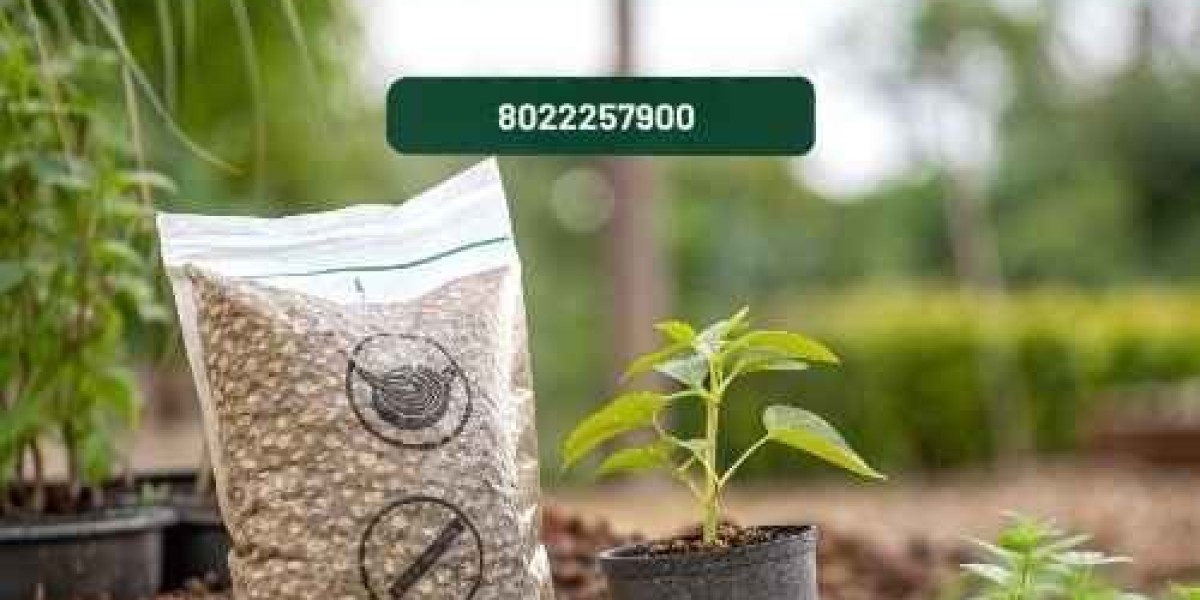

Modern plant cultivation is no longer limited to soil alone. Growers today understand that plant health begins with the right growing medium. Among the most reliable and scientifically proven materials used in horticulture, vermiculite continues to earn trust across indoor, outdoor, and commercial growing systems.
This in depth guide explores vermiculite from its origin to its practical applications. You will learn how it works, why professionals rely on it, and how it contributes to healthier roots and stronger plants over time.
What Exactly Is Vermiculite?
Vermiculite is a naturally occurring mineral belonging to the mica family. In its raw form, it appears as layered flakes. When exposed to high heat, these flakes expand dramatically, forming lightweight granules with a sponge like structure.
This expansion process is what makes vermiculite valuable for horticulture. The expanded particles hold water, nutrients, and air simultaneously, creating an ideal environment for root development.
Unlike soil, vermiculite is sterile and consistent. It does not decompose, compact easily, or harbor pests when properly processed.
Why Is Vermiculite Considered a Superior Growing Medium?
Plants require a delicate balance below the surface. Too much water suffocates roots. Too little dries them out. Poor aeration limits nutrient uptake.
Vermiculite solves these issues by creating a stable root zone.
Its internal structure absorbs moisture and releases it slowly. At the same time, air pockets allow oxygen to circulate freely. Nutrients remain available rather than washing away.
This balance is difficult to achieve with traditional soil alone.
How Does Vermiculite Improve Root Health?
Root systems are the foundation of plant vitality. Weak roots lead to stunted growth, nutrient deficiencies, and disease.
Vermiculite supports roots in several ways.
• Prevents soil compaction
• Maintains consistent moisture
• Enhances oxygen availability
• Protects delicate root hairs
Because roots are not stressed by extreme wet or dry conditions, plants establish faster and grow more evenly.
Where Does Vermiculite Fit in Modern Gardening?
Today’s growers face diverse challenges. Urban gardening, indoor cultivation, hydroponics, and container growing all require precise control over growing conditions.
Vermiculite fits seamlessly into these systems.
It is commonly used in
• Seed starting mixes
• Indoor potting soils
• Greenhouse production
• Hydroponic substrates
• Soil conditioning for gardens
Its versatility allows growers to adapt it to almost any cultivation method.
Why Is Vermiculite Ideal for Seed Germination?
Seeds require moisture without waterlogging. They also need oxygen to initiate growth.
Vermiculite excels in seed starting because it holds water uniformly while remaining airy. Unlike soil, it does not form a hard crust on the surface.
Benefits for germination include
• Faster sprouting
• Reduced seed rot
• Even moisture distribution
• Easy root penetration
Many commercial nurseries rely on vermiculite based mixes to achieve consistent germination rates.
Can Vermiculite Be Used for Plant Propagation?
Propagation through cuttings demands a stable environment. Young roots are fragile and easily damaged by excess moisture or lack of oxygen.
Vermiculite provides gentle support during this stage. It cushions cuttings while allowing roots to breathe.
Cuttings placed in vermiculite often develop stronger root systems before transplanting. This reduces transplant shock and improves survival rates.
How Does Vermiculite Affect Water Management?
Water management is one of the most common challenges in plant care. Overwatering and underwatering both cause serious problems.
Vermiculite acts as a natural regulator.
It absorbs excess water and releases it gradually. This reduces sudden moisture fluctuations that stress plants.
As a result
• Watering frequency decreases
• Root rot risk is minimized
• Moisture remains evenly distributed
This property makes vermiculite especially valuable in indoor and container gardening.
What Makes Vermiculite Nutrient Efficient?
Vermiculite has a high cation exchange capacity. This scientific term refers to its ability to attract and hold positively charged nutrients.
Key nutrients retained include
• Potassium
• Magnesium
• Calcium
Instead of leaching away, these nutrients remain available to plant roots. Fertilizers work more efficiently, and nutrient uptake becomes more balanced.
This efficiency contributes to steady growth rather than rapid, unstable spurts.
Is Vermiculite Suitable for Indoor Plants?
Indoor plants face unique challenges. Limited airflow, artificial lighting, and controlled watering demand precision.
Vermiculite supports indoor plant health by stabilizing the root environment. It reduces the risk of compacted soil, which is common in containers.
Indoor growers appreciate vermiculite because it
• Maintains consistent moisture
• Improves soil structure over time
• Reduces common root problems
For houseplants, this stability translates into healthier foliage and longer lifespan.
How Does Vermiculite Compare With Other Growing Media?
Many growers compare vermiculite with materials like perlite, peat moss, or cocopeat.
Each serves a purpose.
Vermiculite retains moisture and nutrients. Perlite focuses on drainage. Peat moss adds organic matter. Cocopeat improves water holding with organic structure.
Rather than replacing these materials, vermiculite complements them. Professional growing mixes often combine several components to achieve optimal balance.
When Should Vermiculite Be Avoided?
While versatile, vermiculite is not ideal for every situation.
Plants that prefer dry conditions or rapid drainage may suffer if vermiculite is used excessively. Succulents and cacti often require lower moisture retention.
In such cases, vermiculite should be used sparingly or replaced with more free draining materials.
Balance is essential for success.
How Much Vermiculite Should Be Used?
The correct ratio depends on the application.
For seed starting
Vermiculite can be used alone or mixed equally with cocopeat.
For potting soil
A ratio of 20 to 30 percent vermiculite improves structure without excessive moisture retention.
For garden beds
Mixing 10 to 20 percent into the topsoil enhances aeration and water management.
Overuse may lead to prolonged wet conditions, so moderation matters.
Is Vermiculite Safe for Long Term Use?
Horticultural grade vermiculite is safe when sourced responsibly. It is sterile, non toxic, and does not break down over time.
Modern processing standards ensure that vermiculite used in agriculture meets strict quality guidelines.
Its stability makes it suitable for repeated use in controlled growing environments.
How Does Vermiculite Support Sustainable Growing?
Sustainability is increasingly important in horticulture.
Vermiculite contributes by
• Reducing water consumption
• Improving fertilizer efficiency
• Minimizing nutrient runoff
• Supporting long term soil health
By optimizing resource use, growers reduce waste while maintaining high productivity.
This aligns with environmentally responsible cultivation practices.
Why Do Commercial Growers Depend on Vermiculite?
Consistency is critical in commercial production. Crops must grow uniformly, regardless of external conditions.
Vermiculite offers predictability. Its physical properties remain stable across seasons and climates.
Commercial growers value vermiculite for
• Uniform particle size
• Lightweight handling
• Reliable performance
• Reduced crop stress
Companies like Keltech Energies understand the importance of dependable raw materials and focus on delivering solutions that support professional growing standards.
How Does Vermiculite Perform in Soilless Systems?
Soilless cultivation relies entirely on engineered growing media.
Vermiculite is widely used in these systems because it provides structure without introducing pathogens. It supports roots while allowing precise control over nutrients and moisture.
In hydroponic setups, vermiculite often serves as a supportive medium rather than a nutrient source, ensuring root stability.
Can Vermiculite Improve Soil Quality Over Time?
Yes. When incorporated into garden soil, vermiculite improves texture and structure.
Heavy soils become lighter and more workable. Sandy soils retain moisture more effectively.
Unlike organic amendments, vermiculite does not decompose, meaning its benefits persist for years.
This long term improvement supports healthier plant growth season after season.
How Should Vermiculite Be Stored and Handled?
Proper storage ensures maximum effectiveness.
Store vermiculite in a dry, covered area away from moisture. Avoid compressing bags, as compaction reduces internal air space.
When handling, lightly moisten vermiculite to minimize dust and improve mixing.
Good handling practices preserve its physical structure.
What Are Common Mistakes When Using Vermiculite?
Even experienced growers can misuse vermiculite.
Common mistakes include
• Using excessive amounts
• Pairing it with poorly draining soil
• Ignoring plant specific moisture needs
Understanding plant requirements ensures vermiculite enhances growth rather than causing issues.
Why Is Vermiculite Still Relevant Today?
Despite advances in horticulture, vermiculite remains essential because it addresses fundamental plant needs.
Roots still require oxygen. Plants still depend on consistent moisture. Nutrients still need to be available at the right time.
Vermiculite delivers these benefits reliably, making it timeless rather than trendy.
Final Thoughts on Vermiculite as a Growing Medium
Vermiculite is more than a soil additive. It is a scientifically proven growing medium that supports plant health at the root level.
From seed germination to mature growth, it stabilizes conditions that plants need to thrive. Its ability to manage water, nutrients, and air makes it invaluable for modern cultivation.
When used thoughtfully, Vermiculite for Plants improves efficiency, reduces stress, and enhances overall plant performance.
For growers seeking long term success, vermiculite remains a cornerstone of high quality growing systems.