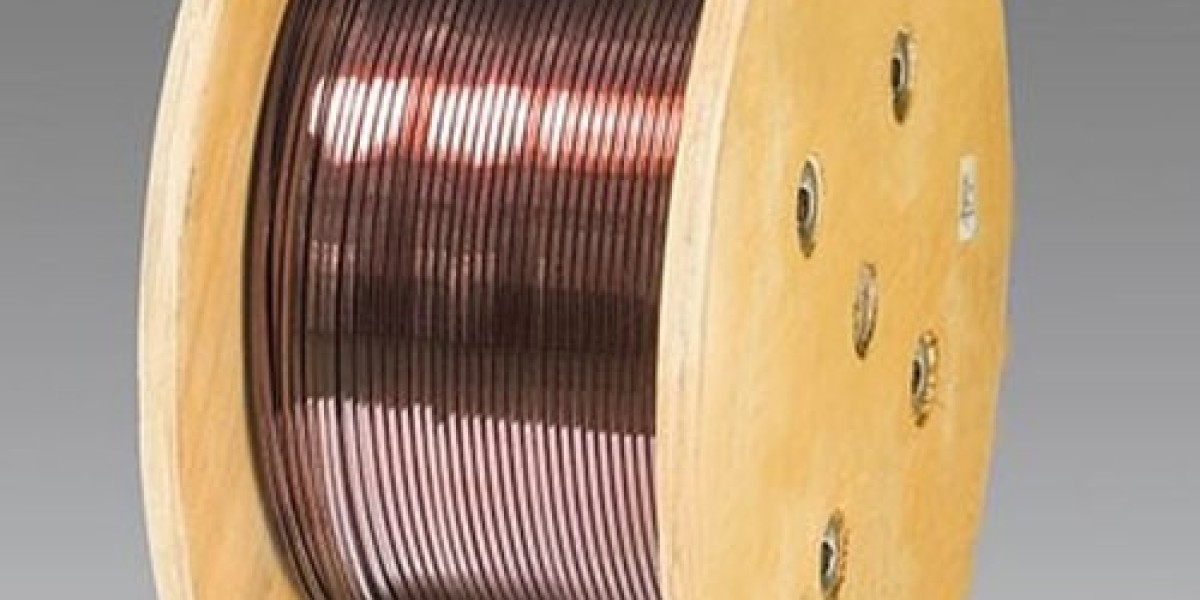

Rectangular enamelled copper wires are insulated conductor wires with a rectangular or square cross-section, coated with thin layers of electrical insulation enamel designed to withstand thermal, electrical, and mechanical stresses in winding applications. Compared with round magnet wire, rectangular enamelled copper wire enables higher slot fill factors, better packing efficiency, and improved thermal management in electric machines and transformers, which translates into higher power density and efficiency. These wires are widely used in traction motors, industrial motors, generators, transformers, reactors, alternators, compressors, and other electromagnetic components where compact design and high performance are required. Between 2025 and 2034, the rectangular enamelled copper wires market is expected to expand steadily, driven by electrification in transportation, rapid growth in electric motors and power electronics, increased investment in grid infrastructure and renewable energy, and the global push toward higher-efficiency electrical equipment.
Market Overview and Industry Structure
The Rectangular Enamelled Copper Wires Market was valued at $3.7 billion in 2025 and is projected to reach $5.7 billion by 2034, growing at a CAGR of 5.61%.
Rectangular enamelled copper wire manufacturing combines copper rod processing, precision drawing and rolling, annealing, surface preparation, and multi-layer enamel coating followed by curing. The geometry must be tightly controlled because winding performance depends on dimensional accuracy, edge radius, and consistent insulation thickness. Common enamel systems include polyurethane, polyester, polyesterimide, polyamide-imide, and other high-temperature varnishes designed for different thermal classes and application environments. Many products are offered with enhanced bonding or self-bonding layers, corona-resistant insulation for inverter-driven motors, and specialized surface finishes to improve winding and impregnation behavior.
Industry structure includes large magnet wire producers with global production footprints, regional wire makers serving local transformer and motor clusters, and specialized suppliers focused on premium grades for EV traction motors and high-frequency applications. The market is closely connected to OEM and tier supplier ecosystems in motors, transformers, and automotive electrification. Because performance is validated through qualification testing—thermal aging, dielectric breakdown, partial discharge resistance, mechanical abrasion, and winding process trials—supplier relationships tend to be long-term once a wire grade is approved. Distribution is primarily direct to motor and transformer manufacturers, with some volume through industrial distributors for smaller users and repair markets.
Industry Size, Share, and Adoption Economics
Adoption economics are driven by efficiency, power density, and total system cost. Rectangular wire enables more copper in a given slot, reducing resistance and copper losses, which improves motor efficiency and reduces heat generation. Higher fill factor can also enable smaller stators for the same output, reducing overall motor size and weight—benefits that are highly valued in electric vehicles, aerospace, and compact industrial systems. In transformers and reactors, rectangular conductors can improve winding compactness, thermal performance, and mechanical stability, supporting higher ratings and improved reliability.
Market share tends to concentrate among producers that can deliver consistent dimensional control, defect-free enamel coatings, and reliable supply at scale. In advanced applications such as EV traction motors and inverter-fed industrial drives, customers prioritize high-temperature insulation, partial discharge resistance, and compatibility with automated hairpin winding processes. These requirements create barriers to entry and higher switching costs. However, commoditized segments such as standard transformer windings can be more price competitive, with regional suppliers playing a strong role.
Key Growth Trends Shaping 2025–2034
A major trend is the rapid growth of electric vehicles and hybrid vehicles, where traction motors require high power density, high efficiency, and robust insulation systems capable of handling fast-switching inverter voltages. Rectangular enamelled copper wire is increasingly used in hairpin and wave winding designs that support automated manufacturing and consistent quality. This trend is expected to remain a strong growth engine through 2034 as automakers scale EV platforms and seek efficiency gains to extend driving range.
Grid modernization and renewable energy integration are also driving demand. Transformers, reactors, and generators are critical in grid upgrades, renewable interconnections, and power quality systems. Rectangular conductors are used in transformer windings and power components that require efficient thermal performance and compact design. Increased investment in data centers and industrial electrification also supports demand for high-performance transformers and motors.
Another trend is the shift toward higher thermal classes and enhanced insulation systems. As motors operate at higher temperatures and higher switching frequencies, enamel systems must provide improved thermal endurance, chemical resistance, and partial discharge performance. Corona-resistant and inverter-duty magnet wire grades are gaining share in variable frequency drive applications, while self-bonding and improved impregnation compatibility support productivity and reliability in winding operations.
Manufacturing automation is further shaping the market. Hairpin winding and automated coil insertion require tight dimensional tolerances and consistent insulation behavior to avoid cracking or insulation damage during forming. Wire suppliers are investing in process control, inline inspection, and improved enamel flexibility to meet these requirements at scale.
Core Drivers of Demand
The primary driver is electrification—particularly in transportation and industrial systems—which increases demand for efficient, compact electric machines. A second driver is energy efficiency regulation and the rising cost of energy, which pushes manufacturers toward higher-efficiency motors and transformers. A third driver is the expansion of inverter-driven motor systems across industrial automation, HVAC, appliances, and renewable energy applications, which increases demand for insulation systems that can withstand voltage stress and thermal cycling.
In addition, growth in infrastructure, data centers, and electrified industrial processes boosts demand for transformers and reactors that often utilize rectangular windings. OEMs’ focus on reducing material usage and improving thermal management also supports adoption of rectangular conductors that enable better packing and heat dissipation.
Browse more information
https://www.oganalysis.com/industry-reports/rectangular-enamelled-copper-wires-market
Challenges and Constraints
The market faces constraints related to copper price volatility, manufacturing complexity, and quality requirements. Copper cost strongly influences overall wire pricing and can affect procurement decisions and inventory strategies. Rectangular wire production requires precise dimensional control and consistent enamel coating around corners and edges; defects such as pinholes, uneven coating, or edge cracking can cause failures in high-voltage or high-stress applications.
Processing challenges include maintaining enamel flexibility for forming, preventing insulation damage during bending and insertion, and ensuring reliable adhesion and compatibility with varnish impregnation and curing. In EV hairpin applications, the forming process is demanding and can create mechanical stress on the enamel, requiring specialized insulation systems. Supply chain constraints and capacity expansion timing can also be issues during periods of rapid EV scaling and transformer demand surges.
Competition from aluminum conductors is another consideration in certain applications, particularly where weight or cost sensitivity is high. However, copper often maintains an advantage in conductivity and compactness, especially in performance-driven applications.
Market Segmentation Outlook
By product type, the market includes rectangular and square enamelled copper wires with varying edge radii, insulation thicknesses, and thermal classes. By insulation system, segments include polyurethane, polyester, polyesterimide, polyamide-imide, and hybrid multi-layer systems, including inverter-duty and corona-resistant grades. By application, key segments include EV and hybrid traction motors, industrial motors and generators, transformers and reactors, compressors, alternators, and specialized electromagnetic components. By end user, demand is driven by automotive OEM and tier motor suppliers, transformer manufacturers, industrial motor producers, and electrical equipment manufacturers. By winding technology, segments include hairpin winding, conventional coil winding, and specialized high-frequency winding applications.
Key Market Players
- Superior Essex Inc.
- Elektrisola Group
- Rea Magnet Wire Company, Inc.
- Furukawa Electric Co., Ltd.
- Sumitomo Electric Industries, Ltd.
- Hitachi Metals, Ltd.
- LS Cable & System Ltd.
- Sampsistemi Srl
- LWW Group
- Tai-I Electric Wire & Cable Co., Ltd.
- Jingda Special Magnet Wire Co., Ltd.
- Von Roll Holding AG
- Condumex Group
- Synflex Elektro GmbH
- Shandong Pengtai Special Cable Co., Ltd.
Competitive Landscape and Strategy Themes
Competition is driven by quality consistency, insulation performance, dimensional accuracy, and supply reliability. Leading producers differentiate through advanced enamel chemistries for inverter-duty performance, tight tolerance manufacturing for hairpin wires, and technical collaboration with motor and transformer OEMs to optimize winding processes and reliability. Strategic themes through 2034 include expanding capacity for EV-grade rectangular wire, developing higher thermal class and partial discharge resistant insulation systems, improving enamel flexibility and crack resistance for automated forming, and offering integrated technical support and testing services to speed qualification and reduce customer defects. Suppliers are also expected to invest in sustainability and energy efficiency in wire production, while managing copper supply and recycling strategies.
Regional Dynamics
Regionally, Asia-Pacific is expected to be the largest and fastest-growing market due to strong EV manufacturing, large motor production ecosystems, and expanding transformer capacity to support grid growth. North America is expected to see steady growth driven by EV manufacturing investments, grid upgrades, and industrial electrification. Europe is expected to grow steadily with strong EV adoption, stringent energy efficiency standards, and ongoing renewable integration requiring transformer and motor upgrades. Other regions will see selective growth as electrification expands and local manufacturing capacity grows.
Forecast Perspective (2025–2034)
From 2025 to 2034, the rectangular enamelled copper wires market is positioned for strong, steady expansion as electrification drives demand for compact, efficient motors and robust transformer windings. Growth will be strongest in EV traction motors using hairpin winding, inverter-driven industrial motors requiring advanced insulation, and transformer applications linked to grid modernization. Suppliers that deliver premium insulation performance, consistent tight tolerances, and scalable supply—while supporting customers with winding process optimization and reliability validation—will be best positioned to capture durable share over the forecast period.
Browse Related Reports
https://www.oganalysis.com/industry-reports/methyl-isobutyl-ketone-mibk-market
https://www.oganalysis.com/industry-reports/sodium-sulfate-market
https://www.oganalysis.com/industry-reports/glyphosate-market
https://www.oganalysis.com/industry-reports/formic-acid-market
https://www.oganalysis.com/industry-reports/fermentation-chemicals-market