
INTRODUCTION
In the world of assisted reproductive technology, the role of an IVF Lab Design Consultant is critical in establishing a high-performance, contamination-free laboratory environment. IVF procedures rely heavily on precision, controlled conditions, and advanced equipment to ensure successful fertilization and embryo development. From air filtration systems to specialized laboratory instruments, every component installed by an IVF Lab Design Consultant is carefully selected to meet stringent medical standards and optimize clinical outcomes.
Understanding the equipment involved helps fertility clinics make informed decisions when setting up or upgrading their IVF laboratories.
Importance of Equipment in IVF Lab Design
IVF laboratories are highly sensitive environments where even the smallest environmental or mechanical variation can impact success rates. The equipment installed must:
- Maintain sterile and controlled conditions
- Support delicate biological processes
- Ensure accuracy and consistency
- Minimize contamination risks
- Comply with international standards
An IVF Lab Design Consultant ensures that all equipment is integrated seamlessly to create a reliable and efficient workflow.
Core Categories of Equipment Installed
1. Air Handling and Filtration Systems
Air quality is the backbone of any IVF lab.
Key Components:
- HEPA filtration units
- Laminar airflow systems
- HVAC systems with temperature and humidity control
- VOC (Volatile Organic Compound) filters
These systems maintain cleanroom conditions and protect embryos from airborne contaminants.
Laminar Airflow Workstations
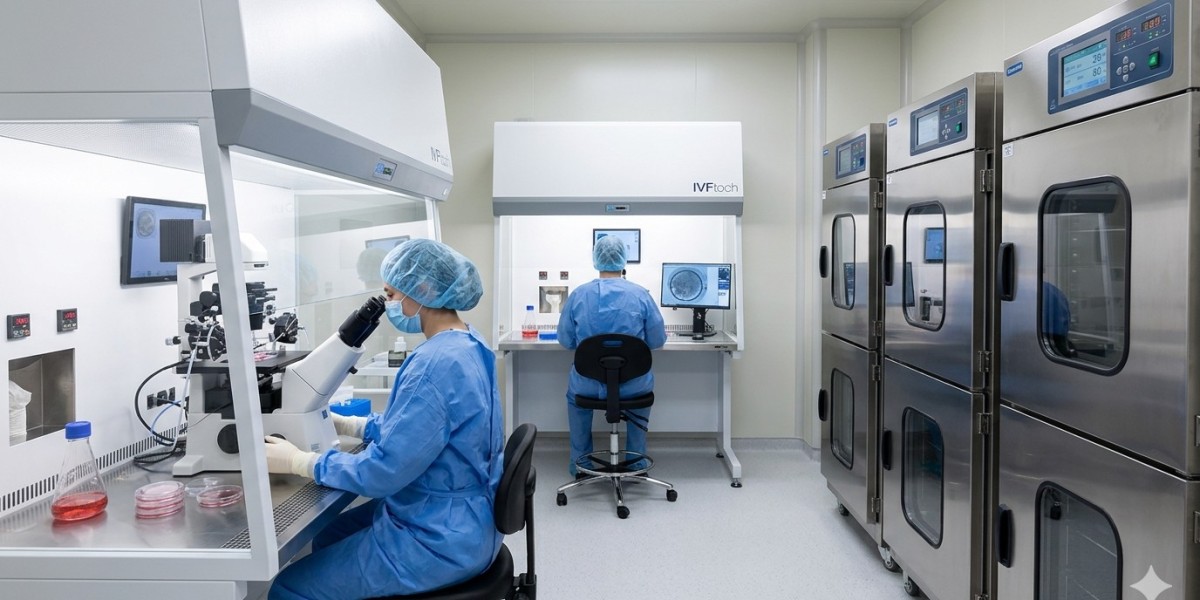
Laminar airflow workstations provide a sterile working environment for handling gametes and embryos.
Features:
- Unidirectional airflow
- HEPA-filtered air
- Stainless steel work surfaces
- UV sterilization options
These workstations are essential for maintaining aseptic conditions during procedures.
IVF Microscopes
Microscopes are among the most critical tools in an IVF lab.
Types Installed:
- Stereo microscopes for initial examination
- Inverted microscopes for embryo observation
- Micromanipulation microscopes for procedures like ICSI
Benefits:
- High magnification and clarity
- Precision in handling cells
- Integration with imaging systems
CO₂ Incubators
Incubators are used to culture embryos under controlled conditions.
Key Features:
- Maintains temperature at 37°C
- Controls CO₂ levels for pH balance
- High humidity environment
- Minimal vibration and disturbance
Advanced incubators ensure optimal embryo development.
Cryopreservation Equipment
Cryopreservation is essential for storing embryos, sperm, and eggs.
Equipment Includes:
- Cryo freezers
- Liquid nitrogen storage tanks
- Cryo storage containers
Advantages:
- Long-term preservation
- Maintains cell viability
- Supports fertility preservation programs
IVF Workstations
IVF workstations combine multiple functions in a single unit.
Features:
- Integrated heating surfaces
- Controlled airflow
- Ergonomic design
- Anti-vibration setup
These workstations enhance efficiency and precision.
Anti-Vibration Tables
Sensitive procedures require stable platforms.
Benefits:
- Eliminates vibrations
- Improves accuracy during micromanipulation
- Essential for high-precision equipment
Anti-vibration tables are crucial for delicate IVF procedures.
Gas Supply Systems
Controlled gas supply is necessary for incubators and workstations.
Components:
- CO₂ gas cylinders
- Nitrogen gas systems
- Gas regulators and pipelines
Proper gas management ensures stable laboratory conditions.
Laboratory Furniture and Modular Panels
An IVF Lab Design Consultant also installs specialized infrastructure.
Includes:
- Modular wall panels
- Cleanroom ceilings
- Anti-bacterial flooring
- Stainless steel furniture
These elements support hygiene and durability.
Temperature-Controlled Equipment
Maintaining temperature is vital for embryo survival.
Equipment:
- Warming plates
- Heated stages
- Temperature-controlled transport units
These tools ensure consistent thermal conditions.
Sterilization Equipment
Sterility is critical in IVF labs.
Equipment Includes:
- Autoclaves
- UV sterilizers
- Air sterilization units
These systems eliminate microbial contamination.
Monitoring and Alarm Systems
Continuous monitoring ensures safety and reliability.
Features:
- Real-time temperature monitoring
- Humidity sensors
- Gas level monitoring
- Alarm systems for deviations
These systems help maintain consistent lab conditions.
Backup Power Systems
Uninterrupted operation is essential.
Components:
- UPS systems
- Backup generators
These ensure that critical equipment continues functioning during power outages.
Water Purification Systems
High-quality water is required for lab processes.
Systems:
- RO (Reverse Osmosis) units
- Deionized water systems
These systems provide contaminant-free water for laboratory use.
Workflow Optimization Equipment
Efficient workflow reduces contamination risks.
Includes:
- Pass boxes
- Airlocks
- Separate zoning equipment
These features support smooth and sterile operations.
Integration of Smart Technologies
Modern IVF labs incorporate advanced technologies.
Innovations:
- Digital monitoring systems
- Automated incubators
- AI-based embryo tracking
These technologies improve accuracy and success rates.
Compliance with Standards
All equipment installed by an IVF Lab Design Consultant complies with:
- ISO cleanroom standards
- NABH guidelines
- ICMR regulations
- International IVF protocols
Compliance ensures safety, quality, and reliability.
Benefits of Professional Equipment Installation
- Improved IVF success rates
- Enhanced patient safety
- Reduced contamination risks
- Efficient lab operations
- Long-term cost savings
Challenges in Equipment Installation
- High initial investment
- Complex integration
- Need for skilled personnel
- Regular maintenance requirements
Despite these challenges, proper equipment installation is essential for successful IVF operations.
Future Trends in IVF Lab Equipment
- AI-driven lab automation
- Advanced imaging technologies
- Energy-efficient systems
- Compact and integrated
These advancements will further enhance IVF lab performance.
Conclusion
The equipment installed by an IVF Lab Design Consultant forms the foundation of a successful IVF laboratory. From air filtration systems and microscopes to incubators and cryopreservation units, each component plays a vital role in maintaining a controlled and sterile environment. Proper selection, installation, and integration of this equipment ensure high success rates and patient safety. For clinics aiming to establish world-class IVF facilities, partnering with experts like Altus Airflow ensures access to advanced technologies, compliance with standards, and reliable performance.
FAQs
1. What equipment does an IVF Lab Design Consultant install?
An IVF Lab Design Consultant installs equipment such as HEPA filtration systems, incubators, microscopes, cryopreservation units, and laminar airflow workstations.
2. Why are incubators important in an IVF Lab Design Consultant setup?
Incubators are essential in an IVF Lab Design Consultant setup because they provide controlled conditions for embryo development.
3. How does an IVF Lab Design Consultant ensure air quality?
An IVF Lab Design Consultant uses HEPA filters, HVAC systems, and laminar airflow units to maintain clean air.
4. What role do microscopes play in an IVF Lab Design Consultant lab?
Microscopes in an IVF Lab Design Consultant lab are used for observing and handling embryos with precision.
5. Does an IVF Lab Design Consultant provide backup systems?
Yes, an IVF Lab Design Consultant installs backup power and monitoring systems to ensure uninterrupted lab operations.
Read Our Previous Blog------>What standards are followed by an IVF Lab Design Company?