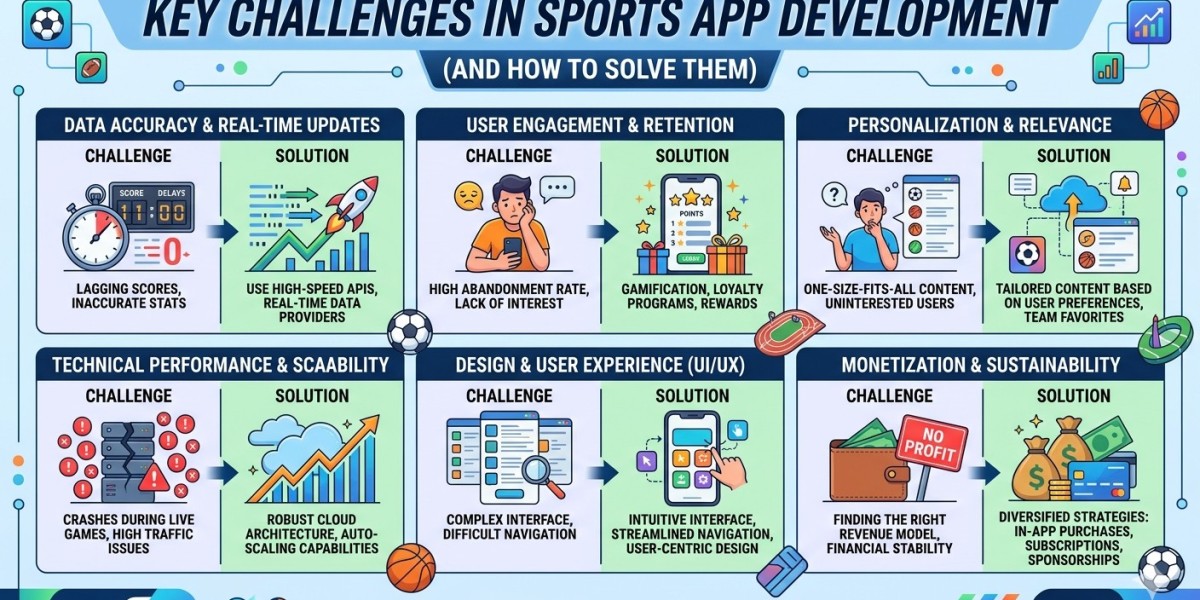

The sports app industry has experienced explosive growth in recent years, driven by increased smartphone adoption, high-speed internet, and evolving user expectations. From live streaming platforms and fantasy sports apps to athlete performance tracking and fan engagement tools, sports applications are transforming the way people interact with sports.
However, building a successful sports app is not without its challenges. Developers and businesses must navigate complex technical requirements, ensure real-time performance, maintain scalability, and deliver seamless user experiences—all while staying within budget and timelines.
In this comprehensive guide, we will explore the key challenges in sports app development and provide practical solutions to overcome them. Whether you're a startup or an enterprise, understanding these challenges will help you build a robust and competitive sports application.
Understanding the Complexity of Sports App Development
Why Sports Apps Are Different
Unlike standard mobile apps, sports apps require:
- Real-time data processing
- High scalability during live events
- Integration with multiple third-party services
- High-performance streaming capabilities
These requirements make sports app development more complex and resource-intensive.
Challenge 1: Real-Time Data Processing
The Problem
Sports apps rely heavily on real-time updates such as:
- Live scores
- Match statistics
- Player performance data
Handling this data accurately and instantly is a major challenge.
Solution
- Use WebSockets for real-time communication
- Implement event-driven architecture
- Leveraging cloud-based real-time databases (eg, Firebase)
- Optimize APIs for low latency
Challenge 2: High Traffic and Scalability
The Problem
Sports apps often experience sudden traffic spikes during live matches or major events, which can lead to:
- Server crashes
- Slow performance
- Poor user experience
Solution
- Use cloud-native infrastructure (AWS, Azure, GCP)
- Implement auto-scaling and load balancing
- Use Content Delivery Networks (CDNs)
- Adopt microservices architecture
Challenge 3: Live Streaming Complexity
The Problem
Live streaming is one of the most demanding features in sports apps. Challenges include:
- Low latency requirements
- High bandwidth usage
- Multi-device compatibility
Solution
- Use adaptive bitrate streaming
- Implement HLS/DASH protocols
- Integrate CDNs for faster delivery
- Optimize video encoding and compression
Challenge 4: Data Security and Privacy
The Problem
Sports apps handle sensitive data such as:
- User information
- Payment details
- Analytics data
Security breaches can damage reputation and lead to legal issues.
Solution
- Implement end-to-end encryption
- Use secure authentication (OAuth, MFA)
- Regularly update security protocols
- Ensure compliance with data protection regulations
Challenge 5: Integration with Third-Party APIs
The Problem
Sports apps rely on multiple external services:
- Sports data providers
- Payment gateways
- Social media platforms
Integration issues can cause delays and inconsistencies.
Solution
- Choose reliable API providers
- Use middleware for seamless integration
- Monitor API performance
- Implement fallback mechanisms
Challenge 6: User Experience and Engagement
The Problem
Users expect intuitive, fast, and engaging apps. Poor UX can lead to:
- Low retention rates
- Negative reviews
- Reduced revenue
Solution
- Focus on user-centric design
- Use AI for personalization
- Implement gamification features
- Conduct usability testing
Challenge 7: Cross-Platform Compatibility
The Problem
Ensuring consistent performance across devices and platforms is challenging.
Solution
- Use cross-platform frameworks (Flutter, React Native)
- Conduct device-specific testing
- Optimize UI for different screen sizes
Challenge 8: Monetization Strategy
The Problem
Balancing revenue generation with user experience is difficult.
Solution
- Use non-intrusive ads
- Offer subscription models
- Implement in-app purchases
- Use data analytics for targeted monetization
Challenge 9: Performance Optimization
The Problem
Sports apps must handle:
- Large data volumes
- High user concurrency
- Real-time updates
Poor performance leads to user dissatisfaction.
Solution
- Optimize backend architecture
- Use caching mechanisms
- Minimize API calls
- Optimize app size and load time
Challenge 10: Continuous Updates and Maintenance
The Problem
Sports apps require frequent updates to:
- Add new features
- Fix bugs
- Improve performance
Solution
- Adopt agile development methodology
- Use CI/CD pipelines
- Monitor app performance
- Collect user feedback
Challenge 11: Licensing and Legal Issues
The Problem
Sports apps may require:
- Broadcasting rights
- Data licensing
- Compliance with regional laws
Solution
- Partner with licensed providers
- Consult legal experts
- Ensure compliance with regulations
Challenge 12: Data Management and Analytics
The Problem
Managing large volumes of data efficiently is complex.
Solution
- Use big data technologies (Hadoop, Spark)
- Implement data warehousing
- Use analytics tools for insights
Best Practices to Overcome Development Challenges
Start with a Clear Strategy
Define goals, target audience, and features.
Build an MVP First
Launch a basic version and iterate based on feedback.
Use Scalable Technologies
Ensure infrastructure can handle growth.
Focus on Security
Protect user data and maintain trust.
Invest in Testing
Ensure quality and performance.
Future Challenges and Opportunities
AI and Machine Learning
While AI enhances apps, it also increases complexity.
AR/VR Integration
Immersive technologies require advanced development.
5G Technology
Enables better performance but requires optimization.
Blockchain
Adds security but increases development effort.
What Businesses Should Do Next
Prioritize User Experience
Deliver value through intuitive design.
Invest in Technology
Adopt modern tools and frameworks.
Plan for Scalability
Prepare for growth and high traffic.
Partner with Experts
Work with experienced developers to overcome challenges.
How JPLoft Helps Overcome Sports App Development Challenges
Navigating the complexities of sports app development requires expertise, strategic planning, and advanced technical capabilities. JPLoft has established itself as a trusted development partner, helping businesses overcome these challenges effectively.
They specialize in scalable building, high-performance sports applications that address real-world challenges such as real-time data processing, live streaming, and high user concurrency.
JPLoft offers comprehensive services, including:
- Requirement analysis and strategy
- Custom app development
- Real-time data integration
- Cloud-based infrastructure setup
- Security implementation
- Ongoing maintenance and support
They leverage cutting-edge technologies such as AI, machine learning, cloud computing, and big data analytics to deliver innovative solutions.
Their team follows agile methodologies, ensuring flexibility, faster delivery, and continuous improvement. By focusing on scalability, performance, and security, they help businesses build reliable and future-ready sports applications .
By partnering with JPLoft, businesses can:
- Overcome technical challenges
- Reduce development risks
- Accelerate time-to-market
- Build high-quality sports apps
They work closely with clients to understand their unique requirements and provide tailored solutions that drive success.
Conclusion
Sports app development presents a wide range of challenges, from real-time data processing and scalability to security and user engagement. However, with the right strategies, technologies, and development approach, these challenges can be effectively addressed.
Businesses that invest in robust infrastructure, prioritize user experience, and adopt modern development practices will be better positioned to succeed in the competitive sports app market.
Partnering with experienced developers like JPLoft can further simplify the process, ensuring that your app is scalable, secure, and capable of delivering exceptional user experiences.
By understanding and addressing these challenges proactively, you can build a sports app that not only meets user expectations but also drives growth and long-term success.