
Imagine an underground command post that has just detected a plume of hostile aerosolized agents drifting toward its perimeter. The ventilation intake could be the difference between mission continuation and mass casualties. In such facilities—military bunkers, nuclear plants, ammunition depots, and strategic command centres—air protection and contamination control are non-negotiable. Choosing the right NBC filtration system is a technical decision that directly affects occupant survivability, mission integrity, and long-term infrastructure resilience.
NBC threats—nuclear fallout particulates, biological aerosols, and chemical vapours—remain real hazards for defence and critical industrial facilities. An NBC filtration system provides engineered air protection by removing particles, adsorbing toxic gases, and enabling positive-pressure sheltering to prevent ingress. Early integration of the correct system is essential for compliance with defence standards and to ensure dependable operation when seconds matter.
What an NBC filtration system is
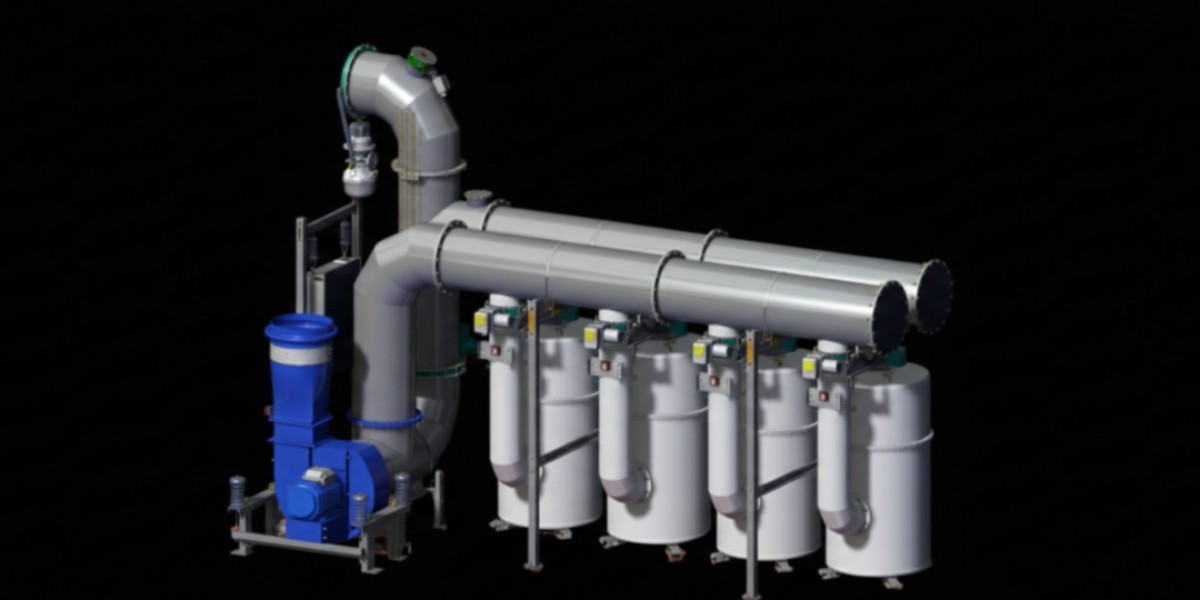
An NBC filtration system is a purpose-designed air-handling train combining particulate filtration, gas adsorption media, pressure control, and monitoring to protect enclosed spaces from nuclear, biological, and chemical hazards. Unlike commercial HVAC, these systems are rated and tested to remove specific threat classes and operate during degraded conditions.
How NBC filtration systems work
Typical systems use staged treatment: pre-filtration to protect downstream components; HEPA or ULPA filters to remove radioactive and biological particles; and activated carbon or impregnated sorbents to adsorb chemical warfare agents and toxic industrial chemicals. A positive-pressure regime prevents contaminated air entry; continuous monitoring and automatic bypass controls switch modes during attack or contamination events.
Air purification and contamination-control principles
Protection relies on capture efficiency, adsorption capacity, and maintaining a controlled airflow pattern. HEPA filters target particles down to 0.3 µm with 99.97% efficiency, critical for radioactive particulates and many biological agents. Activated carbon beds—with impregnations tuned for reactive gases—provide adsorption and catalytic destruction for common chemical threats. Redundancy, staged filtration, and differential-pressure sensing complete the control loop.
Protection against nuclear particles
Radioactive fallout mostly travels as particulate matter attached to dust. HEPA filtration and robust pre-filters trap these particles; system design must consider filter loading, changeout intervals, and radiological decontamination procedures for safe maintenance.
Biological agent filtration
Biological threats require HEPA/ULPA integration, plus careful consideration of ductwork layout to avoid re-entrainment. Systems often include UV-C or HEPA-backed containment for critical spaces and validated testing to demonstrate log-level reductions for aerosolized pathogens.
Chemical warfare agent removal
Chemical protection depends on sorbent selection and bed depth. Activated carbon impregnated with metal salts or catalysts is common to target nerve agents and industrial toxicants. Designers size beds for breakthrough times under worst-case concentrations and include temperature/humidity controls because environmental conditions affect adsorption performance.
Positive pressure protection systems
Positive pressure keeps clean air flowing out through potential leaks rather than allowing contaminated air in. Control systems maintain specified overpressure while monitoring for breaches; automatic makeup air and isolation sequences preserve shelter integrity during extended events.
Multi-stage filtration technologies
Effective NBC systems are modular: coarse pre-filters, HEPA/ULPA arrays, multiple sorbent stages (for different chemical classes), particulate bypass protection, and final safety filters. This modularity simplifies maintenance and enables mission-specific configurations.
Environmental control and occupant safety
Beyond filtration, environmental control systems maintain temperature, humidity, and CO2 removal. Occupant safety also requires clear guidance on shelter capacity versus airflow supply, emergency power provisions, and filtered fresh-air schedules during prolonged events.
Key features to evaluate
HEPA filtration: certified efficiencies and leak-testing protocols.
Activated carbon filtration: impregnation type and bed life metrics.
Toxic gas adsorption: calculated breakthrough times for target agents.
Biological contaminant protection: validated aerosol reduction data.
Radioactive particle filtration: dust-loading and deconability.
Positive pressure operation: control stability and alarm setpoints.
Corrosion-resistant construction: materials for coastal/industrial sites.
Continuous air monitoring compatibility: CBRN sensors and integration.
Low maintenance requirements: ease of access and filter handling.
Long operational life and modular design for upgrades.
Energy-efficient performance and emergency operation provisions.
Applications
NBC filtration systems suit military shelters, defence installations, command and control centres, ammunition storage, nuclear power plants, chemical processing and petrochemical facilities, government security buildings, underground bunkers, emergency shelters, data centres, and other critical industrial sites.
System selection factors
Choose based on a documented threat assessment, required airflow capacity, and filtration efficiency standards (defence or industry-specific). Consider occupancy load, facility size, environmental extremes, installation complexity, monitoring and control integration, maintenance logistics, and lifecycle costs. Focus on engineering value—system reliability, validated performance, and maintainability—rather than upfront cost alone.
Buyer’s guide: what to evaluate
Industry experience and defence engineering credentials.
Manufacturing capabilities and quality control.
Testing and validation procedures, including third-party labs.
Compliance certifications to relevant defence standards.
Customization options for site-specific threats and interfaces.
Technical support, installation assistance, and commissioning.
Maintenance services, spare-part availability, and documentation quality.
Long- Common mistakes to avoid
term reliability and product traceability.
Selecting equipment without a formal threat assessment.
Ignoring detailed airflow calculations and pressure balancing.
Underestimating filter life and sorbent bed sizing.
Choosing solely on price without checking validated performance.
Neglecting maintenance planning and safe filter-change procedures.
Overlooking compliance standards or pressurization needs.
Failing to plan for future expansion or interoperability.
Skipping thorough system testing and commissioning.
For practitioners seeking vendor validation or technical specifications during procurement, reviewing established system portfolios and documented installations can clarify capability and fit. For further technical reference on design and supplier options, see Nbc filtration system india which outlines engineering approaches and services relevant to defence-grade installations.
Conclusion
Selecting the right NBC filtration system requires engineering-led threat assessment, careful sizing of HEPA and activated-carbon stages, robust positive-pressure control, and validated testing to ensure occupant protection. Prioritise systems with proven defence expertise, maintainable modular designs, and integrated monitoring to meet long-term operational needs. A properly specified NBC filtration system protects lives, preserves mission capability, and sustains critical infrastructure under the most severe contamination threats.