
Navigating Intellectual Property in India: The Ultimate Guide to Protecting Your Innovations and Brands
In today's highly competitive, technology-driven global marketplace, innovation is the ultimate currency. Whether you are a tech startup developing a groundbreaking software algorithm, an established manufacturing company engineering a more efficient machine, or a creative entrepreneur building a distinctive brand identity, your ideas hold immense value. However, an idea left unprotected is highly vulnerable to exploitation, duplication, and theft.
This is where Intellectual Property Rights (IPR) come into play. Securing proper legal protection through patents, trademarks, copyrights, and industrial designs transforms your abstract creations into valuable commercial assets.
For businesses operating in or expanding into South Asia, navigating the legal intricacies of the Indian IP ecosystem can feel overwhelming. This comprehensive guide breaks down everything you need to know about Patent Registration, Trademark Registration, and finding the right legal partners to safeguard your business assets.
Part 1: Understanding the Pillars of Intellectual Property Rights (IPR)
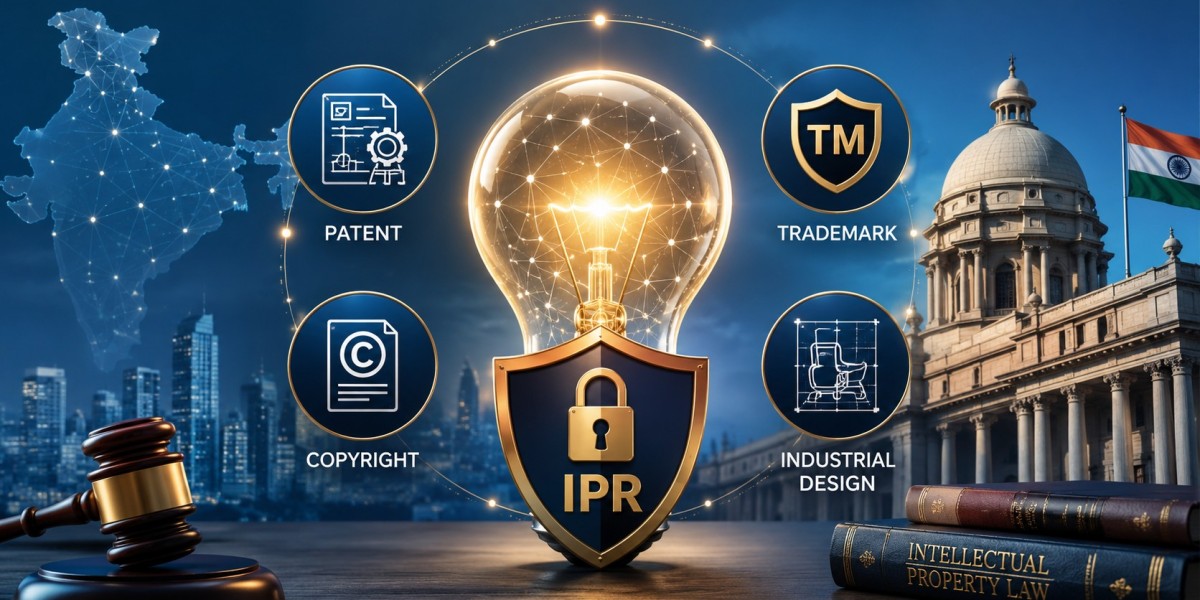
Intellectual Property is an umbrella term that encompasses several distinct legal rights. Each type of protection serves a different purpose and safeguards a specific form of human creativity. To build a robust IP strategy, you must first understand what these different rights protect.
1. Patent Registration
A patent is a legal monopoly granted by the government for a limited period (typically 20 years from the filing date) in exchange for the full public disclosure of an invention. It grants the patentee the exclusive right to prevent others from making, using, selling, or importing the patented invention without permission.
- What is patentable? In India, an invention must meet three strict criteria: Novelty (it must be completely new), Inventive Step (it must not be obvious to a person skilled in the art), and Industrial Applicability (it must be capable of being used or made in an industry).
2. Trademark Registration
A trademark is a unique visual symbol, which may be a word, signature, name, device, label, numerals, or combination of colors used by an enterprise to distinguish its goods or services from those of other undertakings. It is the ultimate tool for protecting your brand registration and ensuring that consumers can identify your products without confusion.
3. Copyright Registration
Copyright Registration protects original expressions of ideas in the form of literary, dramatic, musical, artistic, cinematographic films, and sound recordings. It is important to note that copyright protects the expression of the idea, not the idea itself. For instance, while a software algorithm's functional mechanics are protected by a patent, the actual written source code can be protected by copyright.
4. Industrial Design Registration
Industrial Design Registration protects only the aesthetic, visual characteristics of an object—such as its shape, configuration, pattern, ornament, or composition of lines or colors applied to a finished article. It does not protect any functional or structural elements of the product; its sole focus is on how the product looks to the human eye.
Part 2: The Patent Journey in India: From Conception to Grant
Patent filing in India is a highly technical and legally rigorous procedure governed by the Indian Patents Act, 1970. Because patenting requires both scientific acumen and precise legal drafting, most innovators rely heavily on patent agents in india or specialized patent attorneys in india to navigate the maze.
The typical patent registration process follows several critical steps:
Step 1: Patentability Search
Before spending time and money filing an application, it is vital to conduct a comprehensive prior art search. This involves scanning global patent databases and scientific literature to ensure your invention is genuinely new. Missing a piece of existing prior art can lead to an expensive rejection later in the cycle.
Step 2: Drafting the Patent Specification
This is the most crucial step of the entire process. A patent document includes a technical description and "claims," which define the exact legal boundaries of your invention. You can file a Provisional Specification if your invention is still in the development phase (granting you an initial 12-month priority date window) or a Complete Specification if the invention is fully finalized.
Step 3: Filing the Application
The application is formally submitted to the Indian Patent Office (IPO) through online portals or physical offices located in Kolkata, Delhi, Mumbai, or Chennai.
Step 4: Publication and Examination
Every filed patent is published in the official journal 18 months after the filing date (or earlier if an expedited publication is requested). Following publication, the applicant must formally file a Request for Examination (RFE). An examiner will then scrutinize the application and issue a First Examination Report (FER), detailing any legal or technical objections.
Step 5: Handling Objections and Grant
The applicant, usually through their chosen patent lawyers in india, must respond to the FER within a strict timeframe (typically six months). If the examiner is satisfied with the response and any subsequent oral hearings, the patent is officially granted.
Part 3: The Trademark Ecosystem: Securing Your Brand Identity
Your brand is your business's reputation, encapsulated in a logo, slogan, or name. Without proper trademark protection, copycats can easily trade off your hard work, diluting your brand value and stealing your customers.
The Trademark Registration Process
The transition from a simple business name to a legally protected asset involves a structured trademark registration process. First, a deep search across the comprehensive Indian Trademark Registry database is vital to confirm that your proposed brand name or logo is not identical or confusingly similar to an existing registered mark within your industry class. Next, applications are primarily processed via trademark registration online systems, which dynamically speed up initial administrative processing.
Once filed, the Trademark Registrar reviews the application to ensure it complies with absolute grounds for refusal (e.g., being overly descriptive or generic) and relative grounds (conflict with existing marks). If approved, the trademark is published in the Trademark Journal, which opens a strict 4-month window allowing any member of the public to file a formal opposition. Finally, if no oppositions are filed, or if you successfully defend against an opposition, your trademark is registered, and a certificate is issued. A trademark is valid for 10 years and can be renewed indefinitely.
Costs and Practicalities
Modern systems have made it simpler to handle online trademark registration workflows seamlessly. If you choose an established trademark registration company to manage your portfolio, they will guide you through the variable structural components of government trademark registration fees. These fees vary depending on whether the applicant files as an individual, a startup, a small enterprise (MSME), or a large corporate entity.
Part 4: Choosing the Right IP Partner in India
Because intellectual property law sits squarely at the intersection of complex science, business strategy, and rigorous legal frameworks, attempting to handle filings without professional assistance is highly risky. A single poorly worded claim in a patent application can make it remarkably easy for a competitor to design around your invention.
When looking to secure your assets, you will encounter various types of service professionals:
- Patent Companies & Patent Service Providers in India: These specialized entities offer end-to-end management of corporate IP portfolios. They often specialize in large-scale data analytics, competitive intelligence landscaping, and multi-jurisdictional filings.
- Patent Agencies in India & Patent Consultants in India: These organizations focus primarily on helping independent inventors, academic labs, and mid-sized enterprises assess patentability, navigate technical filings, and manage routine compliance workflows.
- IPR Law Firms in India: Full-service legal firms handle both transactional IP work (like filings and licensing) and aggressive litigation. If a competitor infringes on your rights, you will need the strategic support of the best ipr law firms in india to file a lawsuit and seek damages.
- Best IP Lawyers in India: These seasoned court litigators specialize in arguing high-stakes IP disputes before the High Courts and commercial legal divisions, defending your market share against infringers.
- Trademark Lawyer in India: These specialized legal counsels focus heavily on trademark opposition proceedings, brand enforcement actions, domain name disputes, and comprehensive anti-counterfeiting strategies.
Part 5: Comparing Patents and Trademarks
To maximize your intellectual property strategy, it helps to understand how patents and trademarks compare across key business metrics. While a patent primarily protects functional, technical inventions and processes for a non-renewable term of 20 years based on novelty and industrial application, a trademark protects brand identity, logos, and market recognition. Unlike patents, a trademark is valid for a 10-year period but can be renewed indefinitely every 10 years, focusing primarily on distinctiveness and avoiding market confusion.
Both applications are overseen by the Controller General of Patents, Designs & Trademarks in India. However, their timelines vary significantly; a patent application can take anywhere from 2 to 4 years (though it can be expedited for startups and MSMEs), whereas a straightforward trademark registration might be completed in 6 to 12 months if it faces no examination or third-party opposition hurdles.
Part 6: Formulating a Modern Corporate IP Strategy
Securing a patent or trademark is not just a legal checkbox; it is a core business driver. Companies must approach IP with a clear, commercial mindset:
- Align IP with Business Goals: Do not spend money patenting ideas that do not align with your 5-year product roadmap. Focus your financial resources on protecting core technologies that provide a clear competitive advantage.
- Enforce Your Rights Dynamically: A patent or trademark is only as valuable as your willingness to defend it. Monitor the market actively for infringers and send cease-and-desist letters promptly when violations occur.
- Leverage Your IP for Revenue: Intellectual property can be monetized directly through smart licensing agreements, joint ventures, or by using it as collateral to secure corporate financing.
- Prioritize Clear Confidentiality: Implement non-disclosure agreements (NDAs) with all employees, contractors, and vendors before sharing any unpatented technological secrets. Public disclosure before filing an application can instantly destroy your invention's novelty.
By partnering with an experienced patent service provider or utilizing trustworthy digital frameworks, you can confidently navigate the legal landscape, minimize compliance risks, and ensure that your creative assets remain safe and exclusively yours.