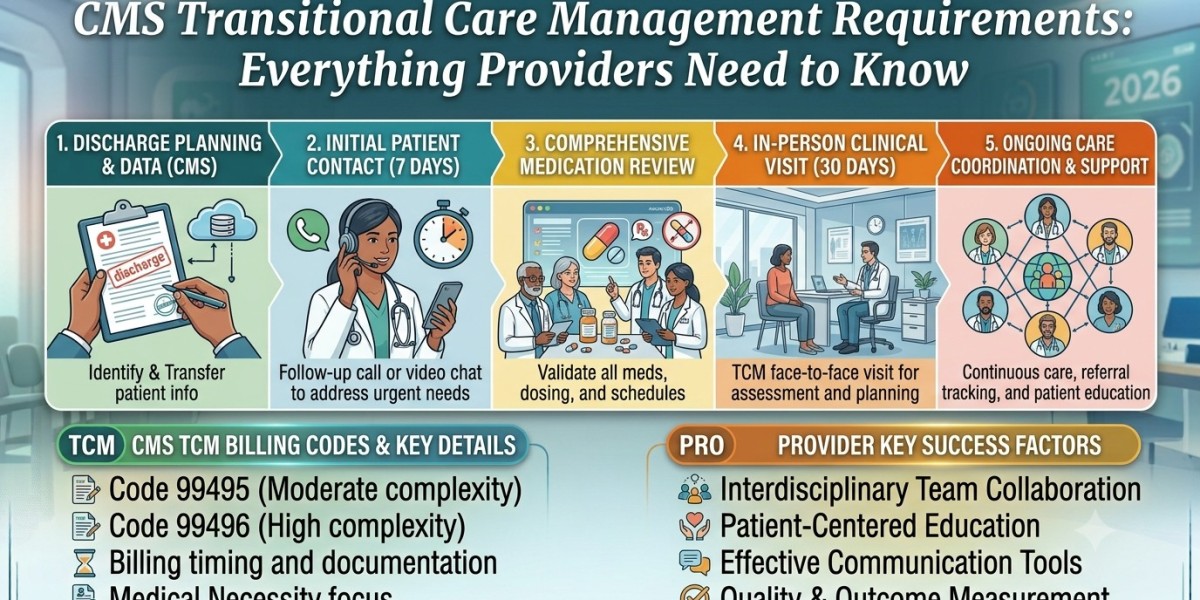

The healthcare landscape is constantly evolving, and one of the most significant advancements in recent years is the implementation of CMS Transitional Care Management (TCM) services. As hospitals and physicians focus on improving patient outcomes and reducing readmissions, understanding and properly implementing CMS transitional care management requirements becomes critical. In this comprehensive guide, we will break down everything providers need to know about CMS TCM, including eligibility, documentation, billing, and best practices to ensure compliance and maximize reimbursements.
What Is CMS Transitional Care Management?
CMS Transitional Care Management refers to a set of services provided to patients as they transition from an inpatient hospital setting (including skilled nursing facilities or rehabilitation centers) back to their home or community. The goal of TCM is to ensure continuity of care, reduce the risk of medical complications, and prevent unnecessary readmissions, which can be costly and detrimental to patient health.
CMS introduced TCM codes in 2013 to incentivize providers for the work involved in managing these complex transitions. These codes cover both medical and psychosocial needs of patients during the critical 30-day post-discharge period.
Who Is Eligible for CMS Transitional Care Management?
To qualify for CMS transitional care management services, the following criteria must be met:
The patient must be discharged from an inpatient hospital setting, skilled nursing facility, or certain other qualifying facilities.
The transition is to the patient’s home, domiciliary, rest home, or assisted living facility.
The patient must require moderate or high complexity medical decision-making during the transition.
Services must be provided within 30 days of discharge.
It’s important to note that TCM services are intended for patients with medical or psychosocial complexities that require additional management and coordination.
Key CMS Transitional Care Management Requirements
Healthcare providers must adhere to several specific requirements when delivering and billing for TCM services. These include:
Timely Contact with the Patient
Within two business days of discharge, the provider (or clinical staff under supervision) must make direct contact with the patient or their caregiver. This initial communication can be by telephone, email, or face-to-face, with the goal of assessing the patient’s status and addressing immediate needs.
Face-to-Face Visit
A face-to-face visit with the patient is required within a certain timeframe post-discharge, depending on the complexity of care needed:
High-complexity decision making: Visit must occur within 7 days.
Moderate-complexity decision making: Visit must occur within 14 days.
The visit should include a thorough assessment, medication reconciliation, and care plan adjustments as needed.
Medical Decision-Making Complexity
The level of complexity—moderate or high—determines the applicable billing code. Providers must document the complexity of medical decision-making involved, which encompasses the amount and complexity of data reviewed, risk of complications, and the extent of management required.
Non-Face-to-Face Services
In addition to in-person care, TCM includes various non-face-to-face services provided by the physician, non-physician practitioner, or clinical staff. These services may include:
Reviewing discharge information
Performing medication reconciliation
Arranging follow-up with other providers and services
Educating the patient or caregiver on self-management
Assessing and addressing social determinants of health
Billing and Coding for CMS Transitional Care Management
There are two primary CPT codes for TCM services:
99495: Moderate complexity, requires patient contact within 2 business days, face-to-face visit within 14 days.
99496: High complexity, requires patient contact within 2 business days, face-to-face visit within 7 days.
To bill for CMS transitional care management, all requirements must be met and thoroughly documented. Only one provider may bill for TCM per patient per 30-day period, and TCM cannot be billed during the same period as certain other care management services (such as chronic care management).
Documentation Essentials
Accurate and detailed documentation is crucial for compliance and reimbursement. Providers should ensure their records include:
Date and method of initial patient contact
Date of face-to-face visit
Detailed summary of medical decision-making complexity
Description of non-face-to-face services provided
Medication reconciliation details
Updates to care plan and referrals arranged
Benefits of Proper CMS Transitional Care Management Implementation
Meeting CMS transitional care management requirements delivers significant benefits to both patients and providers. These include:
Reduced hospital readmissions: Effective TCM helps identify and address potential issues before they escalate.
Improved patient satisfaction: Patients feel more supported and confident in managing their health post-discharge.
Enhanced care coordination: TCM fosters communication among the care team, specialists, and community resources.
Increased revenue: Proper billing for TCM services allows providers to capture appropriate reimbursement for their efforts.
Common Challenges and How to Overcome Them
Many providers face hurdles when implementing CMS transitional care management, such as:
Lack of staff training on requirements and workflows
Difficulty tracking patient discharges and post-discharge timelines
Incomplete documentation leading to claim denials
To overcome these challenges, consider the following strategies:
Invest in staff education and training on TCM requirements
Utilize technology and EHR systems to flag eligible discharges and automate reminders
Implement standardized documentation templates to ensure all elements are captured
Best Practices for CMS Transitional Care Management Success
To excel in CMS transitional care management, providers should:
Establish clear protocols for identifying eligible patients at discharge
Designate a care coordinator or team to oversee TCM processes
Foster open communication with patients and caregivers
Collaborate with community resources for seamless care transitions
Regularly review and update policies in line with the latest CMS guidance
The Future of Transitional Care Management
As the healthcare industry increasingly prioritizes value-based care and outcomes, the importance of CMS transitional care management will only grow. Providers who invest in robust TCM programs stand to enhance patient outcomes, reduce costs, and thrive under evolving payment models.
Conclusion
CMS transitional care management requirements provide a framework for ensuring patients receive the support they need during vulnerable transitions from hospital to home. By understanding eligibility, adhering to documentation standards, and following best practices, providers can maximize both patient outcomes and financial performance. Stay informed about CMS updates and leverage technology to streamline your TCM processes for optimal results.
If you’re looking to improve your transitional care management program, adopting the latest tools and staying up-to-date on CMS requirements will help you deliver better care and achieve lasting success.