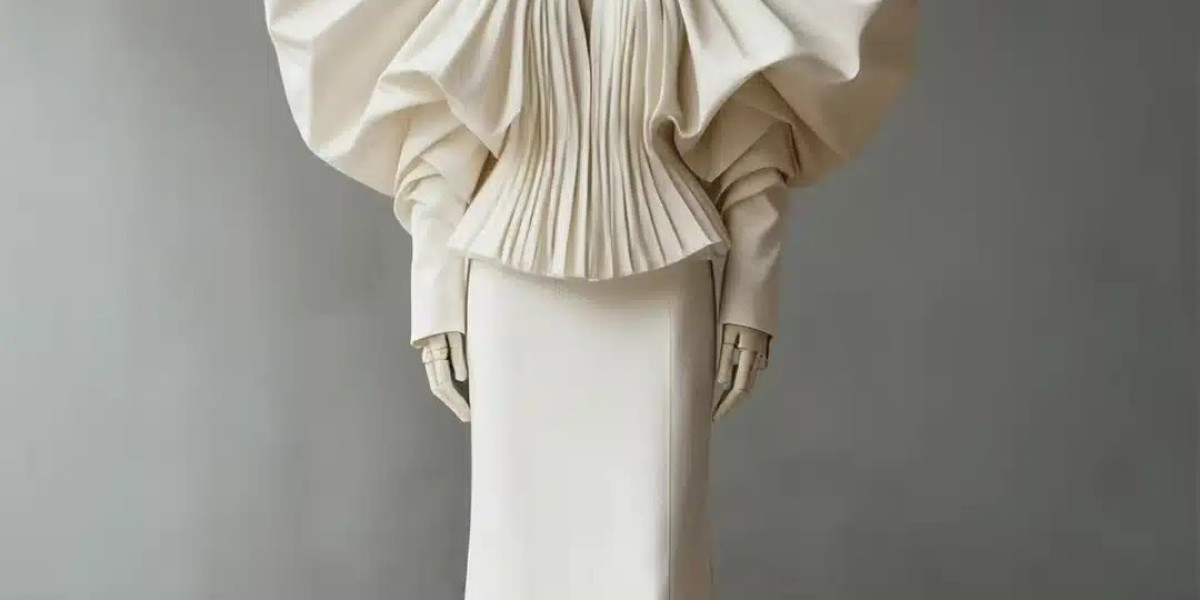

A haute couture dress isn't just clothing, it's hundreds of hours of hand-stitched craftsmanship wrapped around your exact measurements. If you've ever wondered why a single gown can cost as much as a car, the answer lies in a tradition most people never get to see up close.
I've spent over a decade working alongside workshops, tailors, and formalwear clients who wanted something the racks at a department store could never give them. And every single time, the question is the same: what actually separates a haute couture dress from "just a nice dress"? Let's break it down properly.
What Is a Haute Couture Dress, Really?
The term "haute couture" is French for "high sewing," and it's not a marketing buzzword, it's a legally protected designation in France, regulated by the Fédération de la Haute Couture et de la Mode. Only a small handful of fashion houses are permitted to use the label, and they have to meet strict criteria: made-to-order for private clients, at least one fitting in person, and produced largely by hand in a registered atelier.
Outside of Paris, the phrase is used more broadly to describe garments built with that same philosophy, bespoke construction, exceptional fabric, and a level of finishing you simply don't get from ready-to-wear. A haute couture gown, in that sense, is designed around one person, not a size chart.
How Is It Different From Prêt-à-Porter (Ready-to-Wear)?
Ready-to-wear is produced in batches, in standard sizes, using patterns that fit an "average" body. Couture flips that entirely, the garment is built from a single client's measurements, often through multiple muslin (toile) fittings before the final fabric is even cut.
Think of it the way a bespoke Savile Row suit compares to something off a rack. Same category, completely different process.
Why Do Haute Couture Dresses Cost So Much?
Labor. Real, human, hand-stitched labor. A single embroidered bodice can take a skilled artisan 100+ hours to complete. Add in luxury fabrics like silk gazar, Chantilly lace, or hand-beaded tulle, and you understand why couture pricing starts where ready-to-wear pricing ends.
The Anatomy of a True Haute Couture Gown
Not everything labeled "couture" online actually earns that name. Here's what genuinely sets a couture-level gown apart, piece by piece.
Fabric Selection and Sourcing
Couture houses often work with mills that have supplied fashion for generations, some silk and lace producers in France and Italy have been operating since the 1800s. The fabric isn't just beautiful; it's chosen specifically for how it will move on one particular body.
Hand-Finishing Techniques
French seams, hand-rolled hems, boned bodices, internal corsetry, these details are invisible from the outside but are exactly why a couture dress fits like a second skin and holds its shape for decades.
The Fitting Process
A proper couture commission typically involves two to four fittings:
- Initial consultation and measurements: discussing silhouette, fabric, and occasion
- First toile fitting: a muslin mockup to test structure and proportion
- Second fitting in actual fabric: adjusting drape, length, and construction
- Final fitting: confirming every seam, hem, and closure before delivery
This is the exact process we follow when clients come to us for custom couture dresses. It's slower than off-the-rack shopping, but it's the only way to guarantee a fit that feels effortless.
Custom Couture Dresses vs. Off-the-Rack Formal Wear
I get asked this constantly by brides, gala guests, and pageant clients alike: "Is custom really worth it over buying something already made?"
Here's my honest, experience-based answer, it depends on what you're solving for.
When Off-the-Rack Makes Sense
If you need something quickly, on a tighter budget, and your body fits standard sizing reasonably well, ready-to-wear formal dresses can absolutely work. There's no shame in that.
When Custom Couture Is the Better Investment
If you've ever altered a dress and still felt like it wasn't quite right, pulling at the bust, gaping at the waist, dragging at the hem, that's the exact problem custom solves. A custom couture gown is built around your body from the first stitch, not adjusted after the fact.
We regularly work with clients who tried three or four boutiques before coming to us for a made-to-measure gown, simply because nothing fit their proportions or vision. If that sounds familiar, a consultation for a custom piece is usually the faster path to "the one," not the slower one.
Choosing the Right Women's Formal Wear Dress for Your Occasion
Not every formal event calls for the same silhouette, and this is where a lot of women get stuck scrolling endlessly online.
Red Carpet and Gala Events
Bold silhouettes, dramatic trains, and structured bodices tend to photograph best under event lighting. A mermaid or fishtail cut with a fitted waist creates the kind of shape that reads well in photos.
Black-Tie Weddings and Formal Receptions
Softer, floor-length gowns in silk or chiffon strike the right balance, elegant without competing with the bride. A-line and column silhouettes are consistently popular for this reason.
Award Ceremonies and Corporate Formals
Clean lines, minimal embellishment, and tailored structure communicate polish without overwhelming the room. This is where a well-cut evening gown does more work than heavy embellishment ever could.
What Fabric Works Best for a Formal Evening Gown?
Silk satin, crepe, and organza remain the industry standard because they hold structure while still moving beautifully. Velvet is a strong seasonal choice for winter formals, offering warmth and richness without sacrificing elegance.
Women's Evening Gowns: Timeless Styles That Never Go Out of Fashion
Trends shift every season, but certain silhouettes have stayed relevant for decades because they flatter a wide range of body types.
The A-Line Gown
Forgiving, elegant, and universally flattering, this is the silhouette most stylists recommend for first-time couture clients who aren't sure what suits them yet.
The Mermaid Silhouette
Fitted through the bodice and hip, flaring dramatically at the knee. It demands precision tailoring, which is exactly why it's rarely successful off-the-rack.
The Column or Sheath Gown
Sleek, minimal, and often the go-to for clients who want maximum impact with minimal embellishment, think Old Hollywood glamour.
How Do I Know Which Gown Silhouette Suits My Body?
The honest answer is that photos and mannequins can only tell you so much. A fitting on your actual body, even a preliminary one, reveals far more than browsing lookbooks ever will. This is exactly why we recommend a short consultation before committing to a design.
How to Commission a Custom Haute Couture Dress: Step by Step
If you're considering going the custom route, here's roughly how the process unfolds from first inquiry to final delivery.
Step 1: Define the Occasion and Vision
Bring reference images, but also be honest about what you want to feel like wearing it, confident, romantic, powerful. That emotional direction shapes design decisions more than people expect.
Step 2: Fabric and Design Consultation
This is where an experienced designer helps translate vague ideas ("something elegant but not boring") into an actual technical design.
Step 3: Measurements and Canvas Fitting
Precise measurements are taken, and a muslin mockup is constructed to test fit and proportion before any expensive fabric is cut.
Step 4: Construction and Fittings
The gown is built in stages, with fittings at each major milestone to catch and correct anything before it's final.
Step 5: Final Fitting and Delivery
The finished piece is fitted one last time, pressed, and prepared for the big day.
If this process feels intimidating, it shouldn't. A good atelier walks you through every stage, and most clients tell us the fittings themselves become one of the most enjoyable parts of preparing for their event.
Ready to Own Something Made Only for You?
A haute couture dress isn't about status, it's about walking into a room in something that was built, stitch by stitch, around your actual body and your actual moment. That's a feeling ready-to-wear simply can't replicate.
If you're planning a wedding, gala, red carpet appearance, or any formal occasion where you want to feel unmistakably yourself, a custom couture gown is worth exploring. Book a consultation with our design team, share your vision, and let's build a dress that fits like it was always meant to be yours, because it was.
Frequently Asked Questions
Q: How long does it take to make a haute couture dress? A: Depending on complexity, a custom couture gown typically takes anywhere from 6 to 16 weeks, factoring in fittings and hand-finishing time.
Q: Is haute couture the same as bespoke or made-to-measure? A: They're closely related but not identical. True haute couture follows strict French guild standards, while "bespoke" and "made-to-measure" describe the same custom-fit philosophy applied more broadly across the industry.
Q: How much does a custom couture dress cost compared to designer ready-to-wear? A: Pricing varies widely by fabric, embellishment, and construction hours, but custom couture generally starts where premium ready-to-wear ends, reflecting the hand-labor involved.
Q: Can I bring my own design idea for a custom gown? A: Absolutely, most clients arrive with inspiration images or a rough concept, and the design team refines it into a wearable, technically sound gown.
Q: How many fittings are needed for a custom evening gown? A: Most gowns require two to four fittings to achieve a precise, couture-level fit.
Q: What's the best fabric for a formal evening gown? A: Silk satin, crepe, and organza are industry favorites for structure and movement, while velvet works beautifully for winter formal events .
Q: Is custom couture worth it for a one-time event? A: Many clients find that the fit, comfort, and confidence a custom gown provides make it worth the investment, even for a single occasion, and the craftsmanship often means the piece can be re-worn or altered for future events.