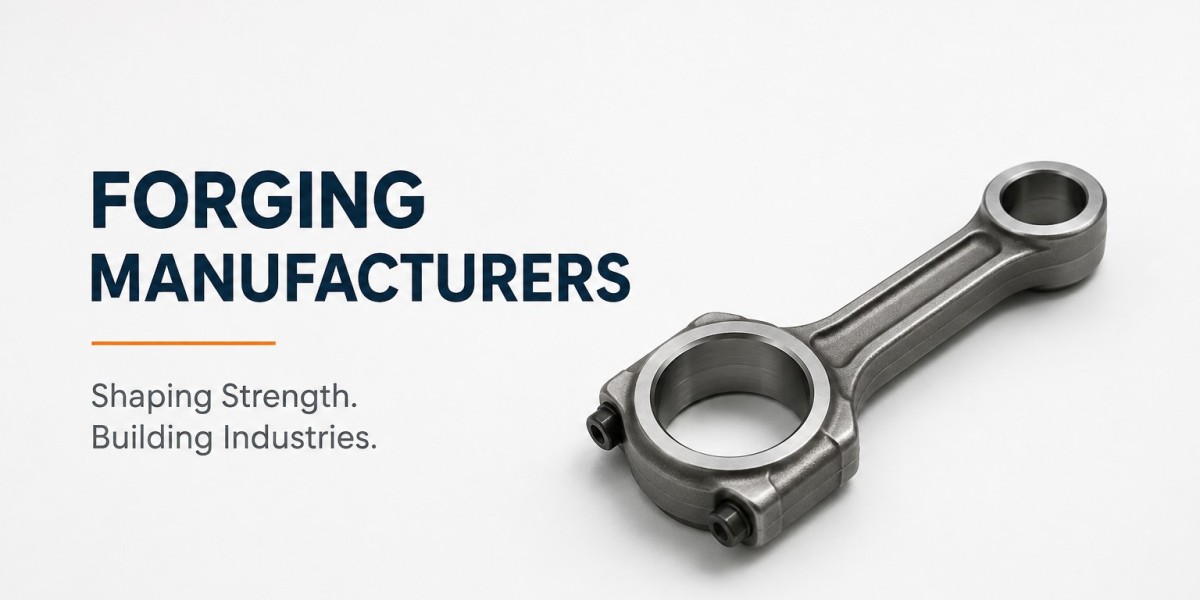

When you think about the strength behind everyday machines, vehicles, and tools, there's a good chance forging manufacturers played a part in making it happen. From aerospace parts to automotive components, forging manufacturers are the backbone of industries that demand strength, durability, and precision. But what exactly do they do, and why are they so important? Let's break it down in simple terms.
What Is Forging, and Why Does It Matter?
Forging is a manufacturing process where metal is shaped using compressive forces, typically through hammering, pressing, or rolling. Unlike casting, which involves pouring liquid metal into a mold, forging works the metal while it's solid (though often heated), aligning its internal grain structure. This process results in parts that are stronger, more durable, and better able to withstand stress and impact.
Forging manufacturers are the companies and facilities that specialize in this process, transforming raw metal into finished or semi-finished components used across countless industries.
The Core Role of Forging Manufacturers
Forging manufacturers do far more than just shape metal. Their role includes:
1. Designing for Strength and Durability:
Before any forging begins, manufacturers work closely with engineers to design components that can handle specific loads, pressures, and environmental conditions. This step ensures the final product performs reliably in real-world use.
2. Selecting the Right Materials:
Different applications call for different metals: steel, aluminum, titanium, and various alloys each offer unique properties. Forging manufacturers help determine which material best suits a project's strength, weight, and cost requirements.
3. Precision Shaping and Production:
Using techniques like open-die forging, closed-die forging, and rolled ring forging, manufacturers shape metal into precise forms. This precision reduces waste and ensures consistency across large production runs.
4. Quality Testing and Assurance:
Forged parts often go into critical applications like aircraft engines, industrial machinery, or heavy vehicles so quality control is essential. Manufacturers test for strength, tolerance, and structural integrity before parts ever leave the facility.
5. Supporting Multiple Industries:
Forging manufacturers serve a wide range of sectors, including automotive, aerospace, oil and gas, construction, and defense. Their ability to produce durable, high-performance parts makes them indispensable across the industrial landscape.
Why Industries Rely on Forging Manufacturers
Industries choose forged components over cast or machined alternatives for several key reasons:
Superior strength-to-weight ratio – Forged parts can handle more stress without added bulk.
Enhanced durability – The grain structure created during forging improves fatigue resistance.
Reliability under pressure – Critical components, like crankshafts or turbine blades, need to perform consistently under extreme conditions.
Cost efficiency at scale – While initial tooling can be costly, forging is highly efficient for large production volumes.
This combination of strength and reliability is why forging remains a preferred method in industries where failure isn't an option.
Choosing the Right Forging Manufacturer
Not all forging manufacturers offer the same level of expertise or capability. When selecting one, it's worth considering:
Their experience with your specific industry
Available forging methods and equipment
Quality certifications (such as ISO standards)
Ability to handle custom or complex designs
Turnaround time and production capacity
Partnering with the right manufacturer can make a significant difference in product performance, cost control, and long-term reliability.
Conclusion
Forging manufacturers play a vital, often overlooked role in industries that depend on strength and precision. By combining material science, engineering expertise, and advanced shaping techniques, they produce components capable of withstanding demanding conditions from car engines to aircraft parts. Understanding their role helps businesses make smarter decisions when sourcing critical components, ensuring both performance and long-term value.
FAQs
1. What industries use forging manufacturers the most?
Automotive, aerospace, oil and gas, construction, and defense industries rely heavily on forged components for their strength and durability.
2. How is forging different from casting?
Forging shapes solid (often heated) metal using pressure, while casting pours liquid metal into a mold. Forging generally produces stronger, more durable parts.
3. What materials do forging manufacturers typically work with?
Common materials include steel, aluminum, titanium, and various metal alloys, chosen based on the application's requirements.
4. Why are forged parts considered stronger than cast parts?
Forging aligns the metal's internal grain structure, improving strength and resistance to stress, impact, and fatigue.
5. How do I choose a reliable forging manufacturer?
Look for industry experience, quality certifications, available forging techniques, and their ability to handle custom designs and production scale.