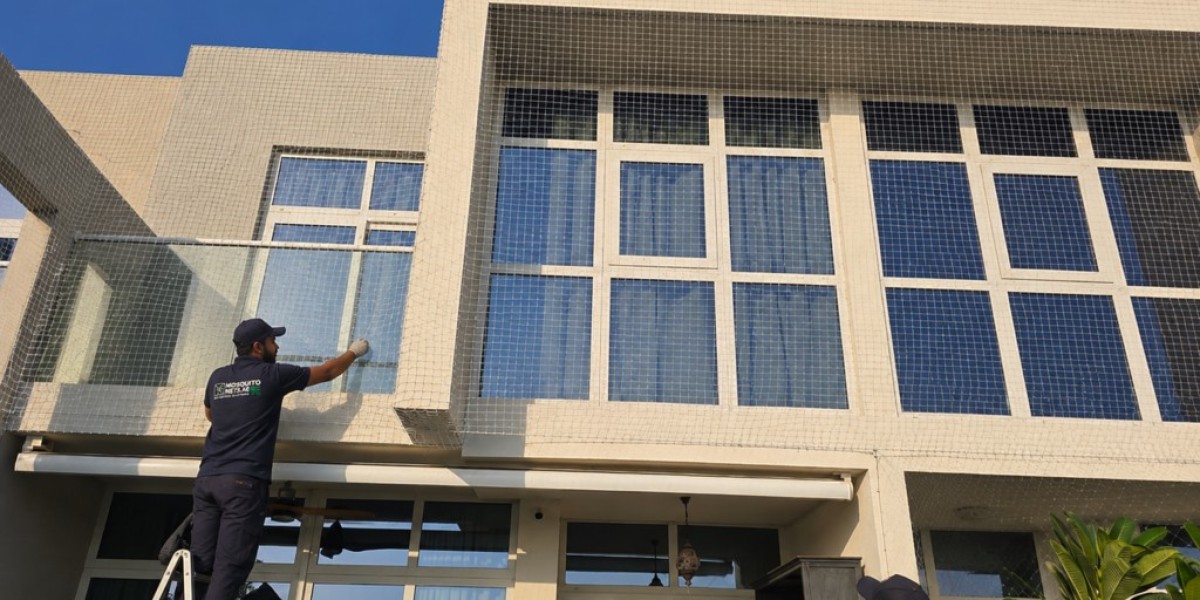

Birds can become a persistent concern when they regularly enter balconies, rooftops, terraces, windows, courtyards, and other open areas. Although birds are a natural part of the environment, repeated activity around buildings can create cleanliness and maintenance challenges. Droppings, feathers, nesting materials, and debris may accumulate quickly, making affected spaces difficult to keep clean. Bird netting installation provides a practical solution by creating a physical barrier that helps prevent birds from entering protected areas.
Effective Bird Entry Prevention
Bird netting works by covering open sections where birds commonly enter. The mesh is securely fixed around the required area, creating a barrier that prevents pigeons and other birds from flying into the protected space. When professionally installed, the system can provide consistent protection while allowing airflow and natural light to continue.
This approach is particularly useful for properties where birds repeatedly return to the same location. For indoor protection from mosquitoes and other flying insects, a mosquito net for doors can provide a practical barrier while still allowing easy access and ventilation. Properly fitted door nets can help reduce insect entry without requiring doors to remain closed throughout the day.
Protecting Balconies From Pigeons
Balconies are among the most common areas affected by bird intrusion. Their open design, railings, ledges, and sheltered corners can provide birds with convenient resting and nesting locations.
Installing netting across a balcony opening can help prevent pigeons from entering. The system can be customized according to the balcony's size and structure, allowing the protected space to remain useful for residents.
Properly fitted netting can cover the required opening without unnecessarily blocking ventilation or natural daylight. This makes it a suitable option for apartments, villas, and other residential properties.
Bird Netting for Rooftops and Terraces
Rooftops and terraces can also attract birds because of their elevated position and sheltered areas. Pigeons may gather around parapets, air-conditioning units, pipes, ventilation structures, and equipment.
Bird netting can be installed around selected areas to limit access and reduce repeated bird activity. Before installation, the property can be assessed to identify common entry routes and determine which sections require protection.
Customized coverage is particularly helpful for properties with complex layouts. The net can be installed around existing structures while maintaining suitable access for maintenance.
Durable Materials for Outdoor Use
Bird netting installed outdoors must withstand sunlight, heat, wind, dust, and moisture. Choosing a strong material designed specifically for exterior applications is therefore important.
UV-resistant netting can help reduce deterioration caused by prolonged exposure to sunlight. Durable mesh can also maintain its protective function when exposed to regular outdoor conditions.
Material selection should consider the location, level of exposure, size of the area, and type of bird activity. Choosing appropriate materials can contribute to better long-term performance.
Importance of Professional Installation
The effectiveness of bird netting depends greatly on how it is installed. Even a high-quality net may fail to provide reliable protection if gaps are left around the edges or if the fixing points are inadequate.
Professional installers can inspect the area before beginning the work. They can identify bird entry points, measure the space accurately, and determine the most suitable locations for securing the net.
Special attention should be given to corners, edges, pipes, railings, and other structural features. Proper installation helps create a continuous barrier and reduces the possibility of birds finding openings.
Maintaining Cleaner Outdoor Areas
Repeated bird activity can make outdoor areas difficult to maintain. Droppings may accumulate on floors, walls, railings, windows, and equipment, while feathers and nesting materials can collect in corners and drainage areas.
By preventing birds from entering, netting can help reduce the amount of debris deposited inside the protected space. This can make balconies, terraces, and other outdoor areas easier to clean and maintain.
Reducing nesting activity can also help property owners avoid repeated cleaning and removal work.
Suitable for Residential and Commercial Properties
Bird netting can be used across a variety of residential and commercial properties. Homeowners may install it around balconies, windows, terraces, and courtyards, while property managers can protect shared spaces and building exteriors.
Commercial buildings such as warehouses, offices, restaurants, factories, and retail properties may also require bird exclusion around open sections. Customized netting can be designed according to the structure and specific protection requirements of each property.
A Practical Long-Term Solution
Bird netting provides continuous physical protection once correctly installed. Unlike temporary deterrents that may require frequent repositioning, a fixed net remains in place and restricts access to the protected area.
The system can also be customized to cover only the areas experiencing bird intrusion. This makes it a practical option for properties with specific problem locations rather than requiring unnecessary coverage.
Conclusion
Bird netting installation offers an effective way to prevent birds from entering balconies, rooftops, terraces, windows, and other vulnerable spaces. By creating a secure physical barrier, it can help reduce nesting, droppings, feathers, and unwanted bird activity.
With durable materials, accurate measurements, secure fixing, and professional installation, bird netting can provide dependable long-term protection. It is a practical solution for maintaining cleaner, more comfortable, and better-protected residential and commercial properties.