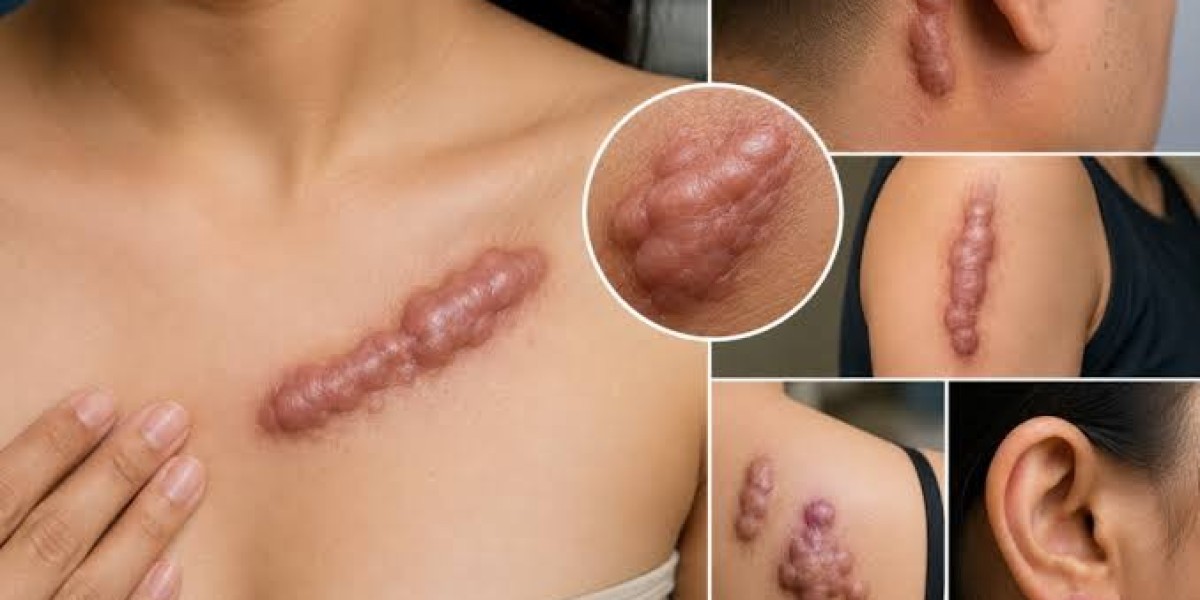

Keloid scars are raised, thick scars that grow beyond the original wound and often continue enlarging over time. This article explains the causes, symptoms, diagnosis, and the most effective Keloid Scar Treatment options, including steroid injections, laser therapy, cryotherapy, silicone therapy, surgery, and preventive care. If you are searching for Keloid Treatment Near Me, this comprehensive guide will help you understand the best treatment choices and long-term scar management.
Introduction
Keloid scars are more than ordinary scars. They develop when the body produces excessive collagen during the healing process, causing thick, raised tissue that extends beyond the original injury. Unlike normal scars, keloids may continue growing for months or even years after the skin has healed. They can appear after surgery, acne, burns, cuts, vaccinations, ear piercing, or other minor skin injuries.
For many people, keloids are not only a cosmetic concern but also a source of itching, pain, tenderness, and reduced confidence. Fortunately, advances in dermatology have made Keloid Scar Treatment more effective than ever. While no single treatment guarantees permanent removal, combination therapies can significantly flatten, soften, and improve the appearance of keloid scars.
What Is a Keloid Scar?
A keloid is an abnormal scar formed by excessive collagen production. Instead of stopping once a wound heals, the body continues producing collagen, creating a thick scar that spreads beyond the original injury.
Keloids are benign, meaning they are not cancerous or contagious. However, they may continue enlarging over time and become uncomfortable depending on their size and location. They can vary in color from pink and red to brown or darker shades, particularly in deeper skin tones.
Common characteristics
Raised, thick scar tissue
Growth beyond the original wound
Smooth or shiny appearance
Firm or rubbery texture
Itching or burning sensation
Pain or tenderness in some cases
What Causes Keloids?
The exact reason why some people develop keloids is still being studied, but the primary cause is an overactive wound-healing response. During healing, collagen helps repair damaged skin. In keloids, collagen production continues longer than necessary, resulting in excessive scar tissue.
Common triggers include
Surgical incisions
Ear and body piercings
Acne scars
Burns
Cuts and injuries
Insect bites
Vaccination scars
Individuals with a family history of keloids are more likely to develop them, and they occur more frequently in medium to darker skin tones.
Where Do Keloids Commonly Develop?
Certain body areas are more prone to keloid formation because of skin tension and frequent injury.
Body Area | Common Cause |
|---|---|
Ears | Ear piercing |
Chest | Acne or surgery |
Shoulders | Cuts and burns |
Upper back | Acne scars |
Neck & jawline | Shaving irritation |
Arms | Vaccination or injury |
These locations often experience greater tension during healing, increasing the likelihood of abnormal scar formation.
Symptoms of Keloid Scars
Keloids develop gradually and may begin as small raised areas before becoming larger. Symptoms vary depending on the individual.
Symptom | Description |
|---|---|
Raised scar | Thick tissue above the skin |
Itching | Common during active growth |
Pain | Especially when pressed |
Burning | May occur occasionally |
Firm texture | Dense collagen buildup |
Enlargement | Spreads beyond wound edges |
If a scar continues growing several months after healing, it is advisable to seek professional evaluation.
How Dermatologists Diagnose Keloids
Diagnosis is usually straightforward and based on a physical examination. A dermatologist evaluates the scar’s appearance, growth pattern, previous injuries, and medical history. Most cases do not require laboratory tests, although a biopsy may occasionally be recommended if another skin condition needs to be excluded.
Why Early Treatment Matters
Early intervention often leads to better outcomes. Newer keloids generally respond more effectively to conservative treatments than older, thicker scars. Beginning treatment before the scar becomes very large may reduce symptoms and improve cosmetic results.
Keloid Scar Treatment Options
Modern dermatology uses several treatment methods depending on the scar’s size, thickness, age, and location. The best results are frequently achieved by combining therapies rather than relying on one procedure alone.
1. Steroid Injections
Steroid injections are one of the most widely used first-line treatments for keloids. The medication is injected directly into the scar to reduce inflammation and slow collagen production. Over multiple sessions, the scar gradually becomes flatter and softer.
Benefits
Reduces scar thickness
Relieves itching
Softens hard tissue
Improves overall appearance
Treatments are commonly repeated every 4–6 weeks, depending on the scar’s response.
2. Laser Therapy
Laser treatment helps improve the color, thickness, and texture of keloid scars. It is particularly useful for reducing redness and stimulating skin remodeling. Dermatologists often combine laser therapy with steroid injections for enhanced results.
Improves scar texture
Reduces redness
Minimal downtime
Suitable for many scar types
Several treatment sessions are usually recommended for noticeable improvement.
3. Cryotherapy
Cryotherapy uses extremely cold temperatures to freeze abnormal scar tissue. It is especially effective for smaller keloids and early raised scars. As the treated tissue heals, the scar gradually becomes flatter.
Small keloids
Ear keloids
Newly formed scars
Temporary swelling or skin lightening may occur after treatment.
4. Silicone Gel and Silicone Sheets
Silicone therapy is a non-invasive treatment that improves scar hydration and helps reduce thickness. Silicone sheets or gel are typically applied daily for several weeks or months after the skin has healed. Consistent use is essential for the best results.
Benefits
Flattens raised scars
Reduces itching
Improves scar softness
Easy home-care option
5. Surgical Keloid Removal
Surgery physically removes the keloid, but it is generally not performed as a standalone treatment because recurrence rates are high. Dermatologists often combine surgery with steroid injections, silicone therapy, pressure therapy, or laser treatment to reduce the likelihood of the scar returning.
6. Pressure Therapy
Pressure therapy is commonly recommended after the removal of ear keloids. Special pressure earrings or garments apply continuous gentle pressure to reduce collagen production during healing. This approach is particularly beneficial for keloids caused by ear piercing.
Combination Therapy: The Most Effective Approach
Research consistently shows that combining treatments provides better long-term outcomes than using a single therapy. Because keloids have a tendency to recur, dermatologists personalize treatment plans according to the scar’s characteristics.
Combination | Purpose |
|---|---|
Steroid + Laser | Flatten and improve color |
Surgery + Steroid | Reduce recurrence |
Laser + Silicone | Improve healing |
Cryotherapy + Steroid | Shrink thick scars |
Surgery + Pressure | Best for ear keloids |
Who Should Consider Keloid Treatment?
You may benefit from professional treatment if your scar:
Continues growing after healing
Causes itching or pain
Becomes cosmetically noticeable
Interferes with movement
Develops after acne or surgery
Returns after previous treatment
A dermatologist can determine the most appropriate therapy after examining the scar.
Recovery After Treatment
Recovery varies depending on the treatment method.
Treatment | Recovery Time |
|---|---|
Steroid injection | 1–2 days |
Laser therapy | 2–5 days |
Cryotherapy | About 1 week |
Surgery | 2–3 weeks |
Silicone therapy | No downtime |
Following the recommended treatment schedule improves the likelihood of long-lasting results.
Aftercare Tips for Better Healing
Proper aftercare plays an important role in scar improvement and recurrence prevention.
Keep the treated area clean.
Avoid scratching the scar.
Protect the scar from excessive sunlight.
Use silicone sheets consistently if prescribed.
Attend all follow-up appointments.
Complete the full course of treatment sessions.
Even when improvement is visible, maintenance care may still be necessary for some patients.
Can Keloids Return?
Yes. Keloids are known for their tendency to recur, particularly when treated with surgery alone. Combination treatments significantly lower recurrence rates by addressing both the existing scar and the healing process that follows. Early treatment and consistent follow-up provide the best long-term outcomes.
How to Choose the Best Keloid Treatment Near Me
When looking for Keloid Treatment Near Me, consider the following factors:
Qualified dermatologist with scar treatment experience
Advanced laser and scar management technology
Personalized treatment plans
Comprehensive consultation and follow-up care
Multiple treatment options available under one clinic
Every keloid behaves differently, so individualized treatment is more effective than a one-size-fits-all approach.
Preventing Future Keloids
Although keloids cannot always be prevented, these measures may reduce the risk:
Treat wounds promptly and properly.
Avoid unnecessary piercings if prone to keloids.
Use silicone gel on healing scars when advised.
Follow post-surgical scar care instructions carefully.
Seek early treatment for raised scars before they enlarge.
People with a history of keloids should inform their healthcare provider before elective surgery or cosmetic procedures.
Conclusion
Keloids are a challenging type of scar caused by excessive collagen production during wound healing. They often extend beyond the original injury and may continue growing over time. While complete removal is not always possible, modern Keloid Scar Treatment offers highly effective solutions for reducing thickness, relieving symptoms, and improving appearance. Treatments such as steroid injections, laser therapy, cryotherapy, silicone therapy, pressure therapy, and carefully planned surgery can deliver excellent results when combined appropriately.
If you are searching for Keloid Treatment Near Me, consult an experienced dermatologist who can create a personalized treatment plan based on your scar type, skin tone, and medical history.
Frequently Asked Questions (FAQs)
1. What is the best treatment for a keloid scar? Combination therapy using steroid injections, laser treatment, and silicone therapy is often considered the most effective approach.
2. Can laser remove a keloid permanently? Laser improves color and thickness but is usually combined with other treatments for better long-term results.
3. Are steroid injections painful? Most patients experience only mild discomfort, and the procedure is quick.
4. How many sessions are needed for keloid treatment? The number varies depending on the scar, but multiple sessions are commonly required.