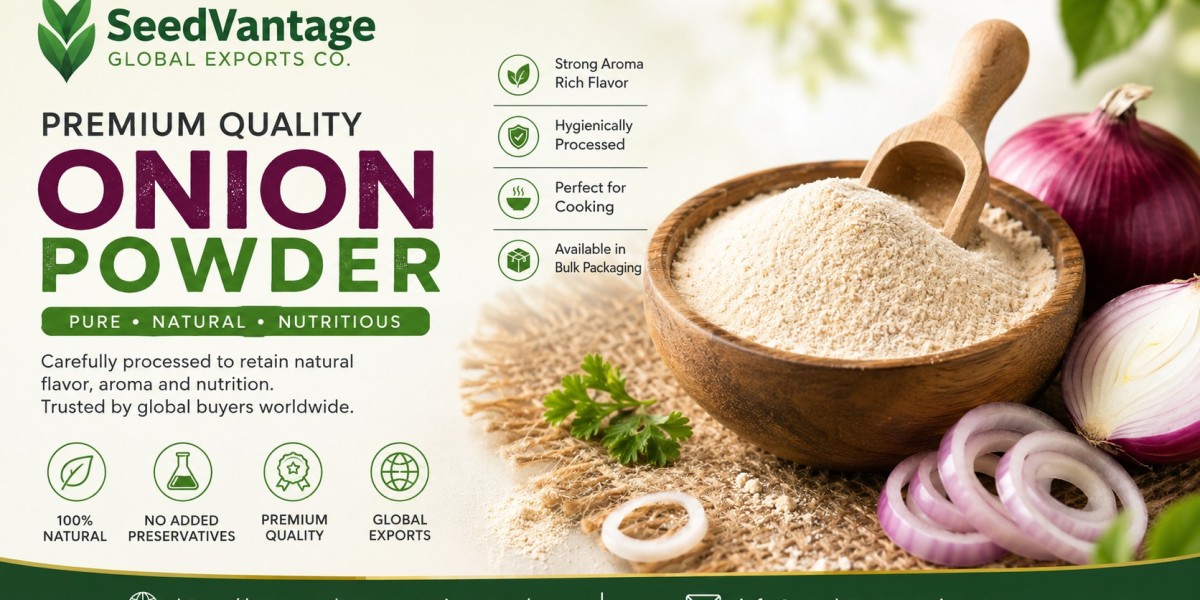

A seasoning batch can fail for a small reason: the onion note changes between deliveries. That is why industrial buyers should treat Onion Powder as a controlled ingredient, not a cheap pantry commodity. India’s onion output is estimated at 307.37 lakh tonnes in 2025–26, but volume alone does not guarantee repeatable powder. Buyers still need tight moisture, mesh, hygiene and batch controls.
The Spec Sheet That Controls Batch Consistency
Moisture Is Not a Minor Line Item
FSSAI’s dehydrated-onion standard sets moisture in powdered onion at not more than 5% by weight, while extraneous matter is capped at 0.5%. Excess moisture raises caking and storage concerns. A supplier saying “dry enough” has not given you a specification.
Mesh Size Changes How the Ingredient Behaves
Fine powder disperses quickly through sauces, seasoning blends and dry mixes. Coarser material behaves differently in rubs and premixes. SeedVantage lists multiple mesh-size options as well as white and red onion variants. Put the required mesh on the PO; “fine powder” is too vague for factory purchasing.
Colour, Aroma and Pack Format Need Agreement
White powder generally works better where product colour matters, while red onion powder can suit darker seasoning systems. SeedVantage markets pack formats ranging from 1 kg pouches to bulk bags. Most buyers focus on net weight and forget the moisture barrier, even though a good batch can still arrive caked after poor transit protection.
Five Supplier Answers Worth Testing Before You Buy
Here’s what to ask any Onion Powder Manufacturers before issuing a PO.
What moisture limit do you release against? Good: a written target aligned with the buyer’s requirement and FSSAI’s 5% ceiling. Bad: “normally low.”
What mesh range will this batch meet? Good: a defined sieve or mesh requirement. Bad: “fine powder.”
What testing comes with the lot? Good: agreed chemical and microbiological parameters backed by batch documents. Bad: “food grade.”
How is it packed for ocean transit? Good: net weight, inner liner, sealing method and lot coding. Bad: “standard export packing.”
How long is the price valid? India’s onion production rose from 242.67 lakh tonnes in 2023–24 to 307.67 lakh tonnes in 2024–25. Serious suppliers state quote validity. Bad ones pretend raw-material markets never move.
Buying only on the lowest dry onion powder price is lazy procurement; one rejected lot can wipe out the saving from several cheap shipments.
Where Onion Powder Protects Margin, Not Just Flavour
Repeatable dosing: controlled powder helps reproduce seasoning targets between shifts.
Lower preparation load: peeling and chopping operations are removed from the ingredient-preparation stage.
Less water variability: dehydrated material gives formulators tighter control than fresh onion.
Better dry-blend distribution: specified mesh reduces uneven flavour pockets.
Simpler inventory handling: a dry ingredient removes much of the day-to-day handling associated with fresh bulbs.
Scalable sourcing: India exported 726,874.82 MT of processed vegetables worth USD 932.19 million in FY2025–26.
Which means the saving is not merely ingredient cost per kilogram. It is fewer production surprises and better protection of finished-product margin.
Why India Is a Supply-Chain Decision, Not Just an Origin
Onion Powder Manufacturers in India operate close to a major raw-material base. APEDA reports that Maharashtra accounted for 44.07% of Indian onion production in 2024–25, followed by Madhya Pradesh at 14.44%. Gujarat, Karnataka and Odisha are also among states connected to onion cultivation and vegetable processing. Location therefore affects sourcing access, inland movement and shipment planning.
For importers comparing Dehydrated Onion Powder Manufacturers in India, geography deserves nearly as much attention as the quoted rate. SeedVantage is based in Rourkela, Odisha, and its onion powder page lists 15 international markets, including the UK, Canada, Australia, Japan, Germany, the United States and Singapore. Onion Powder Suppliers in India should be evaluated on routing and supply continuity, not price alone.
How We Handle the Product Before It Becomes Your Ingredient
We have marketed onion powder for export since 2025, with white and red variants, multiple mesh choices, private-label capability and export-oriented packaging. We list APEDA, IEC, FSSAI, GST, MSME and Udyam credentials on our product page. We work from the specification rather than treating every buyer as if they need the same powder. We expect mesh, moisture, pack format and microbial requirements to be discussed before commercial dispatch.
We use that detail to prevent an argument after the container has already landed.
Send the Production Spec, Not Just “Best Price”
We want the first enquiry to be usable. Send us your required onion grade, mesh, moisture limit, quantity, pack size, destination port, Incoterm and expected monthly consumption.
We do not publish a fixed onion-powder MOQ or an hour-based response SLA on the product page, so we will not invent either. Published MOQ: not specified. Published response time: our website says we will get in touch “shortly.” We will confirm the applicable MOQ and commercial response commitment against your actual specification and order requirement.
A Better Production Run Starts Before the PO
Onion Powder works best as a specified production input, not a generic spice purchase. India’s 2025–26 onion crop is estimated at 307.37 lakh tonnes, yet dependable food production still comes down to batch control and supplier discipline. Lock the specification before you lock the price.
FAQs
1. What should buyers ask an Onion Powder supplier before ordering?
Ask for moisture, mesh, microbiological limits, packing construction, batch documentation and quote validity. FSSAI’s 5% moisture ceiling gives buyers a useful starting point.
2. How do Onion Powder Manufacturers in India maintain consistency?
Serious Indian suppliers control sourcing, dehydration, milling and lot release. Caveat: processes vary, so request the actual batch specification instead of relying on broad quality claims.
3. What affects the dry onion powder price?
Raw onion cost, colour, mesh, testing, packaging, volume, freight and destination terms matter. A dry onion powder price without an agreed specification is not properly comparable.
4. Are dehydrated onion powder manufacturers in India suitable for large factories?
Many operate for industrial and export buyers, but capacity still needs verification. Ask dehydrated onion powder manufacturers in India for monthly supply capability and repeat-order controls.
5. What should I expect from Onion Powder Suppliers in India?
Expect written specifications, export packing, documentation and lot identification. Caveat: Onion Powder Suppliers in India do not all work to identical destination-market requirements.