
Half a millimetre of poor jaw alignment is not a “minor variation” when a surgeon is controlling a vessel. That is why Mediwave Cardiovascular and Vascular Instruments should be purchased by pattern, intended procedure and handling requirement—not by a vague request for “cardiac tools.” WHO estimates cardiovascular diseases cause 17.9 million deaths each year worldwide. Most buyers still start with price, and that is the wrong first filter. That cheap clamp gets expensive fast if it slips, wears early or cannot match the rest of the set.
How to Assess Mediwave Cardiovascular and Vascular Instruments
Start With the Actual Instrument Type
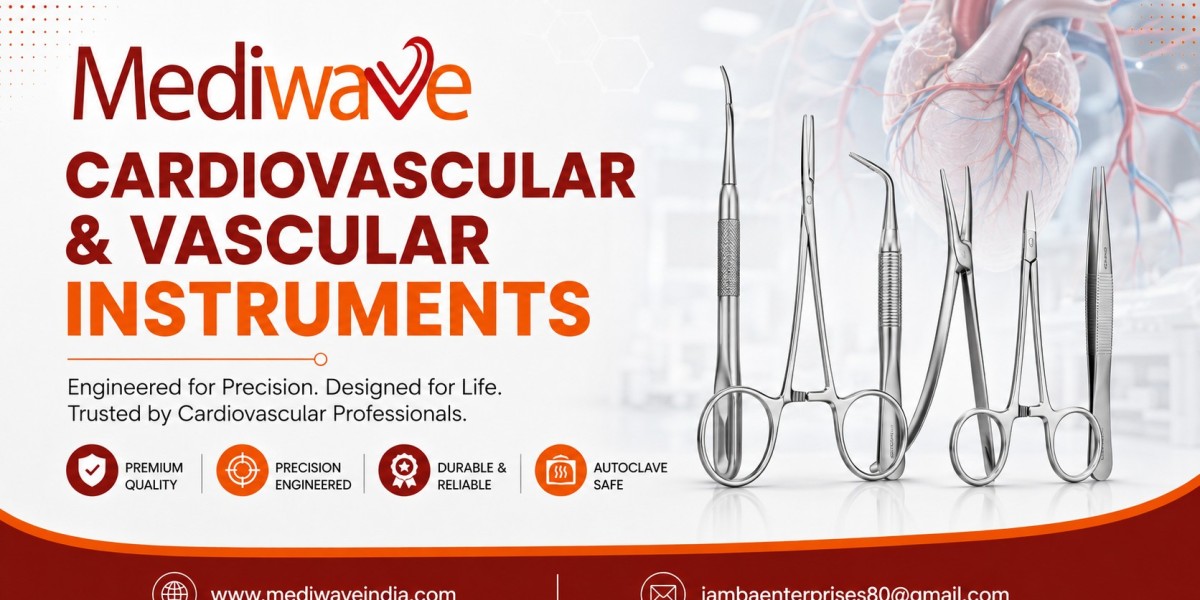
A requirement may include scissors, vascular forceps, DeBakey-style clamps, bulldog clamps, needle holders and vessel dilators. Mediwave lists cardiovascular scissors, Satin Sky vascular clamps and DeBakey vascular clamps. Its vascular guidance references fine sutures from 6-0 to 9-0, showing why tip geometry and grip control matter.
The Spec Detail Most Buyers Skip
Ask for overall length, jaw profile, jaw length, atraumatic pattern, locking mechanism, finish, material grade and sterilization compatibility. Here’s the mistake: buyers approve a product name and leave geometry undefined. Which means replacement stock may look similar yet handle differently. Nobody tells you how difficult standardisation becomes after three departments buy “equivalent” instruments from different sources.
Five Supplier Checks That Expose Weak Quotations
1. Exact Specification
Ask for dimensions, material, finish and intended use. A bad answer is “standard hospital quality.”
2. Functional Inspection
Request the method used to check jaw alignment, hinge action and locking behaviour. “We inspect before dispatch” says little.
3. Reprocessing Compatibility
CDC identifies 121°C and 132°C as two common steam-sterilization temperatures. A bad supplier says only “autoclavable” and cannot explain care or reprocessing requirements.
4. Batch Consistency
Compare production pieces with the approved sample. “Small differences happen” is a warning, not reassurance.
5. Defect Handling
Get replacement terms in writing. “Case by case” is not a policy; it is a negotiation after delivery.
Better Instruments Protect Budget as Well as Workflow
Lower Replacement Waste
Consistent alignment and hinge action reduce premature rejection and repeat buying. That protects replacement budgets.
Easier Set Matching
Standardised patterns simplify single-piece replacement. Which means fewer trays are disrupted by one mismatched clamp.
Better Handling Control
Atraumatic jaws and suitable tip geometry support controlled vessel handling rather than forcing surgeons to compensate for poor instrument behaviour.
More Predictable Reprocessing
CDC lists 30 minutes at 121°C for wrapped supplies in a gravity-displacement sterilizer and 4 minutes at 132°C in a prevacuum sterilizer, while noting that cycles vary by item and sterilizer.
Cleaner Procurement Accountability
Defined specifications give receiving teams something measurable to inspect. “Premium quality” does not.
Cardiovascular Instrument Sourcing Across India
For hospitals comparing Cardiovascular Instruments Manufacturers in India, location matters less than many buyers assume. Mediwave lists its base in Jalandhar, Punjab, while presenting numerous surgical categories through one source. Across India, CVDs accounted for 27% of deaths in 2016, according to WHO. That burden makes dependable replenishment a practical requirement.
Cardiovascular and Vascular Instruments Suppliers should be checked for packing control, documentation, dispatch ownership and replacement support. Buyers comparing Cardiovascular Instruments Manufacturers in India should ask what happens when one clamp needs urgent replacement, because supply discipline matters more than postcode.
One Source, Fewer Procurement Gaps
We group our cardiovascular range into two website subcategories—vascular clamps and vascular instruments—and our main catalogue lists three named cardiovascular products: cardiovascular scissors, Satin Sky vascular clamp and DeBakey vascular clamp. We also cover multiple surgical specialties, helping hospitals reduce supplier fragmentation. Our rule is simple: we do not treat “vascular clamp” as a complete RFQ. That’s because pattern, length and intended use need settling before quotation, not after delivery.
Send us the instrument name, pattern, size, quantity, intended procedure, delivery city and required documents. We list 24/7 phone support; we do not publish one fixed written-quote turnaround, so exact response timing should be confirmed with the enquiry. Our MOQ is item-specific, and we confirm the applicable quantity against the requested product rather than quoting one blanket figure. For replacement matching, send us a clear instrument photo or existing reference too.
Define the Instrument Before You Approve the Supplier
Mediwave Cardiovascular and Vascular Instruments are easier to evaluate when the RFQ defines function, pattern, size, inspection expectations and reprocessing needs. With 17.9 million CVD deaths estimated globally each year by WHO, cardiovascular care is not the place for loose buying specifications. That is why price should follow technical fit. Next procurement cycles should move toward better-defined sets and fewer emergency substitutions.
FAQs
1. What Are Mediwave Cardiovascular and Vascular Instruments Used For?
They are used for cardiac and blood-vessels operations such as cutting, holding, clamping, suturing and vessel manipulation. Mediwaves sorts the category in two subgroups: vascular clamps and vascular instruments.
2. Which Instruments Usually Appear in a Cardiovascular Set?
Common requirements are vascular clamps and forceps, scissors and needle holders. Note: it should not be assumed that a CABG set is the same as a set for peripheral vessels.
3. How Should We Compare Cardiovascular Instruments Manufacturers in India?
Compare sizes, inspection technique, reprocessing data, batch consistency, complaints and “recharge” ability. Price is relevant but not the initial test.
4. What Should We Ask Cardiovascular and Vascular Instruments Suppliers Before Ordering?
Require details of the pattern, dimensions, material, finishing, purpose, cleaning, sterilization, packaging, minimum order quantity, lead time and defects. Not all of these instruments have the same MOQ.
5. Are Reusable Vascular Instruments Suitable for Steam Sterilization?
Numerous re-usable stainless-steel tools are intended for autoclaving, however hospital sterilizing procedures must be to validated guidelines provided by manufacturers. CDC note the following prevalent steam-sterilizing temperatures: