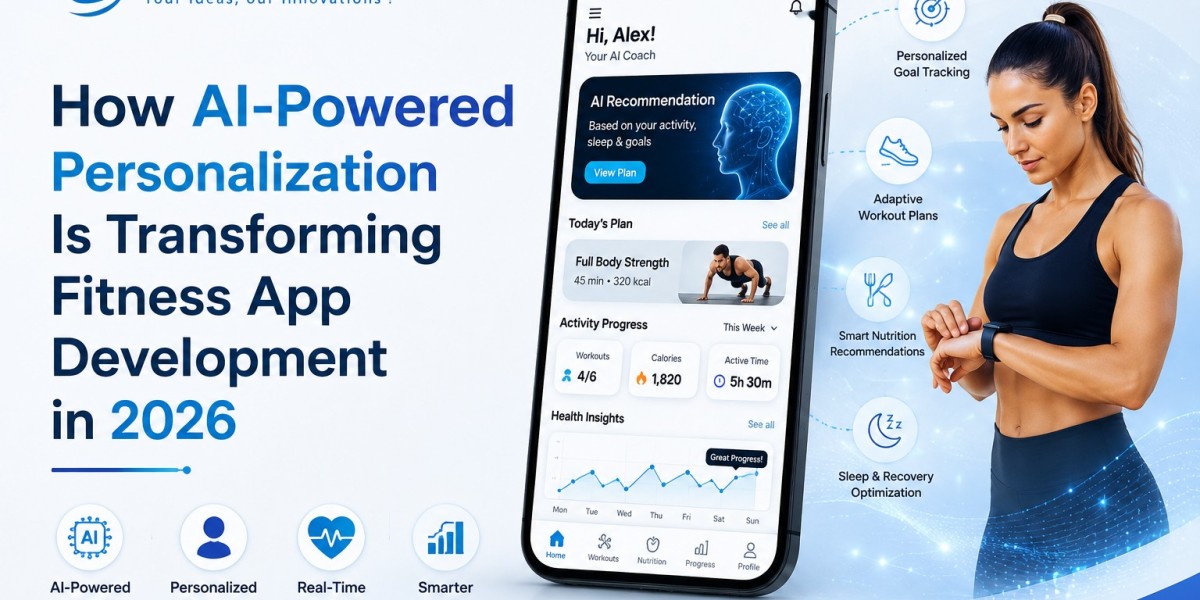

Fitness apps used to ask users to fill in a goal and hand back the same generic workout plan as everyone else. That's no longer how things work. Today, 49% of consumers use AI-powered fitness and wellness apps daily, and another 30% use them weekly. Personalization isn't a nice-to-have feature anymore; it's the baseline expectation. This shift is changing how apps are built from the ground up, and it's worth understanding what's actually driving it, how it works, and what it means for anyone building in this space in 2026.
Why 2026 Is the Turning Point for AI Personalization in Fitness Apps
A few things have converged this year to push AI personalization from a premium feature into a standard one. Wearable devices are now common enough that most fitness apps have real biometric data to work with instead of relying on manual input. Large language models have gotten good enough to power conversational coaching that actually feels useful. And users, having grown accustomed to personalized experiences everywhere else, expect the same from their fitness apps.
The numbers back this up. The AI in the fitness and wellness market was valued at $10.68 billion in 2025 and is projected to reach $57.80 billion by 2035, growing at a steady annual pace. On the trainer side, 64% of personal trainers already use AI regularly, mostly for programming, admin work, and nutrition planning. This isn't a trend confined to consumer apps, it's reshaping how fitness professionals work too. When both sides of the market are adopting the same technology, it stops being optional for app developers.
What AI-Powered Personalization Actually Means in Fitness Apps
It helps to separate old-style personalization from what's happening now. Traditional personalization was rule-based: answer a few questions, get sorted into a category, receive a fixed plan. It didn't adapt once it was assigned.
AI-driven personalization works differently. It pulls in ongoing data, sleep quality, heart rate variability, workout completion rates, recovery signals and adjusts recommendations continuously rather than once at signup. An app can lower workout intensity when a user's HRV is high or shift them toward a restorative session after a poor night's sleep. That kind of responsiveness used to be reserved for people working with elite coaches. Now it's built into consumer software.
How AI-Powered Personalization Is Transforming Fitness App Development
This shift touches nearly every part of how a fitness app is designed and built, not just the recommendation engine. Here's where the impact shows up most clearly.
Real-Time Adaptive Workout Plans
Instead of a static weekly schedule, apps now adjust workout sessions session by session based on how the user actually performed the day before. If someone missed a session or showed signs of fatigue, the plan shifts automatically rather than sticking to a rigid calendar.
AI-Driven Nutrition Personalization
Meal suggestions increasingly factor in activity levels, logged food preferences, and even how a workout went that day. This moves nutrition guidance away from generic calorie targets toward something closer to what a dietitian might adjust in real time.
Predictive Recovery and Injury Prevention
By tracking patterns in movement, strain, and recovery metrics over time, apps can flag when a user is at higher risk of overtraining or injury, prompting rest days before problems occur rather than after.
Conversational AI Fitness Coaches
Chat-based coaching has moved past scripted responses. Users can now ask questions about form, adjust their plan mid-conversation, or get explanations for why a workout changed and receive answers that reflect their actual data history.
Cross-Platform Health Data Integration
Apps are increasingly pulling data from wearables, smart scales, and nutrition trackers to build a more complete picture of a person's health. This kind of integration means recommendations aren't based on isolated data points but on a fuller pattern of behavior.
Predictive Fitness Insights
By 2025, an estimated 70% of fitness apps were expected to use AI for predictive insights, such as adjusting routines in response to fatigue signals. This kind of forward-looking adjustment is becoming a baseline feature rather than a differentiator.
Technologies Enabling AI-Powered Personalization in Fitness Apps
None of this works without the underlying technical infrastructure, and this is where the real engineering challenge sits.
Wearable Data Integration
Pulling reliable data from devices like smartwatches and fitness bands through APIs such as HealthKit and Google Fit is the foundation. Without clean, consistent data input, personalization has nothing accurate to work from.
Machine Learning Models
Recommendation engines and predictive models are trained on user behavior patterns to forecast what a person needs next, whether that's a lighter workout or a nutrition adjustment.
LLM-Powered Coaching
Large language models now handle the conversational layer, letting users ask natural questions and get context-aware answers instead of navigating rigid menus.
Real-Time Data Processing
AI-powered fitness apps need fast data processing to deliver personalized recommendations. In fitness mobile app development, real-time processing helps apps quickly respond to changes in user activity, performance, and recovery.
Business Impact of AI-Powered Personalization
The shift toward personalization isn't just a product decision; it has measurable business consequences.
Improved User Engagement
AI-powered personalization has been shown to boost user motivation by around 40%, largely because plans feel relevant rather than generic.
Higher Retention Rates
When an app adjusts to a person's actual life instead of ignoring missed workouts or plateaus, users are more likely to stick around instead of abandoning the app after a few weeks.
Increased Subscription Revenue
AI-personalized subscription tiers have driven a 19% increase in average revenue per user compared to 2024 levels, showing that users are willing to pay for meaningfully tailored experiences.
Competitive Advantage
As personalization becomes standard, apps without it increasingly look outdated. This is pushing even smaller players investing in fitness mobile app development to prioritize adaptive features early rather than treating them as a later upgrade.
Challenges of Implementing AI-Powered Personalization
This shift isn't without friction, and it's worth being honest about the obstacles.
- Data privacy and security concerns remain significant, with 55% of consumers citing data and privacy as a top barrier to AI adoption in fitness apps
- AI accuracy and reliability are ongoing concerns, particularly around whether recommendations are safe and appropriate for individual users
- Integration and technical complexity increase substantially when combining wearable data, machine learning, and real-time processing into a single reliable system
What Businesses Should Consider When Building AI-Personalized Fitness Apps
Start with clean, reliable data pipelines before investing heavily in advanced models
- Be transparent with users about what data is collected and how it's used
- Test AI recommendations against real user outcomes, not just engagement metrics
- Build in human oversight for anything touching injury risk or medical-adjacent advice
- Plan for scalability from the start, since real-time processing needs grow quickly with user base
Conclusion
AI-powered personalization has moved from an experimental feature to a defining characteristic of how fitness apps are built and used in 2026. The apps that adapt to real user data, rather than relying on static plans, are the ones seeing stronger engagement and retention. For teams building in this space, the technical and ethical considerations around data and accuracy matter just as much as the personalization features themselves. EmizenTech has been following these shifts closely as the fitness technology space continues to evolve.
FAQs
1. Is AI personalization expensive to add to a fitness app?
Costs vary widely depending on the complexity of the models and data sources involved, but it's generally more resource-intensive than static personalization due to ongoing data processing needs.
2. What's the difference between basic and AI-driven personalization?
Basic personalization assigns a fixed plan based on initial input. AI-driven personalization continuously adjusts based on ongoing data like performance, recovery, and behavior patterns.
3. Do users trust AI-personalized fitness recommendations?
Trust is growing but not universal. Privacy concerns and questions about accuracy remain common reasons users hesitate to fully rely on AI recommendations.
4. What data do AI fitness apps use to personalize plans?
Common inputs include heart rate variability, sleep quality, workout history, activity levels, and sometimes nutrition logs, often pulled from connected wearables.
5. Will AI replace human personal trainers?
Most current evidence suggests AI is being used to support trainers rather than replace them, handling programming and admin tasks while trainers focus on relationship-building and nuanced coaching.