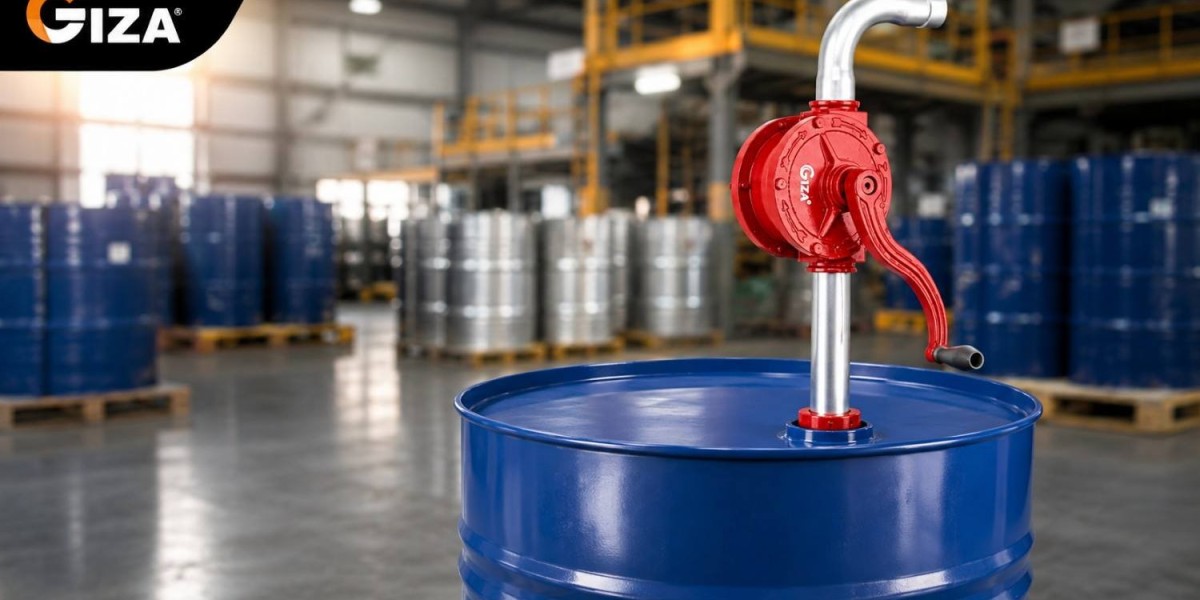

A drum is full, maintenance needs oil now, and nobody wants fluid on the floor because transfer equipment was the cheapest item on the PO. That is where a Cast Iron Barrel Pump earns its place. Giza positions it for non-corrosive liquids such as oil, fuel, lubricant and coolant, with use across oil plants, workshops, lubrication units and manufacturing facilities. One costly buyer mistake is checking fluid compatibility after choosing the pump body. Reverse that order.
What the Pump Must Handle Before It Reaches the Floor
The Compatibility Detail Most Buyers Skip
Cast iron gives the pump body strength for rough industrial handling, but strength does not make it chemically universal. Giza lists the Cast Iron Barrel Pump for non-corrosive fluids and identifies five practical checks: consistent flow, leakage, working life and mechanical strength, flow stability under pressure, and heavy-duty liquid performance.
If a supplier says “works with chemicals” without asking which chemical, concentration or temperature, that is not technical advice.
Match the Pump to the Actual Duty
Oil transfer, automotive servicing, machinery maintenance, coolant movement and lubricant handling are listed applications.
The harder part is viscosity. Buyers should send the fluid grade, usage frequency and container details before approving a model rather than assume every lubricant will pump the same way.
Five Supplier Checks Before You Release a PO
Fluid compatibility: Ask about the exact liquid. A bad answer is “oil and chemicals are fine” without a compatibility check.
Duty requirement: Share viscosity and usage. A bad supplier recommends a pump without asking how often it will run.
Leakage and flow checks: Giza lists five test areas for its cast iron pumps. “All pieces are checked” without naming test points is a weak answer.
Batch consistency: Ask how an approved sample is matched to production stock. “Same quality” without inspection criteria tells you little.
Commercial support: Confirm dispatch, packing and response time. Giza states a response target below 48 hours; “we will reply soon” is harder to enforce.
Where a Cast Iron Barrel Pump Protects Cost and Margin
Less transfer loss: Controlled, leak-resistant movement reduces oil or lubricant wastage.
Lower replacement risk: A heavy cast-iron body suits workshops where handling is rarely gentle.
More predictable maintenance: Checking seals, fittings and lubrication can stop small wear points becoming downtime. Giza specifically advises periodic seal and fitting checks along with cleaning after use.
Better handling control: Consistent flow matters during repeated servicing and lubricant transfer.
Wider industrial fit: Giza lists seven application groups, ranging from oil transfer and automotive service to heavy engineering and mechanical repair.
Better bulk-buy economics: Cast Iron Barrel Pump Wholesalers can support multi-unit buyers, but batch quality must stay uniform. Cheap units with inconsistent seals can erase the saving after the first leakage complaint.
Buying and Supplying Across India
Giza operates from Shapar, Rajkot, Gujarat, PIN 360024, and states that it supports pan-India supply.
For a Rajkot-based supplier, freight still needs to be calculated by destination and order quantity. “Factory direct” does not automatically mean the lowest landed price after packing and transport are added.
Buyers comparing Cast Iron Barrel Pump Manufacturers, Dealers, Wholesalers and Suppliers in India should treat dispatch capability and inventory visibility as purchasing criteria, not afterthoughts.
What We Put on the Record
We operate Giza under Swastik Enterprise, established in 1999. Our website lists 25+ team members, over 90% repeat orders and an inquiry response target below 48 hours.
We also state that our cast iron pumps are checked across five areas covering flow, leakage, strength, pressure stability and heavy-duty performance.
We publish those numbers because procurement teams need something more useful than sales adjectives.
We can respond to enquiries within 48 hours.
Our website does not publish a fixed MOQ, so we will not invent one; we confirm MOQ against the model and requested quantity. Send Giza Pumps the liquid name, viscosity or grade, drum size, usage frequency, quantity and delivery PIN code. We can then discuss the suitable Cast Iron Barrel Pump and current commercial terms without wasting a round of emails.
Conclusion
A Cast Iron Barrel Pump makes sense where non-corrosive oils, fuels, lubricants or coolants need dependable transfer in demanding work areas. Giza lists seven industrial application groups and five pump-check areas, giving buyers a practical evaluation base.
Future purchasing gains will come from matching fluid data, duty cycle and batch requirements before the PO is signed.
FAQs
1. What liquids can a Cast Iron Barrel Pump handle?
Giza lists oil, fuel, lubricant and coolant among suitable non-corrosive liquids. Corrosive fluids need a separate material-compatibility check.
2. What should I ask Cast Iron Barrel Pump Manufacturers before ordering?
Ask about compatibility, viscosity, test points, seals, dispatch and batch consistency. A manufacturer that skips the liquid details is guessing.
3. Are Cast Iron Barrel Pump Dealers suitable for industrial buyers?
Yes, if they can verify model suitability, stock and after-sales support. A dealer relationship does not replace technical compatibility checking.
4. Do Cast Iron Barrel Pump Wholesalers supply bulk quantities?
Giza states that it supports bulk supply. The caveat: MOQ is not publicly listed, so confirm quantity and model before costing.
5. How do Cast Iron Barrel Pump Suppliers in India support maintenance teams?
They can supply pumps for oil transfer, servicing, lubrication, machinery maintenance and workshop use, subject to fluid compatibility.
6. Is cast iron suitable for corrosive chemicals?
Not by default. Giza describes this pump for non-corrosive liquids; aggressive chemicals need a specifically compatible pump material.
7. How often should the pump be maintained?
Giza advises cleaning residue after use, checking seals and fittings periodically, lubricating where required and storing the pump dry.