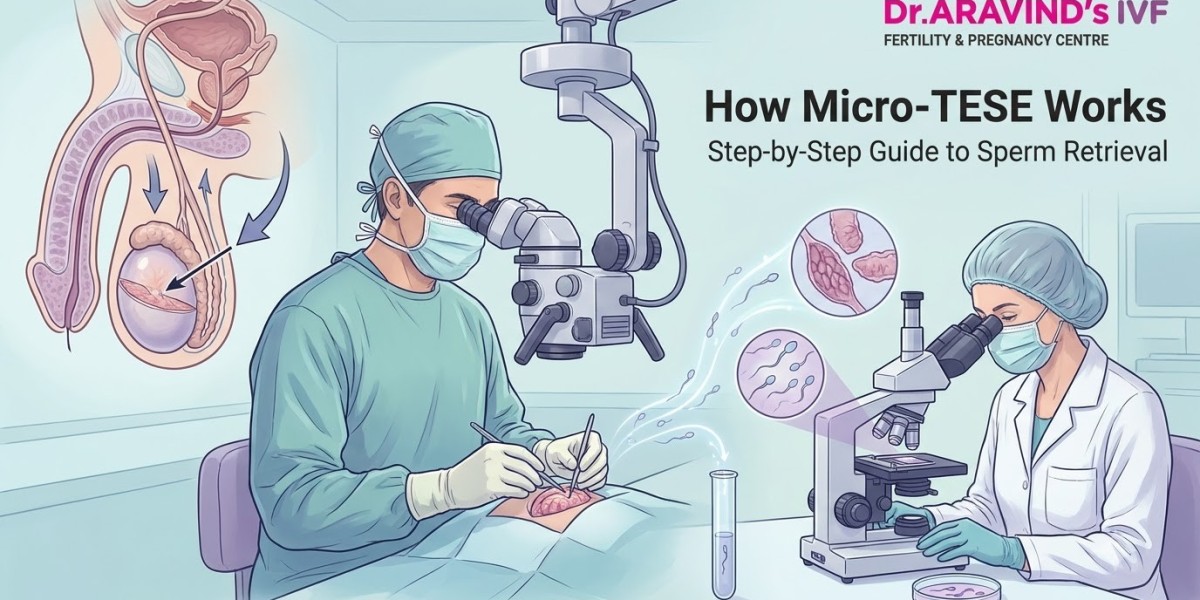

Being told that there is no sperm in the semen can be deeply upsetting for a man trying to become a father. The medical term for this condition is azoospermia. However, a semen sample does not always tell the complete story. Some men may have very limited areas of sperm production inside the testicles even though sperm cannot be found in the ejaculate.
This is where micro-TESE, or microdissection testicular sperm extraction, may become an option for selected patients. The procedure is designed to help doctors search for small areas of the testicular tissue that may still be producing sperm.
For couples seeking care at a fertility centre in Trichy, understanding how the procedure works can make an unfamiliar treatment feel much less overwhelming. At Dr. Aravind's IVF Fertility & Pregnancy Centre, the decision to consider sperm retrieval is based on the cause of infertility and the individual patient's evaluation.
What Exactly Is Micro-TESE?
Micro-TESE is a surgical method of retrieving sperm directly from the testicle. It is mainly considered for selected men with non-obstructive azoospermia, where sperm production is severely reduced.
The important point is that sperm production may not be equal throughout the testicle. Even when a routine semen analysis shows no sperm, small areas may contain sperm-producing tissue.
During micro-TESE, an experienced surgeon uses an operating microscope to examine the testicular tissue carefully and identify areas that are more likely to contain sperm.
The procedure is therefore different from simply taking a random tissue sample. The microscope helps the surgeon search more selectively while aiming to preserve as much healthy testicular tissue as possible.
Why Would a Doctor Recommend Micro-TESE?
Micro-TESE is not necessary for every man with azoospermia.
Before recommending the procedure, a fertility specialist usually looks at the patient's semen analysis, hormone results, physical examination, medical history, and other relevant investigations. Genetic testing may also be recommended in selected cases.
The main question is whether there is a reasonable possibility that sperm can still be found inside the testicles.
Men with non-obstructive azoospermia may be considered for testicular sperm retrieval when other approaches are unlikely to provide ejaculated sperm.
Step 1: Finding the Cause of Azoospermia
The process begins long before surgery.
Doctors first confirm that sperm are genuinely absent from the semen. Depending on the situation, repeat semen testing may be required.
The next step is determining whether the problem is obstructive or related to sperm production. Hormonal tests, examination, ultrasound, and genetic investigations may be used when clinically appropriate.
This distinction matters because men with obstructive azoospermia may have sperm production that is relatively preserved. They may therefore require a different treatment approach from men with severe impairment of sperm production.
Step 2: Preparing for the Procedure
Once micro-TESE is considered appropriate, the fertility and surgical teams explain the procedure, expected benefits, limitations, and possible risks.
The patient receives instructions about medications, fasting, and other preparation depending on the type of anesthesia and the surgical plan.
An important part of preparation is understanding that sperm retrieval is not guaranteed. The likelihood of finding sperm depends on the underlying condition and the amount of active sperm production within the testicular tissue.
Having realistic expectations is an important part of responsible fertility care.
Step 3: Performing Microdissection
During the procedure, the surgeon makes a small opening to access the testicular tissue.
An operating microscope is then used to examine the tissue. The surgeon looks for areas that appear more likely to contain sperm-producing structures.
Small portions of tissue are carefully removed for examination.
The approach aims to identify sperm-containing areas while limiting unnecessary removal of testicular tissue.
This microsurgical aspect is what distinguishes micro-TESE from less targeted forms of surgical sperm retrieval.
Step 4: The Embryology Team Searches for Sperm
The surgeon and embryology team work closely during the procedure.
The retrieved tissue is transferred to the laboratory, where embryologists carefully process and examine it under a microscope. Their job is to identify viable sperm among the testicular tissue.
This can be technically demanding because the amount of sperm may be extremely small.
If usable sperm are found, the embryology team can preserve or prepare them according to the couple's treatment plan.
Step 5: How Is the Retrieved Sperm Used?
When sperm are successfully retrieved, they are commonly used with ICSI treatment.
ICSI stands for intracytoplasmic sperm injection. Instead of requiring sperm to fertilize the egg on their own in the laboratory, an embryologist selects an individual sperm and injects it directly into the egg.
This is particularly useful when only a very small number of sperm are available.
The subsequent stages involve embryo development, embryo assessment, and transfer according to the fertility treatment plan.
What If No Sperm Is Found?
This is one of the most important questions patients have before surgery.
Unfortunately, micro-TESE cannot guarantee successful retrieval. Some men have such severe impairment of sperm production that no usable sperm can be identified.
The possibility of a successful retrieval depends on the cause of non-obstructive azoospermia, hormonal function, genetic factors, and other clinical findings.
A specialist should therefore discuss realistic expectations before the procedure rather than presenting micro-TESE as a guaranteed solution.
Is Micro-TESE Painful?
Micro-TESE is a surgical procedure and may involve temporary discomfort, swelling, or tenderness during recovery.
The exact experience varies from patient to patient and depends on the surgical technique and anesthesia used.
Patients are generally given specific postoperative instructions regarding rest, wound care, physical activity, and when to contact the medical team.
Following those instructions carefully can support a smoother recovery.
Are There Risks?
Like other surgical procedures, micro-TESE has potential risks. These can include pain, swelling, bleeding, infection, and temporary changes in testicular function.
Because testicular tissue is involved, preserving tissue and minimizing unnecessary damage are important considerations.
The potential benefits and risks should therefore be discussed with an experienced specialist before making a decision.
Can Micro-TESE Help Every Man With Azoospermia?
No.
Micro-TESE is most relevant to carefully selected patients, particularly men with non-obstructive azoospermia where there may still be areas of sperm production.
A man with obstructive azoospermia may need a completely different treatment strategy. In some cases, correcting an obstruction or retrieving sperm from another location may be considered.
This is why the diagnosis must come before the procedure.
A good best fertility centre in Trichy should first determine why sperm are absent before recommending an invasive treatment.
What Role Does Genetic Testing Play?
Genetic testing can be important in selected men with severe sperm-production problems.
Conditions such as certain chromosomal abnormalities or Y-chromosome microdeletions can affect sperm production and may influence the chances of finding sperm during retrieval.
Genetic findings can also have implications for assisted reproduction and potential offspring. Genetic counselling may therefore be recommended when appropriate.
Choosing the Right Fertility Team
Micro-TESE is not simply a surgical procedure. Successful management requires coordination between the fertility specialist, surgeon, anesthetic team, and embryology laboratory.
Couples researching the best IVF centre in India should therefore look beyond IVF technology alone. Experience in male infertility, access to appropriate sperm-retrieval procedures, and close coordination between surgery and embryology are all important.
The quality of the evaluation before treatment is equally important. Not every patient needs micro-TESE, and not every azoospermia case follows the same pathway.
What Patients Should Remember
Being diagnosed with azoospermia does not automatically mean that biological fatherhood is impossible.
For some men, sperm may still be present in small areas of the testicular tissue. Microdissection testicular sperm extraction provides a specialized way to search for those sperm-producing areas in selected cases.
At the same time, patients should understand that the procedure has limitations. Successful sperm retrieval cannot be promised, and the overall fertility outcome also depends on factors affecting both partners and the subsequent IVF/ICSI process.
A detailed evaluation helps doctors determine whether micro-TESE is appropriate and what alternatives may exist.
Frequently Asked Questions
1. Who is usually considered for micro-TESE?
Micro-TESE is mainly considered for selected men with non-obstructive azoospermia, particularly when sperm production is severely reduced but there is still a possibility of finding small areas containing sperm.
2. Does micro-TESE guarantee sperm retrieval?
No. The procedure cannot guarantee that sperm will be found. The likelihood depends on the underlying cause and the extent of sperm production within the testicles.
3. Can sperm found through micro-TESE be used for IVF?
Yes. When usable sperm are retrieved, they are commonly used with ICSI, where an individual sperm is injected directly into an egg.
4. Is micro-TESE the same as regular TESE?
Both procedures retrieve sperm from testicular tissue, but micro-TESE uses an operating microscope to help identify areas more likely to contain sperm. This makes it a more targeted procedure.
5. How do doctors decide whether micro-TESE is appropriate?
Doctors consider semen results, hormone levels, physical examination, medical history, genetic findings, and the suspected cause of azoospermia before recommending sperm retrieval.
A Specialized Option When Sperm Is Missing From Semen
Hearing "no sperm found" can feel like a final answer, but azoospermia requires a deeper evaluation.
In selected men, sperm production may continue in small areas of the testicles even when ejaculation contains no sperm. Micro-TESE can help doctors search for these sperm-producing areas and, when successful, provide sperm that may be used for ICSI.
The most important step is choosing treatment based on the underlying diagnosis rather than assuming that every man with azoospermia needs the same procedure.
Take the Next Step
If you have been diagnosed with azoospermia or are considering sperm retrieval, speak with a fertility specialist about your test results and available options.
For comprehensive male fertility evaluation and assisted reproductive care, consult Dr. Aravind's IVF Fertility & Pregnancy Centre, a trusted fertility centre in Trichy.