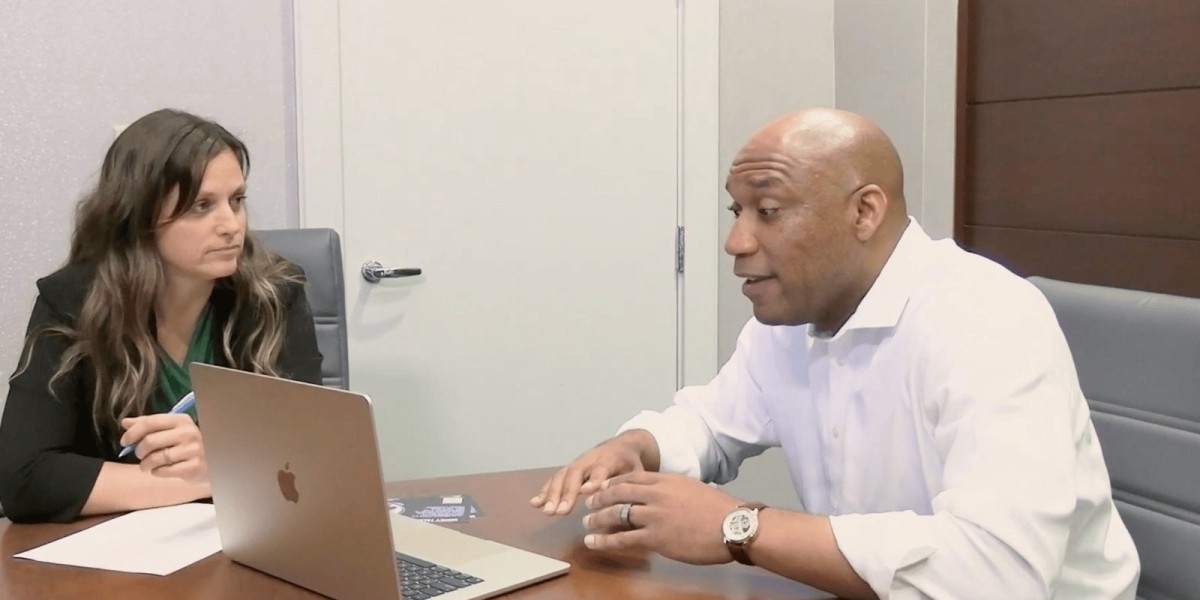

The most consequential decisions in an organization are rarely as simple as they appear.
A company may be trying to grow. An executive team may be dealing with an accountability issue. A foundation may be looking for a more effective way to create impact. A group of advisors may be helping clients navigate increasingly complicated financial and institutional environments.
In each situation, the visible challenge is only part of the story.
Behind the outcome are structures, incentives, governance models, economic conditions, and institutional relationships that influence what happens next.
For leaders, learning to recognize these forces can create a significant difference in how they make decisions.
This is the perspective Antomius Wise brings to keynote presentations, workshops, and executive education. His work is centered on helping leaders understand the systems beneath the surface so they can approach complex challenges with greater clarity and strategic awareness.
The purpose is not simply to deliver a compelling presentation.
It is to create a shift in perspective that continues after the room has emptied.
Why Structure Matters to Leadership
Leadership is often discussed as though outcomes depend primarily on the qualities of individuals.
Strong leaders make good decisions. Effective teams execute well. Visionary executives create growth.
But organizations do not operate through individuals alone.
They operate through systems.
An organization's structure determines how responsibilities are distributed. Governance determines how authority is exercised. Incentives influence what people prioritize. Economic conditions determine which opportunities are available and which constraints must be considered.
When these elements are aligned, they can reinforce organizational performance.
When they are not, leadership teams may spend significant time addressing problems that continue to return.
This is why structural awareness matters.
Before changing a person, process, or strategy, leaders may need to understand the environment that is producing the current result.
Seeing What Is Usually Overlooked
Antomius Wise's signature program, Make the Invisible Visible, is built around this idea.
The program examines the forces that operate beneath visible organizational outcomes, including incentives, governance, economic systems, and institutional structures.
Consider a company with talented employees but declining performance. The instinct may be to replace people or introduce new processes. But if the incentive system rewards behavior that conflicts with the organization's objectives, changing personnel may not solve the underlying problem.
Or consider an institution attempting to expand without updating its governance model. Growth may create new responsibilities and decision-making requirements that the existing structure cannot effectively support.
In both cases, the challenge is structural.
Leaders who learn to identify these hidden dynamics can move beyond treating symptoms and begin addressing causes.
That is the essence of making the invisible visible.
Executive Education for the Decisions That Matter
At the executive level, education should connect ideas to real decisions.
Experienced leaders rarely need another collection of generic management principles. They need perspectives that help them interpret complicated situations and recognize patterns they may not have considered.
Antomius Wise's executive programs are designed around this principle.
Participants are encouraged to examine questions such as:
- What is actually driving this outcome?
- Which incentives are influencing behavior?
- Where does authority reside?
- How is accountability structured?
- What economic conditions are affecting the situation?
- Which assumptions are shaping the current strategy?
- What consequences could emerge from changing one part of the system?
The value of these questions lies in what they reveal.
A leadership team may discover that a performance problem is not a people problem. An organization may recognize that its growth challenge is actually an infrastructure challenge. A philanthropic initiative may reveal opportunities for greater institutional impact.
The right framework can change the way a problem is understood.
A Broader Perspective on Philanthropy
Philanthropy is capable of creating immediate benefits, but institutional philanthropy can also influence the systems that determine long-term outcomes.
Antomius's Strategic Philanthropy & Economic Impact program explores this broader approach.
Rather than looking at philanthropy solely as charitable giving, the program considers the relationship between philanthropic capital, governance, economic infrastructure, and institutional development.
This perspective encourages leaders to think about what their investments can create beyond the initial contribution.
Can funding strengthen an institution?
Can it build sustainable infrastructure?
Can it create economic opportunity?
Can governance mechanisms support the work over the long term?
Can today's philanthropic decision contribute to value that remains years from now?
For foundations, philanthropic networks, wealth advisors, and institutional leaders, these questions can help create a more strategic understanding of impact.
The conversation shifts from simply asking where resources should go to examining what those resources can help build.
Leading When There Is No Simple Answer
Complex environments test leadership differently.
When conditions are stable, established processes can often guide decisions. But when markets shift, regulations change, stakeholder expectations evolve, or unexpected risks emerge, leaders need to understand how different parts of a system interact.
This is the focus of Leadership Inside Complex Systems.
The program explores decision-making, discipline, accountability, and structural awareness in situations where uncertainty and high stakes are part of the environment.
Complex systems do not always respond predictably.
A decision intended to improve performance can create a new problem. A policy designed to increase accountability can unintentionally slow decision-making. A change in resource allocation can influence priorities throughout an organization.
Effective leaders therefore need to consider more than the immediate result.
They need to think about relationships, dependencies, and potential consequences.
This is where structural thinking becomes a practical leadership capability.
Lessons From High-Performance Environments
Antomius Wise's own professional journey adds another dimension to his approach.
His From the Field to the Secret Service keynote draws on his experiences as a former professional football player and his work with the U.S. Secret Service.
At first glance, these worlds may seem unrelated.
One revolves around elite athletic competition. The other involves institutional responsibility and federal service.
Yet both environments demand many of the same fundamental qualities: preparation, discipline, adaptability, accountability, focus, and the ability to perform under pressure.
Athletes learn that performance is built long before game day.
Professionals working in high-stakes institutional environments learn that preparation and awareness can become critical when circumstances change quickly.
These lessons translate naturally into executive leadership.
Organizations may face their own version of pressure, uncertainty, and high expectations. Leaders who have developed discipline and adaptability are better equipped to respond when plans no longer work as expected.
Creating Conversations for the Right Audience
A meaningful leadership program should reflect the people participating in it.
The questions facing a financial services executive may differ from those facing a founder. A philanthropic foundation may have different priorities from a university audience. A wealth-advisor network may approach institutional impact from a different perspective than a civic leadership group.
Antomius Wise's engagements are designed for audiences such as:
- Executive leadership teams
- Wealth advisors and trust networks
- Chambers and civic leadership circles
- Philanthropic networks and foundations
- High-income founders and entrepreneurs
- Universities and academic convenings
- Financial services and insurance firms
- Private executive rooms
Depending on the objectives, an engagement can take the form of a keynote, workshop, executive program, or multi-session education experience.
The format is flexible because the room matters.
Bringing Systems Thinking Into the Executive Room
Some of the most useful leadership conversations happen when different disciplines intersect.
Leadership cannot always be separated from governance.
Governance cannot always be separated from incentives.
Institutional growth cannot always be separated from economic structure.
Philanthropic impact cannot always be separated from infrastructure.
Performance cannot always be separated from organizational design.
Bringing these ideas together allows leaders to examine their challenges from a broader perspective.
Antomius Wise has brought this approach into executive education environments, including a recent engagement at George Washington University. The engagement connected institutional systems, strategic philanthropy, governance, economic structure, and leadership in a setting designed for deeper exploration.
This is the type of conversation that can move executive education beyond traditional leadership topics.
The Lasting Value of a Different Perspective
The true value of an executive education experience is not necessarily measured by how much information an audience can recall.
It is measured by whether the experience changes the way participants approach their work.
A leader may return to an organization and recognize an incentive that has been shaping behavior. An executive team may reconsider a governance structure. A foundation may evaluate an opportunity through a longer-term institutional lens. A founder may begin thinking about the systems required to build an organization that can outlast its current stage of growth.
Those shifts matter.
Because better decisions often begin with better questions.
Antomius Wise's keynotes, workshops, and executive education programs are designed to help leaders ask those questions and understand the systems behind the answers.
The work is ultimately about perspective.
See the structure. Understand the forces. Think beyond the obvious.
When leaders can recognize what is happening beneath the surface, they gain a stronger foundation for navigating complexity, creating institutional value, and leading with greater clarity.
And that is what meaningful executive education should accomplish—not simply giving leaders more to know, but giving them a better way to see.