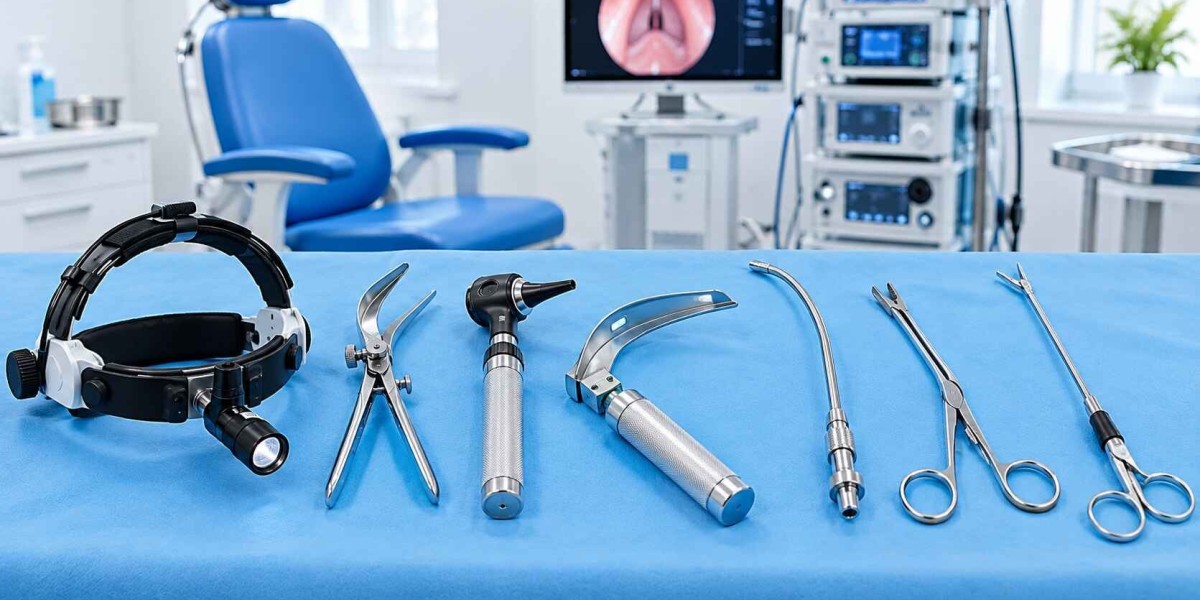

A resident once told us she could tell within three seconds of picking up an aural speculum whether it was ours — not from a logo, from how the light bounced inside it. That's what procurement sheets never capture: ENT Instruments aren't judged on the shelf, they're judged mid-examination, under a headlight, with a patient waiting. Buyers who source ENT equipments purely on price are optimizing for the wrong moment — the one that matters is when a doctor is trying to see, assess, and treat, all in the same ten seconds.
What "See, Assess, Treat" Actually Demands From an Instrument
Every one of our ENT instruments is built around three separate jobs, three separate design requirements. Seeing needs a speculum with a matte, non-glare interior — a mirror-polished bore scatters headlight reflection and makes the canal harder to read, not easier. Assessing needs tactile feedback: forceps and probes that transmit resistance accurately, so a doctor can tell tissue from foreign object by feel. Treating needs a cutting or grasping edge that holds its geometry after repeated autoclaving, not just on day one.
The Detail That Decides How Much a Doctor Can See
Most buyers evaluate a speculum by size and finish. Almost none ask about interior glare control — exactly the spec that separates a usable ENT instrument from one that looks fine in a tray and frustrates a clinician in the room.
Questions That Reveal Whether a Supplier Understands Clinical Use
Five questions separate manufacturers who design for the exam room from ones who only design for the catalog photo.
Does the supplier test under simulated clinic lighting, or only a bench lamp? These aren't the same thing.
Can they explain why one forceps tip transmits more feedback than another? A bad answer talks steel grade alone and skips geometry entirely.
Do they consult practicing ENT doctors during design changes, or only during complaint resolution? Waiting for complaints means the design was never validated properly.
What's their tolerance for tip deflection under normal grip pressure? A bad answer is silence, because most traders reselling ENT Instruments never measured it.
Will they replace a batch that's technically within spec but flagged by clinicians as "off"? A bad answer insists spec compliance settles it. It doesn't — clinicians catch what gauges miss.
Why Precision Protects More Than the Patient
Precision-built ENT equipments protect more than the exam — they protect the business behind the purchase order.
Fewer misdiagnoses traced to equipment. A speculum with poor interior finish contributes to missed findings, which eventually surfaces as a liability question, not just a quality one.
Shorter exam times. Instruments with correct tactile feedback let experienced clinicians work faster, which matters in high-volume ENT clinics.
Lower complaint volume for distributors. Clinicians who trust an instrument stop escalating minor issues to the wholesaler.
Repeat institutional orders. Hospitals standardize on brands that perform consistently across residents and senior doctors.
Fewer mid-batch swaps. Consistent geometry across a shipment means a clinic doesn't sort instruments by "feel" before each use.
This is the difference a procurement manager only notices once doctors start asking for a tray by name.
Manufacturing Out of Jalandhar: What That Means for Your Timeline
Jalandhar's surgical instrument cluster means our forging, hardening, and electro-polishing units sit within a short radius of each other, so a design tweak on a speculum's interior finish doesn't need weeks of back-and-forth with a separate subcontractor. Buyers comparing ENT Instruments Manufacturers in India often assume proximity to a port matters more than proximity to the forge — it's the other way round for anything needing iteration.
We work from 1382/1046, Raja Garden, Basti Danishmandan, near Vishal Tools, Jalandhar — 144002, Punjab, close enough to walk a sample from bench to buffing station the same afternoon.
Built Since 1967 Around What Doctors Actually Need
We didn't start as an export house chasing volume. We started forging locally, and the export side grew once buyers abroad heard the finish held up under repeated sterilization. One thing we still do that most manufacturers our size have dropped: a senior technician handles final glare-check on every speculum batch, by eye, under an actual headlamp, not a bench light.
That single step catches finish problems a machine reading would pass.
Send This, Get a Quote in 48 Hours
Send us your instrument list, quantities, and the clinical setting they're for — hospital, clinic, or field camp — and we'll quote within 48 hours. Standard MOQ is 50 pieces per SKU. Evaluating other ENT Instruments Dealers? Ask whether they've had a practicing clinician handle their design review; most haven't.
The Instrument Should Disappear Into the Exam
Good ENT Instruments don't call attention to themselves — they let a doctor see clearly, feel accurately, and treat confidently, without the tool getting in the way. That standard is harder to hit than a spec sheet suggests, and it's what separates real ENT Instruments Manufacturers from anyone assembling a catalog. We've held to it since 1967, one glare-checked batch at a time.
Frequently Asked Questions
What makes your ENT instruments different for clinical use?
Interior glare control on specula and tactile-calibrated forceps geometry — details most catalogs skip because most manufacturers don't test for them.
Are you ENT Instruments Manufacturers or do you resell?
Manufacturers, based entirely out of our own Jalandhar facility.
Do you involve practicing doctors in design decisions?
Yes, for major changes. For minor SKU variations we rely on our own inspection team — we won't claim clinician review on every batch when it isn't there.
What's your MOQ for ENT Instruments Wholesalers?
50 pieces per SKU standard; custom finishes usually need 100 to justify tooling setup.
How do you test for interior glare on specula?
A final manual check under headlamp conditions, by a senior technician, on every batch.
Can ENT Instruments Suppliers request clinical-use samples before bulk ordering?
Yes, above a set threshold. We can't extend that to every single-unit inquiry — it isn't commercially sustainable at that scale.
Do ENT Instruments Dealers get different lead times than hospitals ordering direct?
No — timelines run the same regardless of buyer type, generally two to three weeks for stock items.