
A buyer can spot a beautifully made product in seconds. The harder part is finding an Indian Handicraft partner who can reproduce that quality across 500, 1,000, or 5,000 pieces without turning every shipment into a negotiation.
The Craft Categories Already Built for Global Shelves
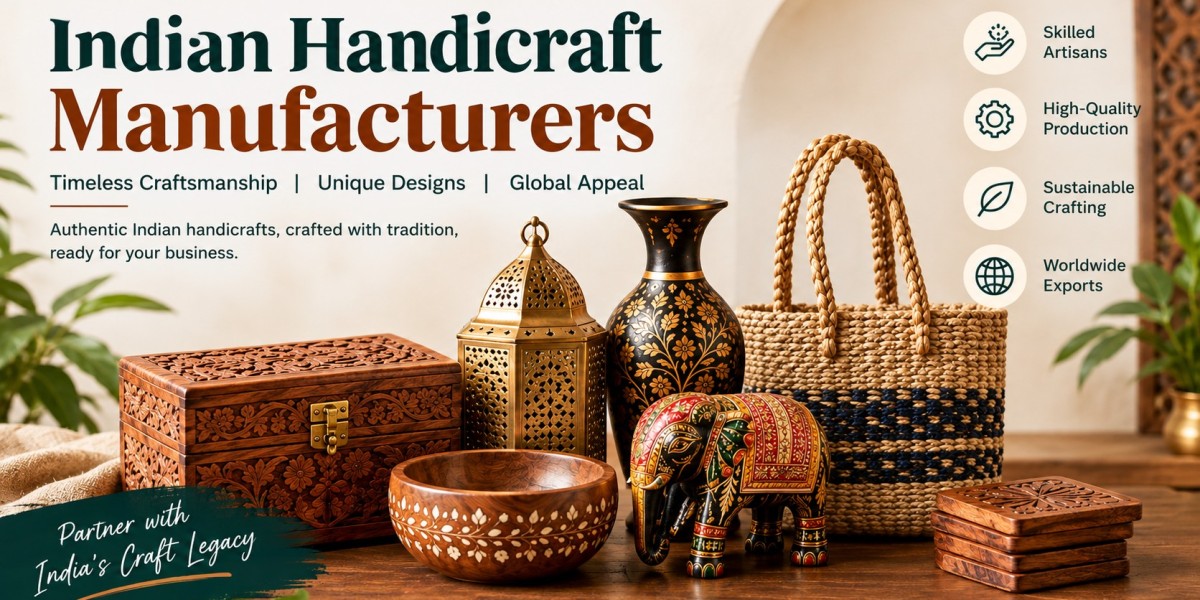
Indian Handicraft Manufacturers base is broader than many overseas buyers realize. Government classifications include textile, metal, wood, leather, natural fiber, mud, paper, jewelry, toys, and other craft categories.
Wood, Metal and Natural-Fiber Products
Wooden artwares, carved products, furniture, brass, copper, iron, cane, bamboo, rattan and natural-fibre products can be developed into retail collections rather than sold merely as individual handicrafts.
Textiles and Decorative Craft
Hand block printing, embroidery, rugs, durries and other textile crafts give retailers room to build coordinated ranges around color, season and design.
The Detail Buyers Often Miss
Handmade does not automatically mean production-ready. A product may look excellent in a sample and still fail because dimensions drift, finishing varies, packaging is weak, or replacement pieces cannot be produced consistently.
Checks That Separate a Supplier from a Real B2B Partner
1. Sample-to-Bulk Consistency
A good sample proves capability. It does not prove repeatability.
A bad answer is: “The artisan will try to make it the same.”
For procurement, “try” is not a specification. Ask for approved samples, tolerances, finish references and a clear bulk-production process.
2. Material Clarity
Wood species, metal composition, fabric weight, coating, lining and finishing should be defined before production.
A supplier who keeps material descriptions vague creates problems later—especially when your customer expects the second shipment to match the first.
3. Production Capacity
Ask how many pieces can realistically be produced within the required window.
The wrong question is, “Can you make 2,000 pieces?” The better question is, “What is your normal monthly capacity for this exact construction?”
Why Indian Craftsmanship Can Protect Retail Margins
For retailers, handmade products create value beyond raw material cost. The story of origin, regional technique, visible workmanship and limited design variation can help a product occupy a stronger position than an anonymous mass-produced alternative.
India's handicraft sector also has a substantial employment base and is recognised by the Development Commissioner as important for employment generation and exports.
1. Product Differentiation
Craft-led products can give a collection visual identity that is difficult to reproduce through generic factory merchandise.
2. Collection Development
One basic design can often become several SKUs through changes in size, finish, colour, material or detailing.
3. Storytelling Value
Regional craft techniques give brands material for product descriptions, merchandising and collection narratives.
Why India's Craft Clusters Matter to Global Procurement
Location affects sourcing more than most first-time buyers expect.
India's craft ecosystem is geographically dispersed, with government resources mapping crafts by state and origin. That means a procurement team can often source according to the craft capability required rather than treating India as one undifferentiated supplier market.
For example, a buyer seeking carved wooden products should evaluate woodworking capability, finishing standards and production infrastructure—not simply search for an “Indian handicraft supplier.”
Indian Handicraft Manufacturers in India can therefore be evaluated on both craft expertise and their ability to translate that expertise into repeatable commercial production.
How We Look at B2B Craft Supply
At Square N Circle, we look at handicrafts from the buyer's side first.
We understand that a beautiful sample is only the beginning. A buyer also needs predictable specifications, practical quantities, sensible packaging and communication that does not disappear after the purchase order.
We work with the understanding that Indian Handicraft Suppliers need to satisfy commercial requirements as well as design expectations.
Send the Specification, Not Just the Product Name
If you are sourcing from India, send us the product reference, target quantity, dimensions, preferred material or finish, packaging requirements and destination market.
Our team can then assess the requirement and discuss the appropriate production route, MOQ and commercial details rather than giving you a generic catalog response.
For wholesalers, brand owners and procurement teams looking for Indian Handicraft Manufacturers , that first specification can save weeks of unnecessary back-and-forth.
Global Retail Is Raising the Standard for Indian Craft
The future of Indian craftsmanship will not be decided by tradition alone. It will depend on how effectively traditional skills connect with modern specifications, packaging, product development and international buying expectations.
The strongest Indian Handicraft Manufacturers will be the ones that understand both sides of the equation.
And that creates room for Indian craft to move further into global retail—from individual artisan pieces to dependent, commercially viable collections.
FAQs
1. Why are Indian Handicraft Manufacturers attracting global buyers?
India combines a large artisan base with diverse craft traditions and established export activity. Government data identifies 68.86 lakh artisans in its handicrafts census information, while EPCH reported ₹33,122.79 crore in handicraft exports for FY2024–25.
2. What should buyers check before choosing Indian Handicraft Suppliers in India?
Check samples, material specifications, production capacity, finishing consistency, packaging and communication. A supplier may produce an attractive sample but still struggle with repeat bulk production.
3. Can Indian Handicraft Suppliers handle customized products?
Many can, but buyers should not assume every supplier can manage every type of customization. Confirm dimensions, materials, finishes, branding requirements and MOQ before approving production.
4. Are Indian Handicraft Distributors useful for international buyers?
They can be useful when a buyer needs access to multiple product categories or smaller assortments. However, direct manufacturer relationships may be more suitable when customization and bulk production are central to the order.
5. What makes Indian handicrafts suitable for modern retail?
The combination of traditional techniques, material variety, design flexibility and storytelling potential makes them suitable for distinctive retail collections.