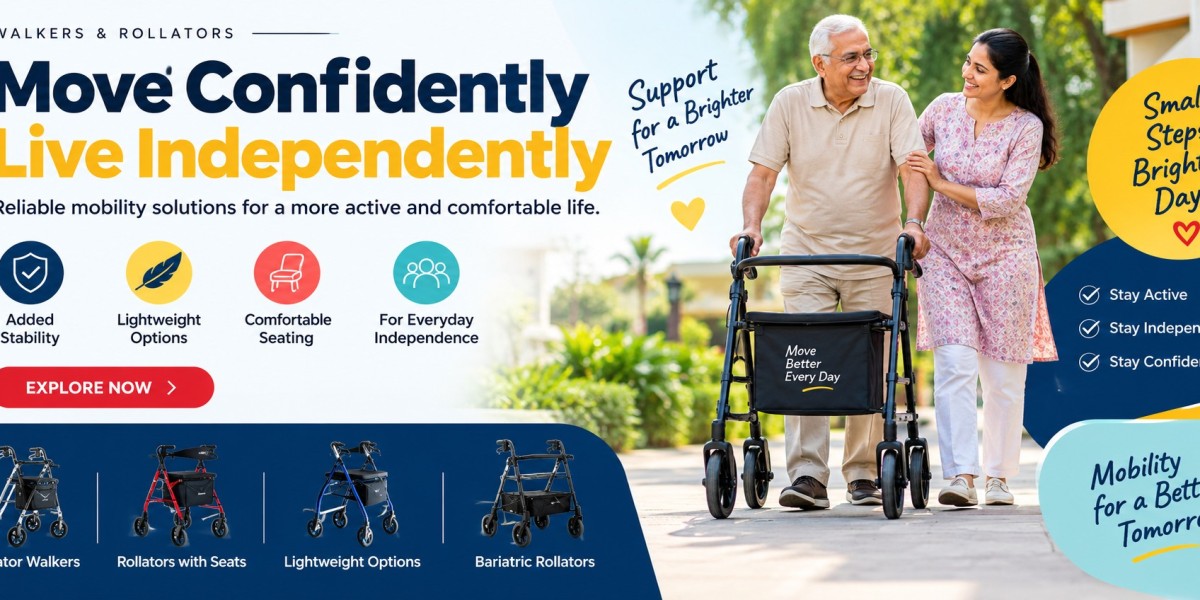

Maintaining independence and confidence while walking is important at every stage of life. Whether you need additional support after an injury, experience difficulty with balance, or simply want a more convenient mobility aid for everyday activities, choosing the right walker or rollator can make a noticeable difference.
Today, there are many mobility options available, but they are not all designed for the same needs. Some people prioritize a lightweight frame that is easy to transport, while others need a sturdy design with a higher weight capacity. Some users want a place to sit and rest during longer walks, while others primarily need stability and easy maneuverability.
A rollator walker can be an excellent option for people who want walking support combined with features designed for everyday convenience. Depending on the design, a rollator may include three or four wheels, hand brakes, an adjustable handle height, a padded seat, a storage basket or pouch, and a folding frame.
However, selecting the right model requires more than choosing the first walker that looks comfortable. Factors such as weight capacity, frame construction, wheel size, seat height, handle adjustment, portability, braking system, and intended environment can all influence whether a particular rollator is suitable.
In this guide, we'll explain the key factors to consider when choosing a rollator, discuss different types of mobility needs, and provide practical tips to help you make a more informed decision.
What Is a Rollator Walker?
A rollator walker is a wheeled mobility aid designed to provide walking support while allowing the user to move with greater freedom than with a traditional stationary walker.
Unlike a standard walker that generally needs to be lifted or moved forward in small steps, a rollator has wheels that allow it to roll along the ground. Most models use hand-operated brakes so users can control their movement and stop when necessary.
Many modern rollators also include additional features such as:
Comfortable padded seats
Backrests
Adjustable handles
Hand brakes
Storage compartments
Removable or folding components
Large or small wheels depending on intended use
Lightweight or heavy-duty frames
These features make rollators useful for a variety of everyday situations.
For example, someone who becomes tired while shopping may appreciate a model with a seat. Someone who frequently travels may prefer a lightweight, foldable design. A user requiring additional structural support may need a heavy-duty model with an appropriate weight capacity.
The most important consideration is not simply finding the product with the most features. Instead, the goal should be to find a mobility aid whose design matches the user's individual requirements.
Why Choose a Rollator Instead of a Traditional Walker?
Traditional walkers can provide excellent stability, particularly for people who need substantial support while standing and walking. However, they can require more effort because the user may need to lift or reposition the frame.
A rollator offers a different experience.
Because the wheels allow the frame to move continuously, a rollator can be more convenient for people who have sufficient control and balance to use a wheeled mobility aid safely.
A rollator may be particularly useful when:
You need walking assistance but can control a wheeled aid.
You want to walk longer distances.
You appreciate the convenience of a built-in seat.
You frequently move around larger indoor spaces.
You want storage for personal belongings.
You need a mobility aid that can fold for transportation.
It's important to remember that wheeled mobility aids are not appropriate for everyone. If you are unsure whether a rollator is suitable for your mobility needs, consider discussing your options with a qualified healthcare professional or physical therapist.
Rollator With Seat: When Is It Useful?
One of the most popular features available on many rollators is an integrated seat.
A rollator with seat can be particularly convenient for users who may become tired while walking or standing for extended periods. Instead of searching for a bench or chair, the user can stop in an appropriate location, engage the brakes, and use the built-in seat for a short rest.
This can be useful during:
Shopping trips
Walks around the neighborhood
Visits to parks
Waiting areas
Long indoor corridors
Travel and sightseeing
Everyday errands
A seat can also provide additional convenience for caregivers and family members accompanying someone who needs frequent rest breaks.
However, users should understand that a rollator seat is intended for appropriate stationary use, not as a substitute for a regular chair during movement. The brakes should be properly engaged before sitting, and the user should follow the manufacturer's instructions regarding safe seat use and weight limits.
When comparing different models, consider the seat's width, height, padding, stability, and overall design. A seat that looks comfortable may not necessarily be the right size or height for every person.
How to Choose a Lightweight Rollator
Portability is an important consideration for many rollator users.
A lightweight rollator may be easier to lift into a vehicle, carry over small obstacles, store at home, or maneuver through busy spaces. This can be particularly helpful for people who regularly travel or need to transport their mobility aid.
However, lightweight does not automatically mean better.
When evaluating a lightweight model, look beyond the product's overall weight. Consider:
Frame Construction
A strong frame should provide appropriate support while remaining manageable for the user.
Weight Capacity
Always check the manufacturer's stated weight capacity. The user's body weight should fall comfortably within the recommended range rather than being close to or above the maximum limit.
Folding Mechanism
If portability matters, examine how easily the rollator folds and whether it remains compact enough for your vehicle or storage area.
Handle Adjustment
Adjustable handles can help users achieve a more comfortable posture while walking.
Wheel Design
Wheel size and construction can affect maneuverability and how easily the rollator moves across different surfaces.
The ideal lightweight rollator is therefore one that balances portability, stability, durability, and user comfort.
What Is a Bariatric Rollator?
People who require a higher weight capacity may need a heavy-duty mobility aid specifically designed for their needs.
A bariatric rollator is generally constructed to accommodate higher user weight capacities than standard models. These rollators often feature reinforced frames, wider seating areas, larger weight capacities, and sturdy components.
When shopping for a bariatric rollator, don't focus exclusively on the advertised weight capacity. Other dimensions are equally important.
Consider:
Seat width
Seat height
Overall frame width
Handle height
Wheel construction
Frame material
Brake system
Storage capacity
Folding requirements
Intended indoor and outdoor use
A wider frame may provide additional comfort and stability, but it may also be more difficult to navigate through narrow doorways or confined spaces.
Therefore, measure important areas of your home before selecting a larger mobility aid.
For example, check the width of:
Bathroom entrances
Bedroom doors
Hallways
Kitchen pathways
Elevators
Vehicle access points
This simple step can prevent an otherwise suitable rollator from becoming inconvenient in everyday use.
Important Rollator Features to Compare
Not every rollator is designed with the same features. Before making a purchase, consider the following characteristics.
1. Weight Capacity
Weight capacity should always be one of the first specifications you check.
Choose a product that is designed to safely accommodate the intended user. If you're buying for someone else, verify their weight and compare it with the manufacturer's recommended capacity.
Never assume that two rollators with similar appearances have identical weight capacities.
2. Handle Height
Correct handle height can contribute to a more natural walking posture.
Many rollators feature adjustable handles, allowing users to customize the height. When standing naturally, the handles should generally allow the user to maintain a comfortable posture without excessive bending or reaching.
If possible, have a healthcare professional or mobility specialist help determine an appropriate setup.
3. Brakes
Hand brakes are an essential component of most rollators.
Look for brakes that are easy for the intended user to operate. Some models also feature a parking brake that keeps the rollator stationary when the user is sitting.
Users should understand how both the movement and parking mechanisms work before using the rollator independently.
4. Wheel Size
Wheel size can affect how the rollator behaves on different surfaces.
Smaller wheels can be convenient for smooth indoor environments, while larger wheels may provide better performance across certain uneven outdoor surfaces.
However, larger wheels can also affect the overall size and weight of the mobility aid.
Think about where the rollator will be used most frequently before selecting a wheel configuration.
5. Seat Comfort
If you're considering a rollator with a seat, pay attention to more than just whether the seat exists.
Consider its:
Width
Depth
Height
Padding
Back support
Overall stability
A seat that is too narrow or too high may not provide the comfort you expect.
6. Storage
A basket, pouch, or storage compartment can make everyday errands significantly easier.
Instead of carrying a handbag or shopping items while using the rollator, users may be able to store lightweight personal belongings in the designated compartment.
Always follow the manufacturer's recommendations regarding storage capacity and avoid placing excessive weight on the rollator.
7. Folding Design
A folding rollator can be particularly helpful for transportation.
Before buying, consider where you'll store it and whether it will fit inside your vehicle. Also consider whether the folding mechanism is easy for the intended user or caregiver to operate.
Indoor vs. Outdoor Rollator Use
Where you plan to use your rollator can influence which design is most suitable.
Indoor Use
For indoor mobility, maneuverability is often a major priority.
A narrower design may be easier to use in:
Hallways
Kitchens
Bedrooms
Elevators
Small stores
If your home has narrow doorways, measure them before purchasing.
Outdoor Use
Outdoor environments may include sidewalks, driveways, parks, and other surfaces that are less predictable than indoor flooring.
If you plan to use your rollator outside regularly, consider wheel construction, frame durability, brake performance, and overall stability.
A rollator designed primarily for smooth indoor floors may not provide the same experience on uneven outdoor surfaces.
Both Indoor and Outdoor Use
Many users need a versatile mobility aid that can transition between home and outdoor environments.
In this case, look for a balanced combination of maneuverability, appropriate wheel design, portability, durability, and comfortable handling.
How to Find the Right Rollator for Your Lifestyle
Rather than starting with a product feature, start by considering your daily routine.
Ask yourself:
Where will I use the rollator?
If you mainly move around your home, compact dimensions and maneuverability may be important.
If you regularly go shopping or travel, portability and storage may become higher priorities.
Do I need to rest while walking?
If the answer is yes, a rollator with an appropriately designed seat may be worth considering.
Do I need additional weight capacity?
If so, explore models specifically designed for higher weight capacities rather than assuming a standard rollator will be sufficient.
Will I transport it frequently?
If you often travel by car, a foldable and manageable design may be more convenient.
Who will operate the brakes and folding mechanism?
Make sure the intended user can comfortably operate the necessary controls, or consider whether a caregiver will assist.
These questions can help narrow down your choices before you compare individual models.
Safety Tips for Using a Rollator
Selecting the right mobility aid is only part of the process. Proper use is equally important.
Before using a rollator:
Check that the frame is properly assembled.
Make sure the handles are adjusted appropriately.
Test the brakes.
Inspect wheels and moving components.
Ensure the folding mechanism is securely locked.
Follow the manufacturer's instructions.
When walking, avoid placing excessive forward pressure on the rollator. Use it according to the manufacturer's intended design.
If you need to sit on the seat, stop completely and engage the parking brakes first.
Avoid using the rollator on stairs unless the manufacturer specifically indicates that it is designed for that purpose. Instead, use appropriate ramps, elevators, or other accessible routes.
If the rollator develops loose components, damaged wheels, brake problems, or other mechanical issues, stop using it until it has been properly inspected or repaired.
Common Mistakes to Avoid When Buying a Rollator
Choosing a mobility aid based solely on appearance can lead to problems later.
Here are some common mistakes to avoid.
Buying Without Checking Weight Capacity
A rollator must be suitable for the intended user's weight. Always check the specifications.
Choosing the Lightest Model Automatically
A lighter rollator may be easier to transport, but the lightest option isn't necessarily the best option for your specific needs.
Ignoring Dimensions
A rollator that is too wide may not fit through your home's doors or other spaces.
Forgetting Seat Height
If you need a seat, make sure its height is appropriate and comfortable.
Not Considering Transportation
If you regularly travel, check the folded dimensions and overall weight before purchasing.
Ignoring Brake Operation
A rollator's brakes should be easy for the intended user to understand and operate.
Choosing Based Only on Price
Price is important, but durability, comfort, safety features, weight capacity, and suitability should also be considered.
How All Care Store Can Help You Explore Mobility Options
Finding the right mobility aid doesn't have to be complicated when you know what features matter.
All Care Store provides a dedicated collection of walkers and rollators where shoppers can explore different mobility solutions based on their individual requirements.
You can explore rollator walker options and compare products according to factors such as design, portability, seating, support, and intended use.
Whether you're interested in a lightweight option for easier transportation, a rollator with a seat for convenient rest breaks, or a heavy-duty solution for higher weight capacities, comparing the available features can help you make a more informed decision.
The right choice will depend on your mobility needs, physical abilities, daily environment, and personal preferences.
Frequently Asked Questions About Rollators
Is a rollator walker the same as a standard walker?
No. A standard walker typically does not have wheels or has a different wheel configuration, while a rollator is designed with wheels and commonly includes hand brakes. Rollators are intended for users who can safely manage a wheeled mobility aid.
Is a rollator with a seat comfortable?
Comfort depends on the individual and the specific design. When comparing models, look at seat width, padding, height, and back support. Always engage the parking brakes before sitting.
Are lightweight rollators durable?
A lightweight design can still be durable, but durability depends on construction, materials, and manufacturer specifications. Don't select a model based solely on weight.
Who may need a bariatric rollator?
A bariatric rollator is designed for users who require a higher weight capacity than standard models provide. Always compare the manufacturer's specified weight capacity with the intended user's requirements.
Can I use a rollator outdoors?
Many rollators can be used outdoors, but suitability depends on the model and the surfaces involved. Check the manufacturer's specifications and consider wheel size, construction, and brake performance.
How do I know which rollator is right for me?
Start by identifying where you'll use it, how much walking support you need, whether you want a seat, your required weight capacity, how often you'll transport it, and the dimensions of the spaces where you'll use it.
Final Thoughts
A rollator can be much more than a simple walking aid. The right design can provide valuable support while also making everyday activities more convenient and comfortable.
When choosing a rollator walker, focus on the features that genuinely match your lifestyle rather than simply choosing the model with the longest feature list. Consider weight capacity, frame construction, handle height, wheel size, brake design, seat comfort, storage, folding capability, and where you'll use the mobility aid.
For people who need convenient rest breaks, a rollator with seat may be an excellent choice. Those who prioritize transportation and portability may want to explore a lightweight design. Users requiring additional weight capacity should consider models specifically engineered for that purpose, such as a bariatric rollator.
Most importantly, choose a mobility solution based on the user's actual needs and ability to operate it safely.
If you're ready to compare available options, explore the Walkers & Rollators collection at All Care Store and review the product specifications carefully before making your decision