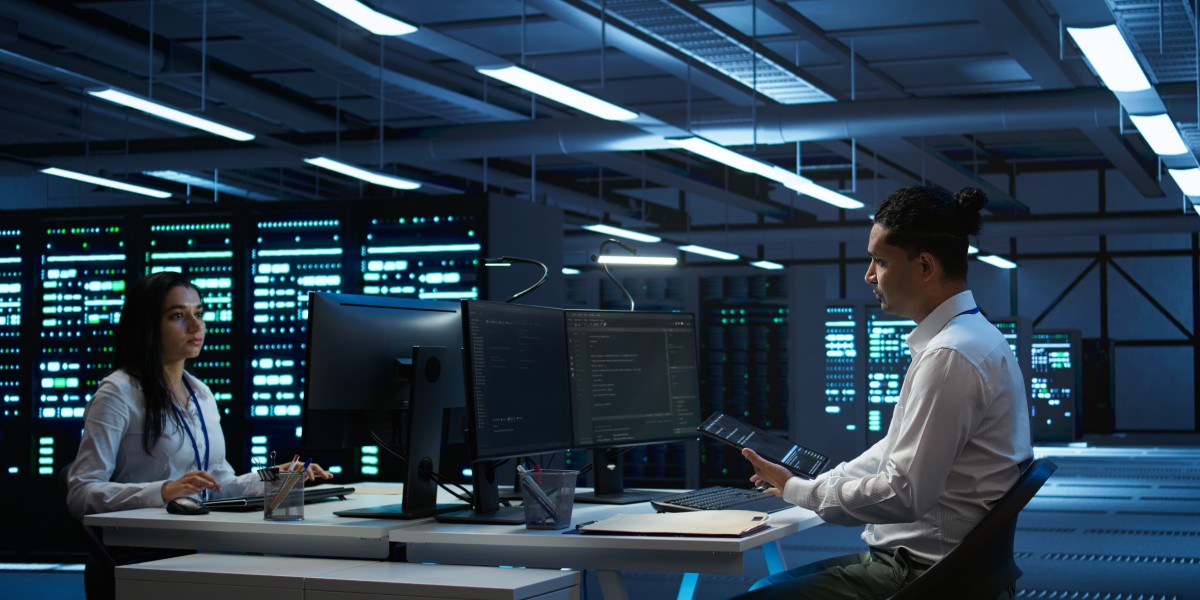

IT infrastructure is the foundation of modern business operations. Employees rely on networks, servers, cloud platforms, databases, storage, and applications throughout the working day.
As an organization grows, maintaining these systems becomes more challenging.
A larger infrastructure environment creates more opportunities for performance degradation, capacity constraints, configuration problems, and service interruptions. IT teams therefore need reliable ways to identify issues before they disrupt users.
This is where infrastructure monitoring becomes an essential component of IT operations.
What Is Infrastructure Monitoring?
Before discussing its benefits, it is useful to understand what is infrastructure monitoring.
Infrastructure monitoring is the process of continuously observing technology systems and collecting information about their performance, availability, and health.
Depending on the organization, this can include monitoring:
- Physical and virtual servers
- Routers and switches
- Firewalls
- Storage infrastructure
- Databases
- Cloud resources
- Virtual machines
- Network connections
- Critical applications
Monitoring platforms collect performance data and can generate alerts when systems behave outside expected conditions.
This gives IT teams a more complete view of their infrastructure.
Why Growing Businesses Need Monitoring
Infrastructure complexity usually increases alongside business growth.
A company may add new offices, employees, applications, cloud services, and business systems. IT teams must support these additions without allowing service quality to decline.
Manual monitoring becomes difficult at scale.
An engineer cannot realistically check every server, network device, and cloud resource continuously. Automated monitoring fills this gap by observing systems around the clock.
This is especially useful for organizations that operate critical services outside traditional business hours.
Infrastructure Performance Monitoring and System Health
Infrastructure performance monitoring provides detailed information about how technology systems are performing.
For example, IT teams can track CPU utilization, memory consumption, disk space, network traffic, latency, and availability.
These measurements can help identify unusual patterns.
A server experiencing occasional high CPU utilization may not require immediate action. However, sustained high utilization could indicate that the system needs additional resources or that an application requires investigation.
Monitoring makes these patterns easier to identify.
Detecting Problems Before Users Do
One of the key advantages of infrastructure monitoring is early detection.
Without monitoring, employees often become the first people to discover infrastructure problems.
They may report that an application is slow, a website is unavailable, or a network connection is unreliable.
By contrast, monitoring systems can detect certain abnormalities automatically.
Alerts can notify IT professionals when important metrics cross predefined thresholds.
This provides an opportunity to investigate the problem before it becomes a widespread business disruption.
Supporting Faster Troubleshooting
When an infrastructure incident occurs, troubleshooting requires accurate information.
IT teams need to know what happened, when it happened, and which systems were affected.
Monitoring platforms can provide historical performance information that helps answer these questions.
For example, engineers may discover that application performance declined at the same time network latency increased.
This type of information can help narrow the investigation.
Instead of checking every component randomly, IT teams can use available evidence to focus their troubleshooting efforts.
Better Capacity Management
Growth creates another challenge: capacity.
Systems that perform well today may not have enough resources to handle future demand.
Infrastructure monitoring provides historical data that can help organizations understand resource consumption.
IT teams can monitor trends in:
- Storage usage
- Network bandwidth
- CPU consumption
- Memory utilization
- Database growth
- Virtual machine resources
This information can support proactive capacity planning.
Businesses can identify potential resource constraints before they become urgent problems.
Helping IT Teams Scale Without Losing Visibility
Adding infrastructure doesn't necessarily mean adding people at the same rate.
Organizations often expect IT teams to support more technology while maintaining operational efficiency.
Automation can help.
Infrastructure monitoring automates continuous observation and alerting, reducing the need for manual checks.
This allows IT professionals to focus their time on higher-value activities while monitoring tools handle routine infrastructure visibility.
Supporting Hybrid and Cloud Environments
Today's IT environments are increasingly distributed.
Some businesses maintain physical servers while also using cloud platforms, virtual machines, SaaS applications, and remote connectivity.
This creates additional monitoring requirements.
A centralized monitoring strategy can help IT teams maintain visibility across different infrastructure components.
The specific monitoring architecture will depend on the organization's technology stack, but the objective remains the same: understand infrastructure health and identify potential issues quickly.
Choosing the Right Monitoring Approach
Not every organization needs the same monitoring strategy.
Businesses should consider factors such as infrastructure size, critical applications, cloud usage, compliance requirements, staffing, and operational priorities.
A useful monitoring solution should provide meaningful alerts rather than overwhelming IT teams with unnecessary notifications.
It should also provide useful dashboards, historical data, reporting capabilities, and integration with existing IT processes where appropriate.
Conclusion
As businesses expand, infrastructure becomes more distributed and difficult to manage manually. Infrastructure monitoring provides the continuous visibility IT teams need to maintain reliable operations.
Understanding what is infrastructure monitoring helps organizations recognize that monitoring goes beyond detecting outages. It can also support troubleshooting, capacity planning, performance management, and operational efficiency.
With effective infrastructure performance monitoring, IT teams can gain better insight into system behavior and respond to emerging problems more proactively.
For organizations planning to scale, making infrastructure monitoring part of the IT management strategy can provide a stronger foundation for continued technology growth.