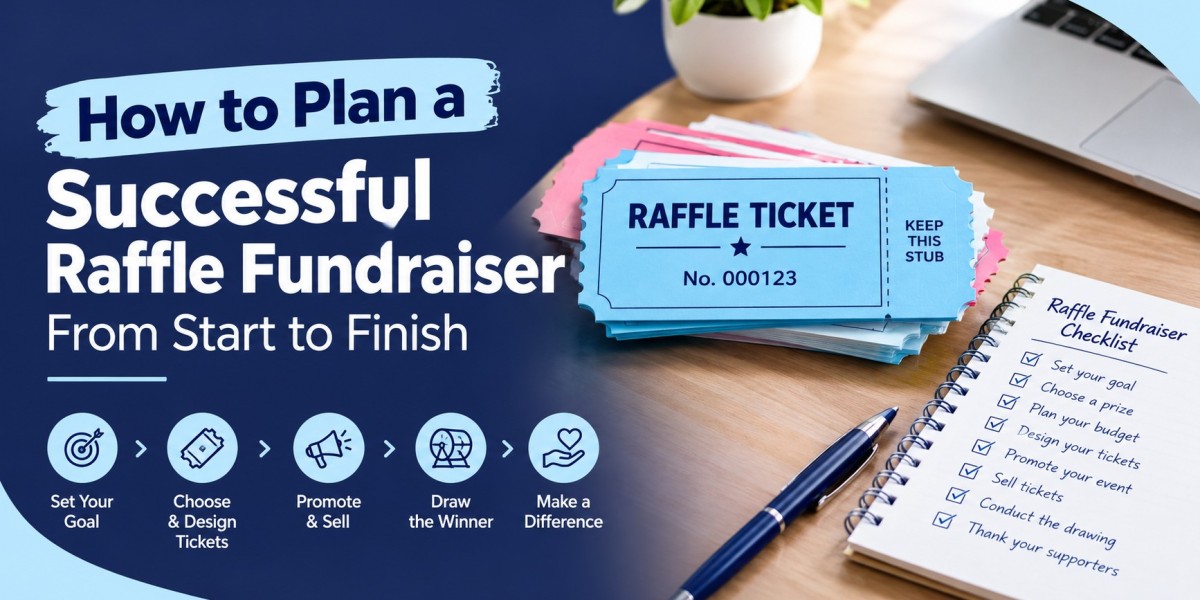

Planning a raffle fundraiser involves more than choosing a prize and printing tickets. A successful raffle needs a clear fundraising goal, an appealing prize, an organized ticket-selling process, properly designed tickets, and a plan for promoting the event.
Whether you're organizing a raffle for a school, church, nonprofit, sports team, charity, or community organization, breaking the process into manageable steps can make the fundraiser easier to run.
This guide explains how to plan a raffle fundraiser from the initial idea through the final drawing.
1. Set a Clear Fundraising Goal
Start by deciding exactly what your raffle is supposed to accomplish.
For example, your organization might want to raise money for:
- School programs or student activities
- Church projects
- Sports equipment
- Community programs
- Charity initiatives
- Building improvements
- Special events
A specific goal gives your team something measurable to work toward.
Instead of simply saying, "We want to raise money," establish a target such as $5,000 or $10,000.
Once you know the target, you can work backward to determine your ticket price, expected sales, prize budget, and promotional strategy.
2. Check the Rules Before Selling Tickets
Raffle laws can vary by state and may also depend on the type of organization holding the raffle.
Before printing or selling tickets, check the applicable rules for your organization and location.
Requirements may cover areas such as:
- Who can legally conduct a raffle
- Whether registration or licensing is required
- Ticket pricing
- Prize restrictions
- Drawing procedures
- Recordkeeping
- Advertising
- Use of raffle proceeds
Do not assume that rules in one state apply everywhere.
Your organization's legal or compliance requirements should be confirmed before ticket sales begin.
For additional research, your team can review Raffles For Less' U.S. raffle laws by state resource.
3. Choose a Prize People Actually Want
The prize is one of the most important parts of your raffle.
A great prize does not necessarily have to be expensive. It needs to be relevant to the people you're asking to participate.
Potential prizes include:
- Gift baskets
- Vacation packages
- Restaurant gift cards
- Sports experiences
- Electronics
- Event tickets
- Local business gift certificates
- Donated services
- Themed prize packages
Consider asking local businesses to donate products or services. In return, you can recognize participating businesses in your promotional materials.
You can also create a themed prize basket instead of offering one large item.
For example, a school could create a family entertainment basket containing movie tickets, restaurant certificates, games, and snacks.
4. Decide How Much Your Raffle Tickets Should Cost
Ticket pricing should make sense for both your audience and your fundraising goal.
Common approaches include:
- $1 tickets
- $5 tickets
- $10 tickets
- 5 tickets for $20
- 12 tickets for $50
You can also offer bundles that give buyers more entries for a larger purchase.
For example:
| Ticket Option | Price |
|---|---|
| 1 ticket | $5 |
| 5 tickets | $20 |
| 15 tickets | $50 |
| 40 tickets | $100 |
The right structure depends on your audience, prize value, fundraising target, and applicable rules.
For more detailed guidance, see the Raffles For Less raffle ticket pricing guide.
5. Determine How Many Tickets to Print
Don't automatically order thousands of tickets just because a larger quantity can reduce the per-ticket cost.
Estimate your potential sales first.
Consider:
- Number of participants
- Number of sellers
- Event attendance
- Length of the campaign
- Ticket price
- Expected demand
- Your organization's previous fundraising results
If you expect to sell 1,000 tickets, ordering significantly more than you can realistically distribute may create unnecessary costs and inventory.
Sequentially numbered tickets can also make distribution and reconciliation easier.
6. Create Professional Custom Raffle Tickets
Your raffle ticket is more than an entry slip.
It represents your organization and gives participants important information about the event.
A well-designed ticket may include:
- Organization name
- Logo
- Ticket price
- Unique ticket number
- Prize information
- Drawing date
- Drawing location
- Contact information
- Rules or required disclosures
- Detachable participant stub
Professional custom tickets can also make your fundraiser look more organized.
Raffles For Less offers professionally printed tickets that are numbered and perforated, with multiple ticket sizes and paper color options.
For a deeper look at ticket design, see the complete custom raffle ticket design and printing guide.
You can also review the available raffle ticket templates before preparing artwork.
7. Create a Simple Ticket Sales System
A raffle becomes much easier to manage when every ticket seller follows the same process.
If multiple volunteers are selling tickets, establish a system for tracking:
- Seller name
- Ticket numbers assigned
- Tickets sold
- Unsold tickets
- Money collected
- Payment date
For example, give each volunteer a specific numbered range.
Seller A might receive tickets 0001–0050, while Seller B receives 0051–0100.
This creates a straightforward way to reconcile tickets and money after the sales period.
Keep unused tickets separate from sold tickets, and establish a deadline for returning money and unsold inventory.
8. Promote the Raffle Before Sales Begin
Don't wait until the final week to tell people about your fundraiser.
Start promoting the raffle before or as soon as ticket sales begin.
You can use:
- Email newsletters
- Social media
- Organization websites
- Flyers
- Church bulletins
- School communications
- Community groups
- Local business partnerships
- Fundraising events
Make the key information easy to understand.
Every promotional message should clearly communicate:
What is the prize?
How much is a ticket?
What does the money support?
When is the drawing?
Where can people buy tickets?
If you're looking for additional fundraising approaches, the Raffles For Less guide to creative raffle fundraising ideas can provide additional inspiration.
9. Make Buying Multiple Tickets Easy
Many people will purchase more than one ticket if the process is simple.
Consider offering clearly explained ticket bundles.
For example:
1 ticket: $5
5 tickets: $20
15 tickets: $50
Make sure your pricing complies with applicable raffle rules.
At in-person events, keep the purchasing process quick. Have clearly marked sales areas and volunteers who understand the pricing and rules.
For larger campaigns, keep an accurate record of tickets distributed and sold.
10. Keep Track of Every Ticket
Ticket tracking becomes especially important as the fundraiser grows.
Numbered tickets allow organizers to match the ticket sold to the ticket entered into the drawing.
Maintain a simple sales record containing:
| Information | Example |
|---|---|
| Ticket number | 01452 |
| Seller | Jane Smith |
| Buyer | John Doe |
| Amount paid | $20 |
| Number of tickets | 5 |
| Date sold | October 12 |
Only collect personal information that you actually need, and handle participant information appropriately.
11. Build Excitement Before the Drawing
As the drawing approaches, remind people about the fundraiser.
You can post updates such as:
- "Only 3 days left!"
- "Ticket sales end Friday."
- "Drawing this Saturday."
- "Last chance to enter."
If your prize is donated by a local business, tag or recognize that business where appropriate.
You can also share photos of the prize, provided you have permission to use them.
The objective is to keep the fundraiser visible without making overwhelming communication.
12. Conduct the Drawing Carefully
The final drawing should be organized and transparent.
Before drawing the winner, confirm:
- Ticket sales have ended
- All eligible tickets are included
- Duplicate or invalid entries have been removed according to your rules
- The drawing procedure follows applicable requirements
- The winning ticket number is recorded
If the winner is not present, follow the procedure communicated in your raffle rules.
Record the winning ticket number and other necessary information for your organization's records.
Final Thoughts
A successful raffle fundraiser starts with organization.
When you establish your goal, choose an appealing prize, price tickets appropriately, create professional tickets, organize your sales team, and promote the fundraiser consistently, you give your campaign a clear structure from beginning to end.
The physical raffle ticket is an important part of that process. It gives participants a tangible entry, provides essential event information, and can reinforce your organization's professional presentation.
If you're ready to order custom tickets, you can explore Raffles For Less' custom raffle ticket options or review raffle ticket samples before placing an order. Raffles For Less states that its tickets are professionally printed, consecutively numbered, perforated, and available with free shipping.