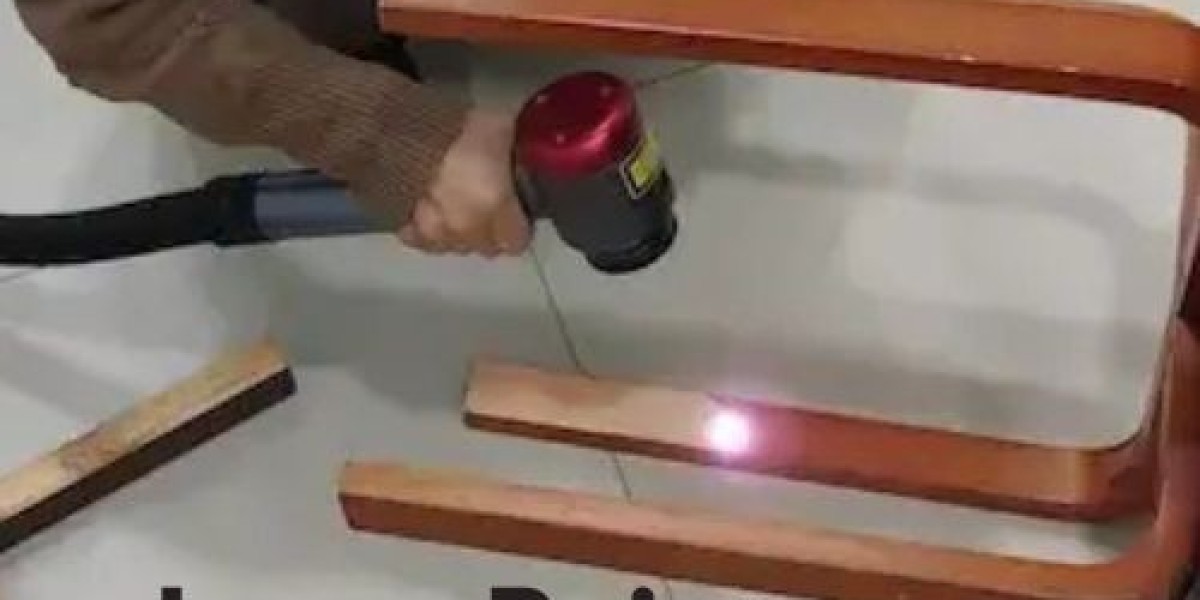

Laser paint stripping is a modern surface treatment process designed to remove unwanted paint, coatings, primers, and other surface layers with remarkable precision. By directing a controlled laser beam onto a coated surface, the process breaks down and removes the paint while allowing the underlying material to remain suitable for further treatment. This technology is increasingly valuable in manufacturing, automotive restoration, machinery maintenance, metal fabrication, and industrial surface preparation. LaserChina provides advanced laser solutions that help businesses achieve controlled, efficient, and professional paint removal results.
How Laser Paint Stripping Works
Laser paint stripping works through a process commonly known as laser ablation. A concentrated laser beam is directed across the painted surface, where the coating absorbs the laser energy. The resulting energy causes the paint layer to heat, break down, and separate from the substrate. By carefully controlling laser power, scanning speed, pulse settings, frequency, and beam characteristics, operators can achieve the desired level of coating removal.
The controlled nature of the process makes it possible to treat specific areas rather than unnecessarily processing the entire component. This is particularly useful when only a section of paint needs to be removed for welding, inspection, repair, bonding, or recoating.
Precise Coating Removal with LaserChina
Precision is one of the defining advantages of laser paint stripping. Instead of relying on mechanical contact, the laser directs energy exactly where treatment is required. This makes the technology suitable for components with detailed edges, seams, grooves, corners, and other intricate features.
LaserChina develops laser cleaning solutions for applications where accurate surface treatment is important. Depending on the material, coating, thickness, and required production rate, an appropriate laser configuration can be selected to deliver consistent and controlled results.
Suitable Materials and Coatings
Laser paint stripping can be applied to a wide variety of industrial materials and coating types. Common applications include painted steel, stainless steel, aluminum, and other metal components. The technology can also be used for removing different types of surface coatings, including paint, primer, powder coating, oxide layers, and certain protective finishes.
The correct laser parameters depend on the relationship between the coating and substrate. Before full-scale processing, testing the actual material and coating combination is an important step for establishing the appropriate operating parameters and desired surface finish.
Advantages of Laser Paint Stripping
One major advantage of laser paint stripping is its controlled and non-contact operation. The laser does not physically scrape or grind the surface, allowing operators to perform detailed coating removal while maintaining the geometry of the component.
Another important advantage is selective treatment. A laser can be directed toward a specific region, making it possible to remove paint around weld seams, repair areas, connection points, inspection zones, or other selected sections without processing the entire component.
Laser paint stripping can also reduce the need for abrasive media and chemical stripping products. This can simplify material handling and help create a more streamlined surface preparation workflow. The process still requires appropriate extraction and safety controls because paint removal can generate fumes and fine particles.
Improved Surface Preparation for Recoating
A properly prepared surface is essential for high-quality painting and coating applications. Old paint, loose coatings, and surface contamination can interfere with adhesion when a new finish is applied. Laser paint stripping can provide controlled removal of unwanted layers before repainting or recoating.
By preparing the surface carefully, businesses can create a cleaner foundation for subsequent manufacturing or finishing operations. This makes laser technology valuable for restoration projects, industrial refurbishment, equipment maintenance, and manufacturing workflows where surface quality matters.
Automotive Applications
The automotive sector offers many opportunities for laser paint stripping. Vehicle bodies, frames, components, restoration parts, and repair areas can require controlled removal of old paint before refinishing or repair.
Laser technology is especially useful when only a particular section needs treatment. For example, paint can be removed around a repair area or selected component without mechanically treating a much larger surrounding region. This precision supports restoration work where preserving the original shape and details of components is important.
Industrial Machinery Maintenance
Industrial machinery frequently requires maintenance, refurbishment, inspection, and repainting. Over time, machinery can accumulate multiple coating layers that need to be removed before repair or surface treatment.
LaserChina solutions can support targeted paint removal on machinery components, equipment frames, tools, molds, and other industrial parts. Portable configurations can also make it easier to process large or difficult-to-move components by bringing the cleaning system directly to the required working area.
Welding and Repair Preparation
Laser paint stripping is highly useful for preparing selected areas before welding and repair operations. Paint and protective coatings around a weld zone can interfere with the preparation process, making controlled removal an important step.
A laser can clean the required region with a focused beam, helping operators prepare the surface while minimizing unnecessary treatment of surrounding areas. This makes the technology valuable for fabrication, maintenance, structural repair, and industrial manufacturing.
Benefits for Manufacturing Workflows
Manufacturers can benefit from the repeatability and controllability of laser-based coating removal. Once suitable parameters have been established for a particular material and coating, operators can follow a defined process for repeated work.
Laser systems can also be integrated into production environments and automated processes. For high-volume applications, automated laser cleaning can support consistent processing of repeated components and selected coating-removal areas.
Portable Laser Paint Stripping Solutions
Portability is another valuable feature for industrial users. Large machinery, structures, production equipment, and fixed installations may be difficult or impractical to move to a dedicated cleaning area.
Portable laser cleaning equipment allows operators to take the technology directly to the component. This can support maintenance teams working on machinery, fabrication structures, automotive components, and other large items. LaserChina offers solutions designed around different application requirements, helping businesses select equipment according to their working conditions.
A More Efficient Surface Treatment Approach
Laser paint stripping can simplify surface preparation by combining precision, controlled energy delivery, and non-contact operation. With the right configuration, operators can process selected areas efficiently while maintaining greater control over the treatment process.
The reduction of abrasive media and chemical products can also contribute to a cleaner and more organized workplace workflow. Proper ventilation, fume extraction, laser safety equipment, and trained operation remain essential parts of responsible laser processing.
Choosing the Right Laser Paint Stripping System
Selecting a laser system should begin with the actual application rather than simply choosing the highest available power. Important factors include the substrate material, paint type, coating thickness, required cleaning speed, working area, desired finish, and whether the process will be manual or automated.
Pulsed laser systems can provide highly controlled energy delivery for precision applications, while higher-power configurations can be considered for applications where productivity and larger-area processing are priorities. LaserChina can help users evaluate these factors and identify a suitable configuration for their specific requirements.
Why Choose LaserChina
LaserChina focuses on providing practical laser technology for industrial processing and surface treatment applications. Its solutions can support businesses looking for reliable equipment for paint removal, coating preparation, rust cleaning, welding preparation, and other laser cleaning tasks.
The combination of precision, controllability, flexibility, and professional laser technology makes LaserChina a valuable choice for companies exploring modern surface preparation solutions. Whether the requirement involves a small component, automotive part, industrial machine, or larger maintenance project, the appropriate laser configuration can be selected according to the application.
Final Thoughts
Laser paint stripping is transforming the way businesses approach coating removal and surface preparation. Its focused, non-contact operation provides precise treatment, controlled coating removal, and excellent flexibility across many industrial applications.
With advantages such as selective processing, reduced dependence on abrasive media and chemicals, consistent results, and suitability for complex components, laser technology offers an efficient approach to modern paint removal. For companies seeking dependable laser cleaning equipment and professional surface treatment solutions, LaserChina provides a broad range of technologies designed to support demanding industrial applications.
By choosing the right laser configuration and establishing suitable processing parameters, businesses can improve their paint removal workflow, prepare surfaces effectively, and achieve professional results across manufacturing, automotive, maintenance, fabrication, and restoration applications.