I discovered Block Blast on a random afternoon when I was looking for something mindless to play while I had coffee. You know, the kind of game where you don't have to think too hard. I was so wrong about that.
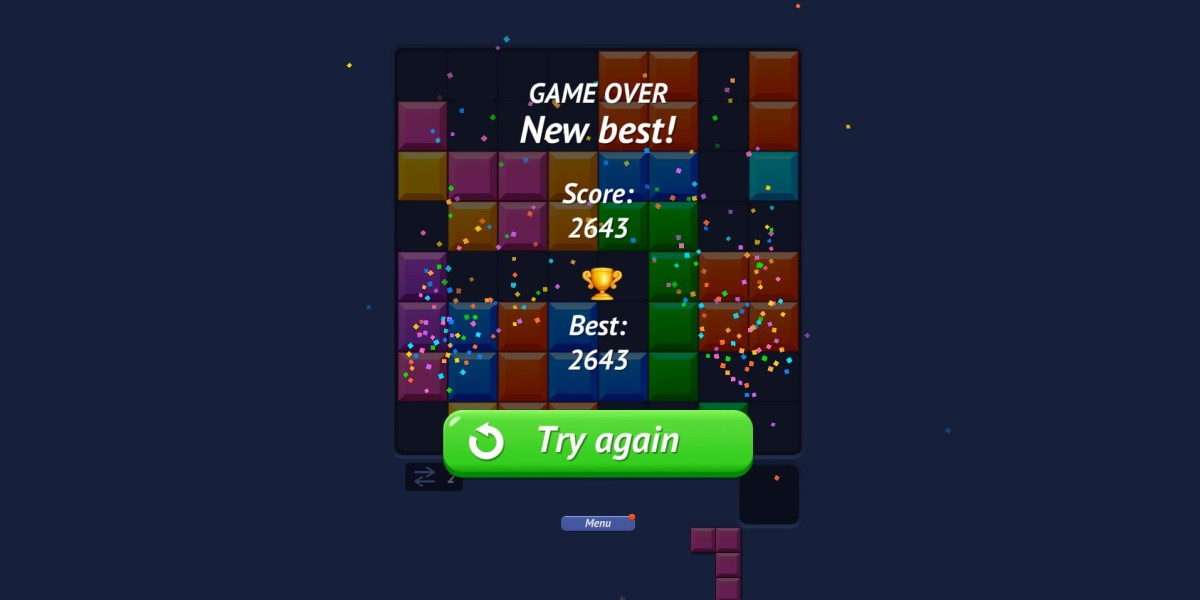
The first thing that grabbed me was how straightforward it looked. Drag some block shapes onto a 9x9 grid, fill up complete rows or columns, watch them disappear, and repeat. The game doesn't have that stressful countdown timer that makes you sweat—no artificial pressure forcing you to decide in two seconds. You can sit with a piece, stare at the board, and actually think about where it should go. That sounded perfect.
Then I placed my first few blocks and realized this was going to be trickier than I expected.
The Moment It Clicked (And Got Complicated)
The first couple of rounds, I was placing pieces wherever they fit. Quick, easy, no big deal. I'd clear a line here, maybe two, and the game would end pretty fast. I figured that was just how it went. Then I started noticing something: the board would get full in weird ways. Not because I ran out of space, but because I'd created these tiny gaps that nothing could fit into. Useless little pockets of empty space that might as well have been walls.
That's when I realized I'd been playing completely wrong.
The real puzzle isn't just "can this block fit?" It's "should this block go here?" Because where you place something now directly affects what you can do later. If I stuff a piece into a corner too early, I might block myself from being able to clear multiple lines at once. And apparently, clearing multiple lines in one move is where the real satisfaction lives.
I started overthinking everything after that.
Learning That Space Is Sacred
Here's what I've learned the hard way: keeping the board open is more important than chasing every quick clear. It sounds simple, but in practice, it's surprisingly hard. There's this temptation to place a piece because it fits right now, without asking whether placing it there leaves you room to maneuver later.
I've made this mistake dozens of times. I'll see a clean spot and think "perfect, that's solved," then five moves later I'm staring at three blocks that can't go anywhere because I've hemmed myself in. The game ends, and I think, "Yeah, I deserved that."
What changed things for me was actually planning ahead. Looking at the blocks I have available and thinking about how they might work together. Maybe I don't place the obvious piece first. Maybe I set up a better position for the next few moves. It's the kind of thing that sounds obvious once you've said it out loud, but in the moment, it requires actual restraint to not just drop a block and move on.
The weirdest part? I genuinely enjoy this now. Sitting there, considering where a piece should go, thinking several moves ahead—it's actually satisfying in a way I didn't expect.
When One Placement Changes Everything
The moments that get me coming back are when I place a single block and it cascades. One piece lines up perfectly, clears an entire row, and suddenly that row's absence opens up space that clears a column too. The board just opens up again. It's that feeling of a puzzle falling into place, and the game rewards you for having actually thought about it instead of just randomly dropping pieces.
Those are the rounds that make me want to immediately start another game, because now I'm thinking: "Okay, if I could do that once, maybe I can do it again. Maybe I can do it better."
Mistakes I Made (So You Don't Have To)
I've definitely learned some things from getting stuck repeatedly. The biggest one is that pieces can't be rotated, which sounds like a small thing until you realize it completely changes how you approach placement. I can't just shove a block in and adjust later. What I see is what I get. So the orientation matters before it even hits the board.
I also learned that I shouldn't place the first piece without looking at all the available pieces together. Sometimes the piece that seems perfect right now actually works way better saved for later, depending on what else is coming.
And corners? Don't just throw pieces in corners early unless you're really sure. Corner placement feels safe, but it can create awkward shapes that are harder to fill later.
Why I Keep Playing "One More Game"
The no-timer thing is honestly what keeps me coming back. I'm not being rushed. I can play one round quickly or spend twenty minutes on a single game because I'm genuinely trying to plan perfectly. There's no countdown making me panic. It's just me, the board, and the question of whether I can do better than last time.
That's the hook, really. Every round is a little puzzle to solve. Every placement matters. And every time I lose—when none of the available blocks fit anymore—I'm already thinking about what I'd do differently next time.
Give Block Blast a Shot
If you like puzzles but you don't want the stress of a ticking clock, or if you just want something that feels satisfying to think through, try Block Blast . It's free, it doesn't require any downloads, and you can jump in right now from your browser.
Start a round, place a few blocks, and see if you can keep the board open longer than I could. I promise you'll get that "just one more game" feeling, and then you'll completely lose track of time. It's one of those games that looks simple until you realize how much strategy is hiding inside it.
Come play a few rounds and tell me how you do. I'm curious to see if anyone manages to keep their board cleaner than I do.