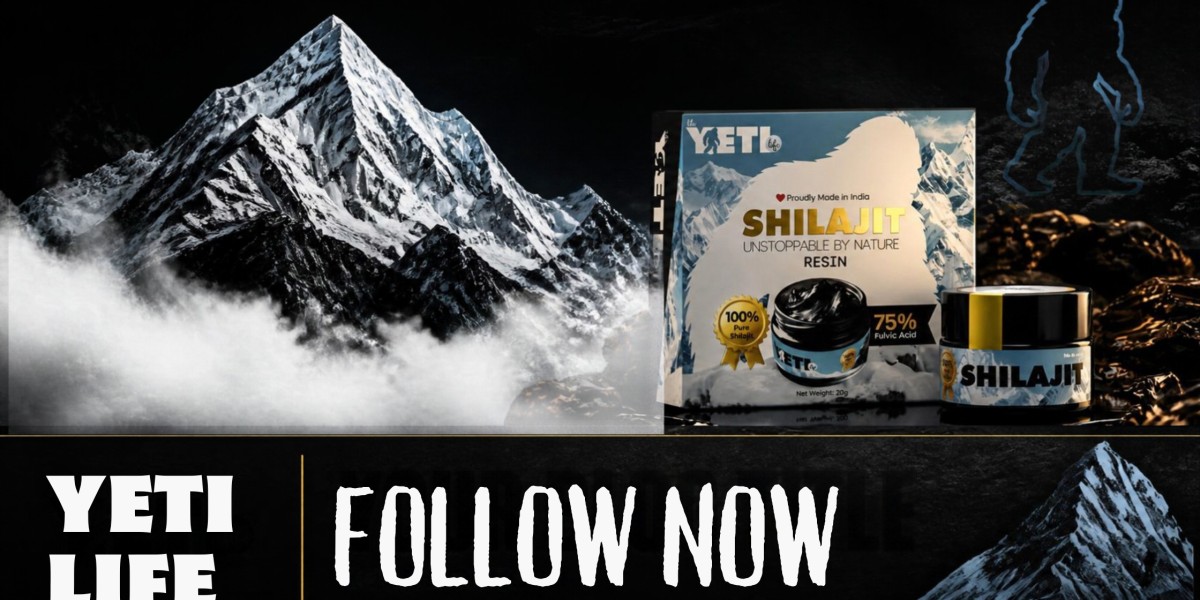

Buying shilajit in India sounds simple until you start comparing brands. Almost every product claims to be pure, natural, Himalayan and rich in fulvic acid. But how can you tell which claims are supported by actual evidence?
The best shilajit brand in India is not necessarily the one with the biggest advertisements or the highest number of online reviews. It is the one that provides clear information about its source, purification process, ingredients and independent laboratory testing.
This guide explains what to check before buying shilajit resin, how to compare different brands and what makes a product worth considering. We'll also look at how The Yeti Life approaches sourcing, purification and batch-level transparency.
What Makes a Shilajit Brand the Best in India?
A reliable shilajit brand should be able to explain where its product comes from, how raw material is purified and whether the finished batch has been independently tested. These details matter more than attractive packaging, influence promotions or unsupported purity claims.
Here are six factors worth checking:
Authentic sourcing: The brand should explain the geographical origin of its shilajit.
Proper purification: Raw shilajit should undergo an appropriate purification process before consumption.
Independent laboratory testing: Look for a genuine third-party Certificate of Analysis (COA).
Heavy metal screening: Check whether lead, arsenic, mercury and cadmium have been tested.
Ingredient transparency: The label should clearly identify the ingredients and avoid undisclosed fillers.
Traceable batches: The laboratory report should correspond to the batch number printed on the product.
A brand that provides evidence for these six points gives buyers more useful information than one that simply describes its product as premium or 100% pure.
How to Compare the Best Shilajit Brands in India
When comparing shilajit brands, avoid choosing based on price or popularity alone. Use the same quality checklist for every product so that you're comparing actual product information rather than marketing language.
| Comparison factor | What buyers should look for |
|---|---|
| Product form | Resin, powder or capsule clearly identified |
| Source | Specific and transparent geographical origin |
| Purification | explained purification method |
| Fulvic acid | Measured quantity with testing method |
| Heavy metals | Individual results for lead, arsenic, mercury and cadmium |
| Lab report | Independent laboratory and report identification |
| Batch details | Matching batch number and manufacturing date |
| Ingredients | Full ingredient declaration |
| Customer support | Accessible contact and product information |
My practical advice: If a brand cannot show you a batch-specific laboratory report, don't rely on its purity claims alone. Keep comparing other products.
1. Check Where the Shilajit Comes From
Shilajit is a naturally occurring mineral-rich substance found in mountainous regions, including the Himalayas. Its composition can vary depending on its geological origin and environmental conditions.
A trustworthy brand should explain:
Which mountain region supplies its raw material.
Whether the material is naturally harvested.
How the source is documented.
Whether different sources or batches are mixed.
For example, The Yeti Life describes sourcing its shilajit from the Indian Himalayas at elevations above 16,000 feet. Its sourcing information also explains the harvesting and supply-chain process.
This is useful information for buyers because geographical claims become more meaningful when a brand explains how it tracks the material from collection to finished product.
2. Understand the Difference Between Raw and Purified Shilajit
Raw shilajit is not automatically ready for consumption. Material collected from mountainous rocks can contain unwanted particles and contaminants.
Purification helps remove unwanted material and prepares the resin for further quality checks.
One traditional Ayurvedic purification approach is called Shodhana . Depending on the method, it can involve water-based processing, filtration and controlled evaporation.
When evaluating a brand, ask:
Does it explain its purification method?
Does it describe how physical impurities are removed?
Are chemicals or solvents used?
Is the final purified material tested?
Don't assume that a product is safe simply because its packaging says natural or Himalayan.
3. Why Fulvic Acid Matters When Comparing Shilajit
Fulvic acid is one of the commonly discussed components of shilajit. It is associated with its complex organic and mineral composition.
However, a higher advertised percentage does not automatically mean better quality.
When checking fulvic acid claims, look for three things:
The actual measured percentage.
The analytical method used to measure it.
The laboratory report supporting the result.
A statement such as "rich in fulvic acid" is not enough to establish how much a particular batch contains.
Also, be careful when comparing percentages from different brands. Testing methods, sample preparation and reporting standards can affect whether two numbers are directly comparable.
4. Check the Certificate of Analysis Before Buying
A Certificate of Analysis, commonly called a COA, is one of the most useful documents to request when evaluating a shilajit product.
It provides laboratory information about the tested sample and its measured characteristics.
A useful COA should include:
Product or sample identification.
Batch or lot number.
Name of the testing laboratory.
Analytical report number.
Date of testing.
Fulvic acid measurement, where applicable.
Heavy metal results.
Microbiological results, where applicable.
Look for an independent laboratory with appropriate accreditation for the tests being performed. An NABL-accredited laboratory or another suitably accredited facility can provide stronger assurance than an undocumented in-house test.
One detail many buyers miss: The batch number on the COA should match the batch number on the jar. A report belonging to an older or unidentified batch does not prove the quality of the product currently being sold.
5. Don’t Ignore Heavy Metal Testing
Heavy metal contamination is one of the main safety concerns when buying shilajit.
Naturally occurring substances collected from geological environments may contain unwanted metals. Poorly controlled sourcing and processing can increase the risk of contamination.
Before purchasing, check whether the laboratory has tested for:
Lead
Arsenic
Mercury
Cadmium
You should also check whether the brand's testing panel includes additional contaminants relevant to its raw material and manufacturing process.
Don't settle for a general statement such as "heavy-metal tested". Look for the actual results, units, testing method and applicable safety limits.
6. Resin, Powder or Capsules: Which Form Should You Choose?
Shilajit is sold in different forms. Each has its own practical advantages, but the product format alone does not establish purity or safety.
| Form | What to consider |
|---|---|
| Resin | Traditional concentrated form; check purification and batch testing |
| Powder | Convenient to measure; check ingredients and processing |
| Capsules | Easy to carry; check the amount of shilajit per serving and other ingredients |
Resin is often preferred by buyers who want a product in its traditional form. However, a properly tested powder or capsule may also be worth considering.
The important thing is to evaluate the actual product rather than assuming one form is automatically superior.
How The Yeti Life Approaches Shilajit Quality
A useful way to evaluate any wellness brand is to look beyond its product description and examine the information it makes available to customers.
The Yeti Life focuses on Himalayan shilajit resin, with an emphasis on sourcing transparency, traditional purification and laboratory verification.
Three aspects of its approach are particularly relevant to buyers.
Himalayan sourcing: The brand describes its raw material as being sourced from Indian Himalayan regions above 16,000 feet. Its sourcing page explains the journey from harvesting and purification to finished packaging.
Traditional purification: Its published process describes traditional Shodhana purification, involving water-based extraction, filtration and controlled evaporation.
Laboratory documentation: The brand publishes batch-related laboratory information through its shilajit lab results and certificates page . Buyers can use this information to examine the reported composition and safety testing.
The Yeti Life's Pure Himalayan Shilajit Resin is one product to consider if you prefer resin rather than capsules or powder.
As with any supplement, check the current batch certificate and product label before purchasing. Laboratory results should always be matched to the actual batch being sold.
For a closer look at the brand's approach, visit The Yeti Life .
How to Choose the Right Shilajit Brand: A Simple Checklist
Before placing an order, follow these seven steps:
Read the product label: Check the ingredients, serving information and manufacturer details.
Verify the source: Look for a clear explanation of where the shilajit comes from.
Check purification: Understand how raw material is processed before consumption.
Request the COA: Find the actual laboratory report, not just a testing badge.
Match the batch number: Ensure the report corresponds to the product you intend to buy.
Review safety results: Check heavy metals and relevant microbiological testing.
Compare customer support: Make sure the brand can answer reasonable questions about its product.
Taking a few minutes to complete these checks can help you avoid making a purchase based only on advertising.
Is Shilajit Safe for Daily Use?
Purified shilajit products are sold as dietary or wellness supplements, but that does not mean every product is safe for everyone.
Product quality, contamination, individual health conditions and medication use can all affect suitability.
If you decide to use shilajit:
Follow the manufacturer's labeled serving instructions.
Avoid unpurified or unidentified raw material.
Do not exceed the recommended amount.
Stop using it if you experience an unwanted reaction.
Speak with a qualified healthcare professional if you have a medical condition or take medication.
People who are pregnant or breastfeeding should avoid using shilajit unless specifically advised by their healthcare professional.
Also, remember that shilajit is not a proven replacement for medical treatment. Claims about curing diseases, treating diabetes or ensuring hormonal improvements should be approached with caution.
Conclusion:
Choosing the best shilajit brand in India requires more than comparing prices, packaging or online ratings. Focus on authentic sourcing, proper purification, independent laboratory testing, batch-specific certificates and clear ingredient information.
The Yeti Life is one option for buyers interested in Himalayan shilajit resin and publicly available sourcing and laboratory documentation. However, the smartest approach is to apply the same quality checklist to every brand you consider.
Don't buy a product just because it calls itself pure or premium. Look for evidence, read the laboratory report and make an informed decision.
Frequently Asked Questions
1. Which is the best shilajit brand in India?
The best brand is one that provides transparent sourcing, proper purification, independently verified laboratory testing and batch-specific certificates. Compare these factors before choosing rather than relying only on popularity or advertising.
2. How can I identify original shilajit?
Start by checking the source, purification process and independent laboratory report. Home tests based on color, smell, stickiness or dissolution cannot reliably confirm authenticity or rule out contamination.
3. Is shilajit resin better than shilajit capsules?
Resin is a traditional form, while capsules offer convenience. Neither format is automatically better in quality. Compare the ingredients, actual shilajit content, purification and laboratory results.
4. What should I check in a shilajit lab report?
Check the testing laboratory, report number, sample identification, testing date, batch number, fulvic acid measurement and heavy metal results. The certificate should match the batch printed on your product.
5. Why is fulvic acid important in shilajit?
Fulvic acid is an important component commonly measured when assessing shilajit composition. Its reported percentage can help with product comparison, but it should not be treated as the only measure of purity or safety.
6. Can I take shilajit every day?
Some purified shilajit products are intended for regular use according to their labels. However, daily use is not suitable for everyone. Follow product instructions and consult a healthcare professional if you have a medical condition or take medication.
7. Is Himalayan shilajit always pure?
No. Himalayan origin alone does not guarantee purity. Proper purification and independent testing are necessary to assess product quality and potential contamination.
8. How do I know whether a shilajit COA is genuine?
Check the laboratory name, analytical report number, sample details and batch identification. Where possible, verify the report directly with the issuing laboratory using its official verification process.
9. What is the difference between raw and purified shilajit?
Raw shilajit is collected from natural deposits and may contain rock particles and other impurities. Purified shilajit has undergone processing to remove unwanted material before further quality and safety testing.
10. Is The Yeti Life shilajit lab tested?
The Yeti Life publishes laboratory information and batch certificates on its website. Buyers can visit its Lab Results page to review the available documentation and check the current product batch before purchasing.